Get Full Government Meeting Transcripts, Videos, & Alerts Forever!
Get email alerts on the Animal Cruelty Prosecution topic
No spam. Unsubscribe anytime.
Dallas County prosecutor outlines criminal standards, jury challenges and limits of city authority in animal cruelty cases
Summary
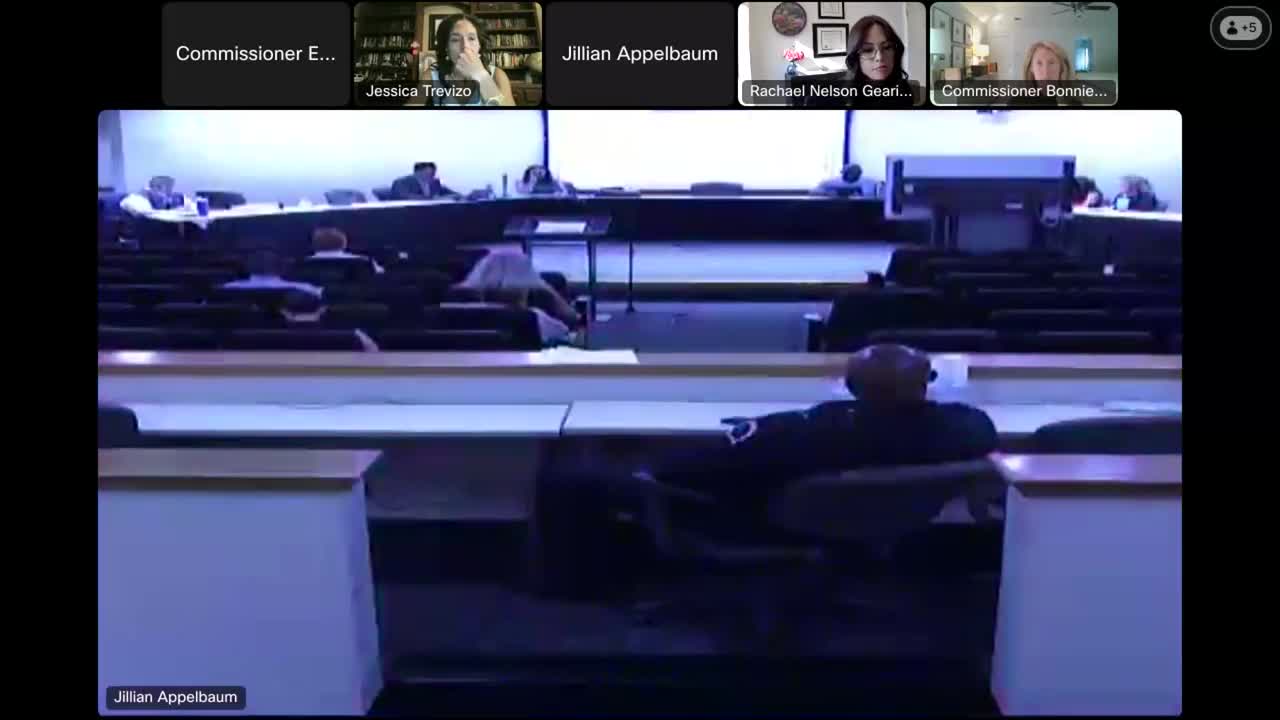
Jessica Trevizo, chief of the Animal Cruelty Unit in the Dallas County Attorney's Office, told the Dallas Animal Services Commission how felony and misdemeanor animal-cruelty prosecutions proceed, said juries can be hard to persuade in these cases and urged people not to post evidence online in active investigations.
Jessica Trevizo, chief of the Animal Cruelty Unit in the Dallas County Attorney's Office, told the Dallas Animal Services Commission that her unit prosecutes felony and misdemeanor animal-cruelty cases under the Texas Penal Code, the Texas Health and Safety Code and the Texas Parks and Wildlife Code.
"I work off the Health and Safety Code, the Penal Code and the Texas Parks and Wildlife Code," Trevizo said, outlining the narrow criminal authorities her office uses and noting that municipal Class C or city-code violations remain with city attorneys.
Trevi'zo described how criminal prosecutions typically follow civil seizure hearings in Dallas. "Once we get the civil procedure hearing, I go out there, I prove up that there was evidence of animal cruelty," she said, adding that civil seizure hearings must be held within 10 days after a warrant and are often heard by a judge she named as experienced in animal-cruelty law.
Trevi'zo listed the range of criminal charges her unit pursues, from misdemeanors up to second-degree felonies when case facts and prior convictions allow. She said the unit prosecutes cases involving torture, emaciation and animal abandonment and that 'unjustifiable pain and suffering' can meet statutory definitions of torture even when the conduct is not prolonged. She offered an example in which a bystander's pepper spray directed at a dog led to a felony conviction.
She described the legal standard for dangerous-dog prosecutions: an unprovoked attack outside the home plus proof the owner failed to keep the dog confined. Owners of dogs legally declared dangerous must register the animal, keep it restrained and obtain liability insurance of at least $100,000; failure to comply can lead to seizure. Trevizo said Dallas County prosecutes cruelty tied to dogfighting and other livestock-related cruelty and that the Dallas Police Department has been increasing enforcement against organized fighting.
On legislative changes and prosecution limits, Trevizo said the unit has pursued tougher penalties for cockfighting and dogfighting but that proposed changes have stalled on legislative calendars. She also noted a recent change she described to the commission: people convicted of animal cruelty can be prohibited from owning animals in the future.
Trevi'zo emphasized evidentiary needs and investigative partnerships. She said veterinary reports are essential: "I really cannot make a case on animal cruelty when it comes to torture or emaciation without a vet report," and she credited Operation Kindness and other veterinarians for forensic reports used in prosecutions.
She warned that public posting of photos or footage and citizen trespass can harm criminal prosecutions by undermining the element of surprise and exposing evidence-handling weaknesses. "When people take pictures, put them online, it... hurts our case tremendously," Trevizo said.
Commissioners asked about the unit's biggest challenges. Trevizo said jury selection and juror willingness to follow the law are persistent problems: she recounted a felony trial in which she says jurors were excused because they would not follow legal instructions, requiring a retrial.
Public comment at the meeting included an allegation from a speaker who identified herself as Stephanie Casey about a conflict of interest involving a local media vendor and Dallas Animal Services contracts. That comment was recorded as a citizen comment and not as a finding by the commission or prosecutors.
The presentation concluded with Trevizo offering prosecutors' training to police and shelter staff and saying the unit will continue outreach to legislators about tougher penalties for organized animal fighting.
Ending: Trevizo asked commissioners and the public to report suspected cruelty to police or prosecutors rather than publicize investigations on social media, and she offered to provide training materials and case information to the commission on request.