Get Full Government Meeting Transcripts, Videos, & Alerts Forever!
Get email alerts on the Historic Arts Venue topic
No spam. Unsubscribe anytime.
Miami Commission OKs manager-mediated deal framework for Olympia Theatre; final contract to return in September
Summary
The Miami City Commission on July 24 authorized the city manager to negotiate terms of a purchase-and-sale agreement to transfer the historic Olympia Theatre and an adjacent tower to SLAM Academica, provided the final contract returns to the commission for approval and includes binding restoration guarantees, appraisals and community-benefit commitments.
The Miami City Commission on July 24 authorized the city manager to negotiate terms of a purchase-and-sale agreement that would transfer the historic Olympia Theatre and an adjacent tower to SLAM Academica, a charter-school operator, and related partners — provided the final contract returns to the commission for approval. Commissioners required additional guarantees, valuation work and public-benefits commitments before any conveyance.
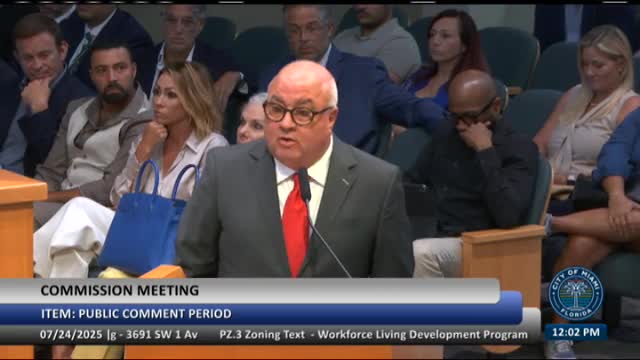
The decision followed hours of public testimony from preservationists, arts advocates, SLAM officials, alumni and neighbors. Multiple speakers expressed strong, opposing views about the proposed no-bid conveyance and the suitability of SLAM as a steward for downtown Miami’s cultural asset.
The commission’s motion directed the manager to negotiate terms that would: secure a binding restoration funding commitment from SLAM or partners (the commission requested clarity around a 40–50 million-dollar restoration estimate that has circulated in presentations); produce appraisals of the property that capture both the building’s condition and the value of transferable development rights (TDRs); specify a detailed schedule and minimum standards for rehabilitation and recertification; and include enforceable reverter or performance-security provisions that allow the city to reclaim the property if terms are unmet. Commissioners also asked the manager to return with a one-page public summary of the negotiated deal and supporting documents for community review prior to voting on final execution.
SLAM representatives and supporters said the agreement offers a path to restore the Olympia without using city capital. Carlos O. Alvarez, principal of SLAM Miami, told commissioners, “The Olympia Theatre won’t be driven by students in a school, it’ll be driven by our community,” and described SLAM’s educational and programming plans that would use and activate the theater while providing student pathways into arts and entertainment careers.
Attorneys representing the Guzman family, which donated the theater to the city decades ago, said the family supports an outside steward and urged the commission to allow the manager to complete negotiations. Tim Barquette, who said he represents the Guzman family, told the commission: “If this commission today does not allow the opportunity for the manager to negotiate a deal to be approved by you in the September meeting, the Guzman family will proceed with our litigation.”
Opponents pressed for more transparency, competitive processes and assurance that public funds and development rights be protected. Several preservation advocates pointed to the Miami Forever bond, noting $78 million had been earmarked for cultural facilities and asked why the Olympia had received none of that funding to date. Maria Gonzales, a vocal critic, said the proposed transfer “is a genius scheme by Academica to rip away taxpayers’ dollars,” and urged the commission to require an open RFP process.
Commissioners pressed administration to produce two independent appraisals: 1) a value based on the building as historic theater (reflecting current condition and restrictions) and 2) a ‘highest-and-best use’ valuation that factors transferable development rights and maximum allowable density if the building were not preserved. Commissioners also asked for a refined cost estimate for the restoration (members referenced numbers ranging from roughly $40 million to $50 million), an analysis of likely sources to fund repairs (private equity, philanthropic pledges, tax credits, TDRs, etc.), and specific enforceable mechanisms (performance bonds, escrow, deed restrictions, reverter language or other security) that ensure the city is protected if work does not proceed.
The commission amended the manager’s authorization so the city would not execute any conveyance without a final purchase-and-sale agreement returned to the commission. The commission voted in favor of the motion and associated directions to staff unanimously.
What happens next: Administration said it expects to continue negotiations and return with a draft PSA and public summary for Commission consideration at the first or second meeting in September. Commissioners requested the manager include: certified appraisals, a quantified restoration budget, proposed sources of funding and the proposed safeguards the city would rely on if the developer fails to perform. Several commissioners also asked that the city prepare an FAQ summarizing the proposed deal and the negotiation milestones so the public can track what changes before final approval.
Why it matters: The Olympia Theatre is an architecturally and symbolically significant cultural asset in downtown Miami. Supporters said SLAM’s plan could quickly return the theater to active public use and add education and workforce pathways for local students. Critics said the process must protect public assets, enforce transparency, and ensure public benefits from any transfer of public property or development rights.
What the vote did, and did not, do: The commission authorized the manager to negotiate terms — including appraisals and enforceable restoration commitments — but it did not approve a final conveyance or execute any deed. The final PSA must come back to the commission for a separate approval vote.
Ending note: Commissioners set a clear expectation that the negotiated package return to the dais in early September with detailed, written valuations and binding performance protections so the public and commission can review exact deal terms before any transfer occurs.