Get Full Government Meeting Transcripts, Videos, & Alerts Forever!
Get email alerts on the Housing topic
No spam. Unsubscribe anytime.
San Mateo County outlines voucher backlog, Homekey conversions and housing pipeline
Summary
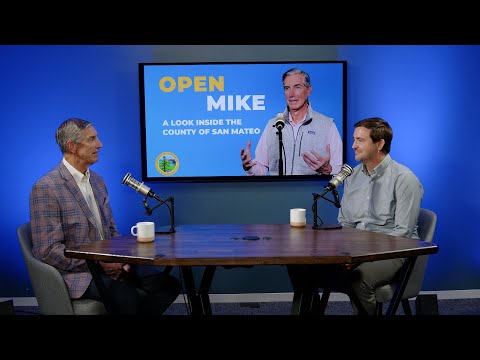
San Mateo County housing director Ray Hodges told County Executive Mike Caligi on the county’s Open Mic program that the county administers about 5,500 federal Section 8 housing vouchers, has a Section 8 waiting list of more than 10,000 people and has financed nearly 5,000 affordable units across the county.
San Mateo County housing director Ray Hodges told County Executive Mike Caligi on the county’s Open Mic program that the county administers about 5,500 federal Section 8 housing vouchers, has a Section 8 waiting list of more than 10,000 people and has financed nearly 5,000 affordable units across the county.
The county’s housing programs matter to local workers and seniors in one of the nation’s most expensive housing markets, Hodges said: a typical two‑bedroom apartment in San Mateo County requires about $140,000 in annual household income to afford, and the median home price is about $2,000,000.
Hodges said the county’s housing work spans two organizational roles: the federally funded Housing Authority, which administers vouchers such as Section 8, and the county’s Housing and Community Development team, which finances affordable housing development and supports shelters and community facilities. "Section 8 funds a portion of rent for families who can't afford a typical rent in San Mateo County," Hodges said. "Families will pay 30% of their income toward rent." He added, "It's about 5,500 that the housing authority administers" and that the waiting list is "more than 10,000 right now."
Hodges described how the Section 8 waiting list is managed: the housing authority uses a randomized lottery to pull names when vouchers become available, rather than a first‑come, first‑served queue. He said that process means some applicants may wait a long time while others are selected sooner.
On development, Hodges said the county has financed just shy of 5,000 affordable units over the last decade and has about 900 units under construction and another 1,200 in earlier predevelopment stages with funding commitments. He credited local Measure K funds and other resources for leveraging additional development investment.
The county also pursued state Homekey funding during the COVID period to convert hotel sites into housing. Hodges said the county received multiple Homekey awards, including funds used to build a navigation center and to acquire hotels and convert them into permanent supportive housing. He described one project, Shores Landing, as a converted hotel with roughly 100 permanent supportive units for seniors formerly experiencing homelessness. He said the county partnered with nonprofit developers, including MidPen Housing, on those conversions.
Hodges highlighted a farmworker housing project in Half Moon Bay developed after a 2023 shooting. He said the county and the city identified land, prepared the site and placed modular units—one, two and three‑bedroom homes—there. "They own those units," Hodges said of the residents at that site, describing the project as affordable homeownership for farmworker families.
The county is also exploring use of county‑owned land for housing, including potential set‑asides for county employees. Hodges said staff are conducting feasibility analyses on several sites, and he specifically named the law library site adjacent to County Center in downtown Redwood City as one under consideration.
Caligi and Hodges framed affordable housing as housing for a broad range of incomes, not only people experiencing homelessness. Hodges said that income eligibility for many affordable programs is commonly set at 80% of area median income — about $160,000 for a family of four in San Mateo County — and noted those households often include teachers, service workers and county employees.
The discussion covered county tools for residents: the Department of Housing’s RentCafe portal for voucher applicants and the Doorway site for applying to income‑restricted units. Hodges also described the county leveraging Measure K funds annually to support development and operations.
No formal votes or board actions were recorded on the program during this interview; Hodges described ongoing programs, pipeline counts and feasibility work already underway.
Ray Hodges, the county’s director of housing, and County Executive Mike Caligi were the principal speakers on the program; the details above reflect their remarks during the Open Mic segment.
Looking ahead, Hodges said the county will continue to combine voucher administration, targeted acquisitions and development financing as it seeks to expand affordable and supportive housing across San Mateo County.