Get Full Government Meeting Transcripts, Videos, & Alerts Forever!
Get email alerts on the Parks And Recreation topic
No spam. Unsubscribe anytime.
Vanke Architects present park master plan; council and residents debate parking, dog‑park and nature‑play ideas
Summary
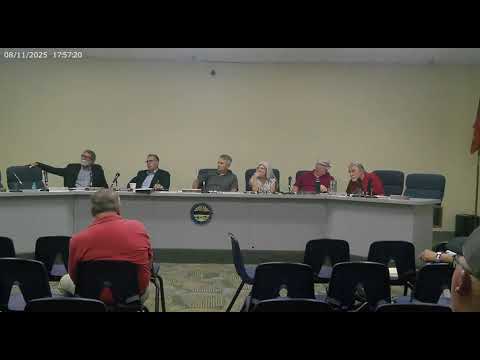
On Aug. 11 the City of Geneva council received an overview from Vanke Architects of a draft Geneva Park master plan and discussed concepts for Memorial Park, the dog park, parking reconfiguration, nature‑play features and improved trail connections.
On Aug. 11 the City of Geneva council received an overview from Vanke Architects of a draft Geneva Park master plan and discussed concepts for Memorial Park, the dog park, parking reconfiguration, nature‑play features and improved trail connections.
City staff introduced Jeff and Marie from Vanke Architects to present the firm’s analysis and concepts and described the package as “an exciting plan” that offers a long‑range vision for the city’s parks and play areas. Jeff with Vanke Architects walked council through national benchmarks and local comparisons, saying the industry guidance for parkland ranges “from 36 to 126 acres” per 1,000 residents and noting “every community is unique.”
The presentation then focused on Memorial Park and nearby facilities. Vanke’s materials and the discussion recommended retaining some existing facilities (including the track) while reconfiguring adjacent parking and circulation. Residents and council members asked about several site changes: closing or reassigning one of the park entrances to limit through‑driving near the dog park; moving existing parking toward the west side of Memorial Field to free up space for active uses; and keeping the running track in place. One resident said the track is well used and urged the council not to remove it; Vanke recommended keeping the track.
Vanke introduced “nature‑play” as an approach that uses natural materials and informal features — “picking a different book of getting the kids out to what’s natural in the world,” the presenter said — and recommended several small‑scale, low‑maintenance nature‑play prototypes. The consultants also proposed clearer pedestrian routes through underserviced neighborhoods north of Rotary Park and suggested that linking trails to existing civic destinations would create usable half‑mile walking loops and better overall connectivity.
Speakers at the meeting suggested easily implementable items. One resident proposed adding benches (noting a local scout had built several at low cost) and additional trash containers at the pickleball courts; another suggested simple parking shifts at Memorial Field to add activity space. Vanke noted some adjacent property uses — including a fire training center and wooded parcels — that shape where new park connections can be routed and said certain areas are unlikely to be developed as residential parkland.
City staff said they would make presentation materials available electronically on request and that Vanke would continue refining concepts after the site walkthroughs, noting the draft is a planning vision rather than a commitment to specific projects or funding. The presentation will inform future capital‑planning discussions and potential grant applications.
Next steps: Vanke will refine the draft plan to address the parking and circulation questions raised and staff will circulate the presentation materials electronically to council and the public. No formal council vote was taken on the draft at the Aug. 11 meeting.