Get Full Government Meeting Transcripts, Videos, & Alerts Forever!
Get email alerts on the Land Use topic
No spam. Unsubscribe anytime.
Harrisburg zoning board approves special exception for truck-wash used by Halal poultry hauler with conditions
Summary
The City of Harrisburg Zoning Hearing Board approved application 26‑13 to allow an indoor truck-and-cage-washing operation at 667 Schuylkill Street, used by a Halal poultry hauler. Approval included planning commission conditions plus board limits on hours, vehicle type and outdoor washing.
The City of Harrisburg Zoning Hearing Board approved a special exception for application 26‑13 to allow an indoor truck-and-cage‑washing operation at 667 Schuylkill Street, a property owned by 2463 Jefferson Street LLC, the board announced after a public hearing and testimony on Sept. 15, 2025.
The approval comes with the four conditions recommended by the planning commission — including obtaining necessary approvals from the city health inspector, the Pennsylvania Department of Agriculture and coordination with Capital Region Water (CRW) on wastewater handling — plus board‑imposed conditions that limit operations to 9 a.m. to 5 p.m., prohibit outdoor washing, ban tractor‑trailer service and bar on signage. The board motion also reiterated that no live animals will be kept on the premises.
The request, presented by landlord Craig Dunkel and his attorney Eric Hume, sought a special exception for a use “not specifically prohibited” by the zoning code: a private, indoor facility to wash crates and enclosed box trucks used by a Halal poultry business. Planning director Jeffrey Knight told the board the planning bureau and planning commission reviewed the application and recommended approval subject to conditions intended to ensure public health and infrastructure coordination.
At the hearing Hume said the facility would be leased to a single operator and “this would just be for a single operator related to their operation.” Dunkel described the proposed operation as a contained, conveyor‑style dishwashing system for plastic poultry crates and occasional interior truck cleaning; he said the washing equipment is “self contained” and that cleaning would occur with food‑safe detergents and drying cycles inside the building.
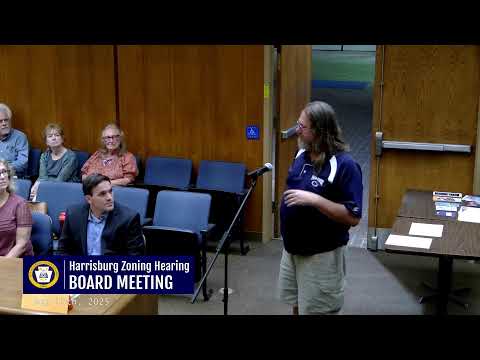
Neighbors and property owners who live on Schuylkill Street and the surrounding block testified in opposition or with concerns. Residents raised safety questions about truck movements on a narrow residential street, worry about odors and possible residue from poultry shipments, and frustration about exterior maintenance at the site prior to tenant occupancy. Esmeralda Nazario, who lives at 672 Schuylkill Street, told the board she is “worried about the kids” because of trucks entering and exiting across from a residential sidewalk. Several neighbors said they had observed large delivery vehicles and blue crates at the property before the hearing.
Attorney Anthony Dixon, representing objector James Robinson, questioned whether the tenant or leaseholder would commit to the operational limits described at the hearing; Dunkel replied he has a written lease and said the tenant has three to four enclosed box trucks and would not bring tractor‑trailers to the site. Dunkel estimated the tenant’s vehicle visits would be “maybe once a week, maybe twice a week” or up to several days per week depending on routing.
Knight told the board that planning staff and the planning commission recommended the special exception because the site sits within a mixed‑use corridor and staff judged that on‑site safeguards and the recommended conditions could address likely impacts. Planning staff cited specific conditions: the applicant must secure approvals from the city health inspector and relevant state agencies, coordinate with Capital Region Water for appropriate collection and treatment of on‑site water, and install an ADA‑compliant sidewalk and curb cut along the Schuylkill Street frontage. City staff noted CRW’s pretreatment and permitting thresholds and recommended testing and coordination to ensure any wastewater meets system limits before discharge.
Landlord and applicant testimony said the building is roughly 3,500–4,000 square feet, with two roll‑up doors and interior floor drains, and that utilities (water, sewer, electric) are available. Dunkel said the structure was formerly used as an auto body garage and later as a ghost‑kitchen storage site; he testified the tenant would not base employees there full time and that no live animals would be present.
After public comment and a short recess the board voted to approve application 26‑13. The motion adopting the planning commission’s four recommended conditions was expanded by the board to add: no outdoor washing of vehicles or cages; no live animals on site; hours limited to 9 a.m.–5 p.m.; no signage; and no tractor‑trailer‑size vehicles served on the premises. The board said a written decision will follow within 45 days.
The board and staff repeatedly noted that compliance with city and state health and environmental permits is required before a second‑unit certificate of occupancy or operational sign‑off; the board’s approval is for zoning relief, and other permits and inspections remain prerequisites to operation. The planning director told the board that CRW and the city’s codes and health staff would be the agencies to enforce wastewater and health requirements.
The board’s written decision will state the full conditions and any required follow‑up inspections. Neighbor concerns about traffic, odors and ongoing exterior maintenance were recorded in the hearing record and will be part of the decision file.