Get Full Government Meeting Transcripts, Videos, & Alerts Forever!
Get email alerts on the Signs topic
No spam. Unsubscribe anytime.
Local sign businesses, industry group urge changes to Caldwells new sign code
Summary
Sign shops and a national sign-industry consultant told the Caldwell City Council the April sign-code rewrite will make many existing signs nonconforming and hinder new businesses; they asked the council to refer the code back to planning and zoning and to hold a stakeholder workshop.
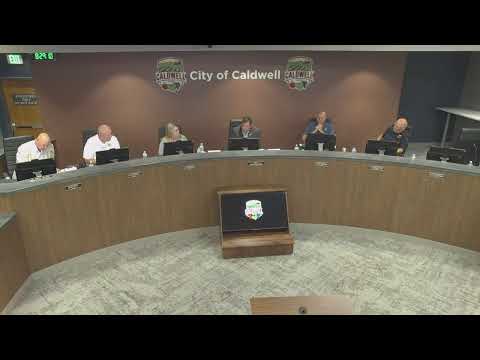
Aaron Vance, a Caldwell sign-shop owner, and James Carpenter of the Northwest Sign Council told the Caldwell City Council on July 21 that the city—s April rewrite of its sign regulations will create hardship for local businesses and make many existing signs nonconforming.
Vance said his family has operated signs in Caldwell since 1972 and that he and his permit staff were surprised by the new rules when they tried to permit two identical school signs earlier this year. "We have been informed on the code change before it happened, and this specific code change, we were not. It caught us blindside when we tried to put in a permit," Vance said.
Carpenter, who described himself as a consultant who helps jurisdictions write practical sign ordinances, told council the new code conflicts with the city—s comprehensive plan goals to attract regional investment and support small businesses. He cited specific provisions he said are problematic: reduced allowable freestanding monument sizes (24 to 60 square feet under the new table), a limit that would make many existing ground signs nonconforming; an electronic message center (EMC) allowance of only 25% of permitted square footage that yields very small EMC areas in most districts; and an illumination standard set at 750 nits rather than a foot-candle approach he said is easier to enforce.
"These new standards for freestanding signs will result in many of the existing ground signs that become nonconforming," Carpenter said. He recommended allowing pole signs with pole covers (as in the previous code), permitting a larger share of EMC face area where appropriate, switching to a foot-candle standard for brightness, and removing special-use-permit requirements that give excessive discretion for EMC approvals.
Planning staff, represented in public remarks by Robin (planning staff), said the sign-code rewrite followed two workshops, a four-hour workshop with the Planning and Zoning Commission and two public hearings that were advertised on the city website and social media. Staff said there were no recommended amendments to the sign code introduced at those public meetings.
Councilors and staff discussed next steps. Multiple councilors suggested a workshop format that would gather sign companies, property or business owners, planning and zoning, and residents for an informal discussion before any rushed action. "I think a workshop is probably better for us right now so that we can bring everybody together and get all those questions answered a little more informally," one councilor said.
What happened next: Council did not take a formal vote on the sign code at the July 21 meeting. Several councilors and staff signaled willingness to schedule a focused workshop and to consider referring the code back to the Planning and Zoning Commission and to affected stakeholders.
Why it matters: Several local businesses said they are already losing potential work because signs that are legal in neighboring cities became nonconforming in Caldwell after the rewrite. City staff said the code change was advertised and heard but that targeted follow-up with sign-industry stakeholders could help resolve practical conflicts without further surprise to businesses.
Requests and clarifications: The sign-industry speakers requested (1) that pole signs with pole covers be allowed as before, (2) that EMC allowances be increased or measured differently, (3) that brightness be regulated by foot-candles rather than nits, and (4) that EMCs be permitted by right with objective standards rather than by special-use permit. Planning staff did not commit to changes at the meeting but said a workshop or referral to planning and zoning was an option.
Speakers quoted in this article spoke during the audience participation and new-business discussion at the July 21 meeting; their remarks are recorded in the meeting transcript.