Get Full Government Meeting Transcripts, Videos, & Alerts Forever!
Get email alerts on the Budget topic
No spam. Unsubscribe anytime.
Evansville City corrections board approves revised budgets after state 10% cut
Summary
Facing a recent 10% reduction in state DOC grant funding, the Evansville City Community Corrections Board approved revised budgets for work release, treatment court and electronic home detention and heard projections of future deficits and possible deeper cuts in 2027.
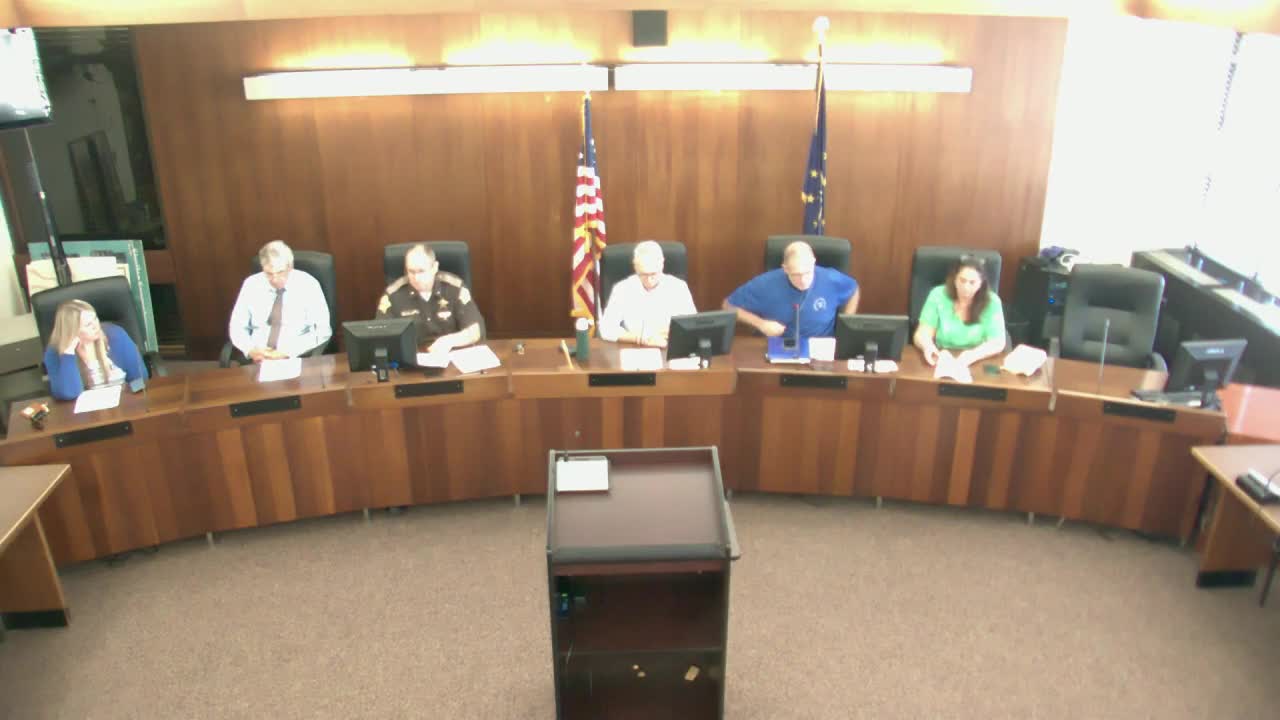
The Evansville City Community Corrections Board on an undisclosed meeting date approved revised budgets for its work release, treatment court and electronic home detention programs after state Department of Corrections grants were reduced roughly 10 percent.
The revisions, presented by Sheriff James House, shift greater reliance to user fees and reserves to cover a roughly $270,000 reduction the board was told came from the state’s cut to DOC grant funding. "We are not in dire straits or anything like that today," Sheriff James House said, but he warned the board’s five-year projections show reserves eroding and a likely deficit by 2027–2028 if additional revenues are not found.
Board members said the cuts will force the county to use accumulated fee revenue to sustain operations. Financial statements presented at the meeting showed balances of $535,435 for work release, $211,997 for the treatment court, $266,658 for home detention and $107,775 for the county’s CTP fund; staff said user fees will be used to supplement after a 10% budget reduction.
Why it matters: the corrections programs rely on state DOC grant funding to pay personnel and operating costs; board members said labor is the vast majority of costs and further cuts could require staff reductions, which would reduce both capacity and revenue produced by program operations.
Sheriff House told the board the county historically received about $2,700,000 a year from DOC grants for salaries and other costs. He said the state’s recent 10% reduction removed about $270,000 from the county’s grants and that the DOC board asked local programs to prepare for a potential $5,000,000 statewide cut in 2027 that could trigger more local reductions. "Every time we lose $100,000 we say, well, there's a position we have to fund somewhere else," he said.
Board members discussed limitations to cutting capacity as a cost-saving measure: reducing the number of people housed does not reduce supervision staffing proportionally and would also reduce fee revenue. The board said it will continue to search for grants and other revenue sources and consider lobbying state officials.
Formal votes: the board approved three separate revised budgets: the work release revised budget, the treatment court revised budget and the community supervision (electronic home detention) revised budget. Motions to approve were made and seconded during the meeting; each motion was called and approved by voice vote. The meeting transcript records the motions and successful outcomes but does not provide a roll-call tally.
The board also heard that some external grant programs may partially offset losses: Sheriff House said he heard an IOCS representative was exploring ways to backfill drug court grant cuts with smaller awards, though he described that prospect as uncertain.
Board members said they would continue to monitor grant opportunities and internal revenue options; no specific new revenue sources were adopted during the meeting.
The board scheduled no immediate further action beyond continued pursuit of grants and internal proposals to shore up reserves.