Get Full Government Meeting Transcripts, Videos, & Alerts Forever!
Get email alerts on the Open Space Development Oak Creek topic
No spam. Unsubscribe anytime.
Irvine to delay ballot decision on Oak Creek after council hears four draft measures
Summary
After receiving a staff presentation outlining four draft ballot measures about open-space protections and a possible exception for Oak Creek Golf Course, the Irvine City Council voted unanimously to continue the matter to early 2026 for further analysis and public review.
The Irvine City Council continued consideration of proposed ballot measures tied to Oak Creek Golf Course and broader open-space protections to early 2026, after a city attorney presentation and more than two hours of public comment.
City Attorney Jeff Melching presented four draft measures the council had requested on July 22: (1) a combined "voter protection" measure that would require voter approval before specified parks and open-space lands may be converted and that would permit a future redesignation of Oak Creek only if the city acquired at least 315 acres of compensating open space; (2) a protection-only measure that would impose voter approval requirements without the Oak Creek exception; (3) an Oak Creek-exception-only measure that would let the council change Oak Creek's designation if compensating land is provided; and (4) a direct general-plan amendment to redesignate Oak Creek from "preservation" to "medium–high density residential." Melching described the two recurring concepts as "voter protection" and the "Oak Creek exception."
The presentation included maps and proposed additions to the city's general plan and conservation/open-space element. Melching said the proposed overlay would extend voter approval protections beyond the 1988 initiative into roughly 1,485 additional acres designated open space by the general plan and another roughly 590 acres of parks that do not currently carry open-space general-plan designations, for a total of approximately 10,575 acres that would be overlaid by the proposed voter-protection designation. He also noted the council faces logistics and legal constraints: a standalone special election would cost about $2,000,000 and a project-level environmental review under the California Environmental Quality Act (CEQA) could take 12–18 months.
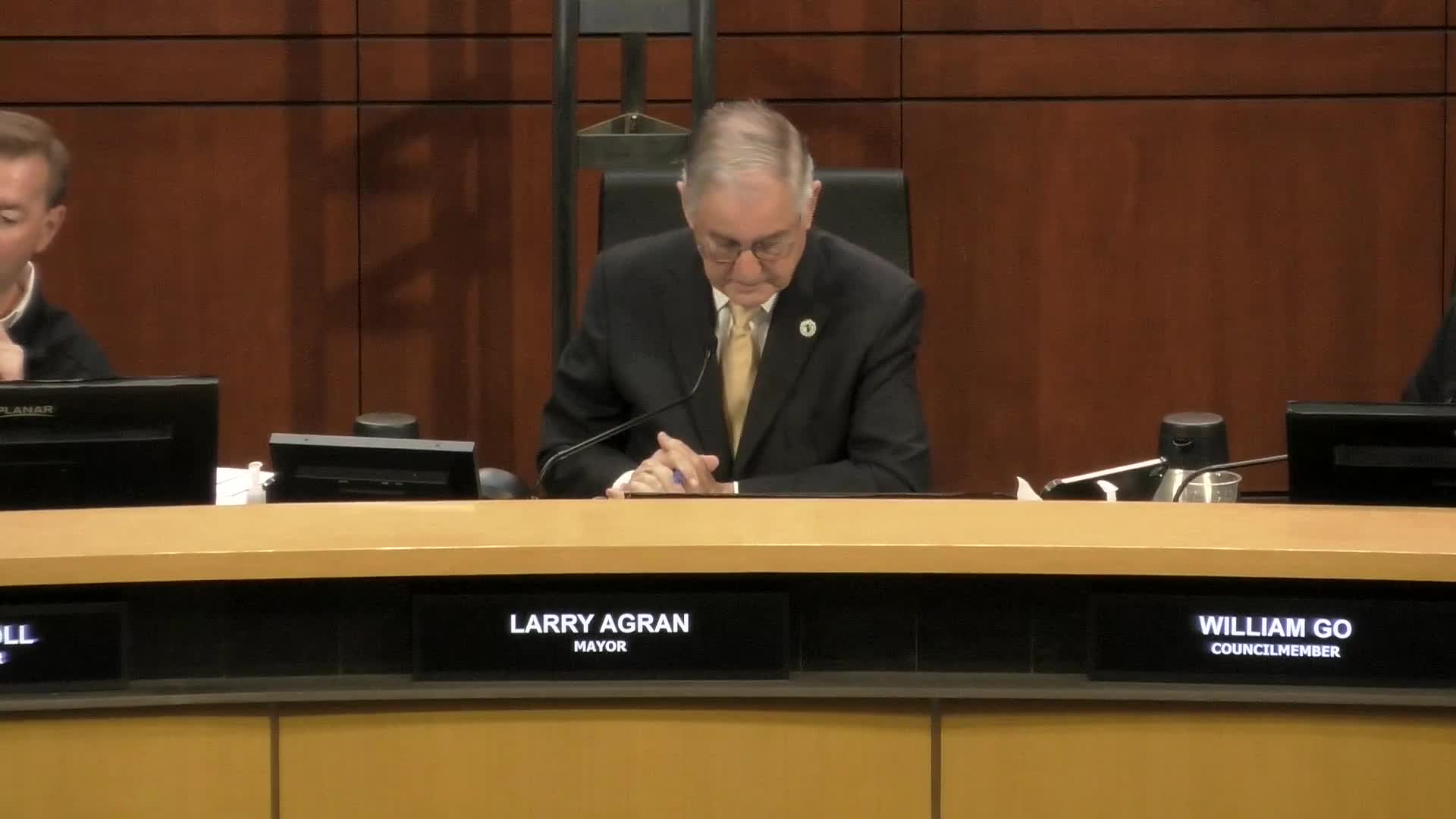
Mayor Agren said a November special election would be impractical and that the matter should return "after the first of the year" to allow environmental review, technical analysis and public vetting. The council voted to continue the item to an early-2026 meeting (the mayor moved the continuance; Councilmember Tresita seconded), and the motion passed 7–0.
Public commenters were overwhelmingly concerned about protecting Oak Creek as permanent open space, enforcing an easement the city says the Irvine Company has not recorded, and the environmental and traffic impacts of a 3,100-unit development that has been discussed for the Oak Creek site. Michael LeBlanc, speaking on behalf of Save Irvine Open Space, called Measure 1 "a charade" if it would permit Oak Creek's redevelopment in exchange for acreage that is distant and dissimilar. Other residents urged straightforward, single-question ballot language limited to Oak Creek and asked the city to require a full independent EIR before placing any measure on a ballot. Supporters of the project who spoke described the site as a viable location for housing and urged balancing housing production and open-space acquisition.
City staff and the city attorney identified next steps should the council choose to place measures on a ballot: (1) finalize ballot questions and titles, (2) prepare the city attorney impartial analysis and conforming zoning-code amendments, (3) determine whether and when to schedule a special election versus placing measures on the June 2026 primary, and (4) complete required CEQA review prior to any binding action that would change general-plan designations. The council specifically directed continuation for further work; staff did not place any final ballot language or scheduling decision on the record at tonight's meeting.
The continuance preserves the record of the presentation and citizen input while allowing staff and the council additional time to refine ballot text, to resolve legal questions raised by residents (including the status of the Oak Creek easement), and to sequence any CEQA review with potential ballot action.
A single-page handout and the packet of draft measures prepared by the city attorney were referenced during the presentation; no item-specific vote authorizing placement of a ballot measure occurred at this meeting.