Get Full Government Meeting Transcripts, Videos, & Alerts Forever!
Get email alerts on the Commercial Development topic
No spam. Unsubscribe anytime.
Planning commission tables 7 Brew drive‑through plan after traffic, noise and neighbor buffer concerns
Summary
The commission tabled a proposal for a 7 Brew drive‑through at 2952 Lehigh Street after staff and commissioners raised outstanding concerns about vehicular access, queuing, amplified sound, lighting, and buffering for adjacent residential properties; the applicant will return with revised traffic, noise and landscaping information.
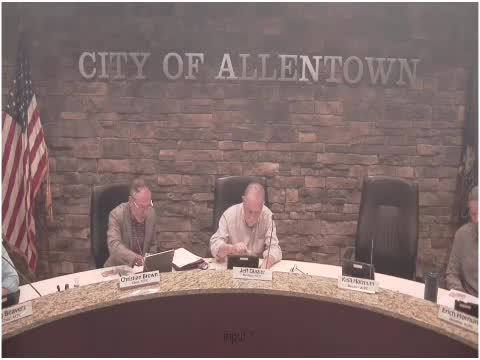
The Allentown City Planning Commission voted to table a proposed 7 Brew drive‑through coffee stand at 2952 Lehigh Street after an extended discussion about access, queuing, noise and impacts on an adjacent residential property.
The staff report described the site as a B3 (highway business) parcel on a major commercial corridor; while the proposed use is permitted in the zone, staff and the LVPC urged additional information because the project would be highly vehicle‑oriented, potentially produce long vehicle queues and introduce amplified outdoor music and exterior lighting near single‑family homes.
Travis Sodom, a franchise partner and director of real estate for 7 Brew, described the operation model to the commission: “If Chick fil A and Starbucks were married and had a baby, that's us,” he said, explaining the concept’s emphasis on quick drive‑through service, staff taking orders directly (no speaker boxes) and two staff members handing out drinks beneath a canopy intended to speed throughput. Sodom said the operator’s target order‑to‑exit time after training is roughly four minutes and that typical peak queueing after openings runs 14–16 cars; traffic studies in the packet modeled a higher theoretical queuing capacity (as many as 39 cars) at maximum demand.
Staff and commissioners flagged four primary concerns: access/egress and left‑turn conflicts on Lehigh Street, potential queuing that could spill into the travel lanes, noise from outdoor speakers and vehicle activity, and light spillover for the directly adjacent residential properties (including several backyard pools). PennDOT review and the requirement for a Highway Occupancy Permit were discussed; staff noted PennDOT had begun review and additional coordination is required.
Traffic and access: Several commissioners said the site’s curb cut and combined in/out driveway raise a risk of interacting unsafely with the center left‑turn lane on Lehigh Street. City traffic staff and a city reviewer suggested the applicant examine alternatives such as separate dedicated in and out lanes, or two exit lanes (right and left), and to continue coordination with PennDOT to reduce conflict with the center turn lane. The applicant said they had worked with PennDOT and were in a second round of agency comments; the applicant opposed a write‑in/right‑out restriction that would preclude left turns into the site, saying full access is important to the operation.
Noise, lighting and buffers: City staff said the applicant typically uses amplified outdoor music at other locations and that lighting (7 Brew often uses neon/LED signage) must be shown to limit spillover to abutting residences. Commissioners recommended an enhanced evergreen buffer (for example, dense arborvitae) combined with the existing vinyl fence and asked the applicant to show speaker locations, their orientation and proposed decibel limits on future plans so the city can evaluate enforceable noise controls.
Operational commitments and other details: The applicant said trash pickup can be scheduled during off‑peak hours and that the stand will use heaters and rotated employees under the canopy for weather. The applicant also described a small walk‑up window for non‑vehicular customers and said they can provide bike racks. City staff reiterated that revised materials should show concrete commitments on access geometry, queuing assumptions, listener‑oriented speaker placement and sound mitigation, lighting cutoffs and landscape buffers.
Commission action: The commission voted to table the application while the applicant coordinates further with city staff and PennDOT and returns with revised traffic analyses, demonstrable buffering plans and plan notes showing how sound and light will be controlled. The applicant and staff agreed to extend municipal review timelines to allow follow‑up submissions.