Get Full Government Meeting Transcripts, Videos, & Alerts Forever!
Get email alerts on the County Budget Courts topic
No spam. Unsubscribe anytime.
Scotts Bluff County reviews judges— and court-related budgets; appointed counsel, jury and personnel costs draw attention
Summary
During a budget hearing, county officials and court staff reviewed proposed spending for district judges, the district court clerk, the county attorney—s office and probation. Discussion focused on appointed counsel costs, jury fees, staff vacancies and several line items with potential reductions.
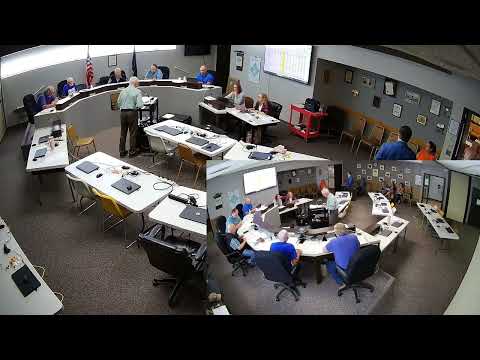
Scotts Bluff County commissioners and court staff reviewed proposed budgets for the county—s district judges, the clerk of district court, the county attorney—s office and probation during a budget hearing, discussing places to trim costs while reserving funds for appointed counsel, juries and staffing needs.
County budget staff and judges ran through line items for the district judges— account, highlighting low recent use of some categories and identifying a few targets for savings while preserving contingency for major, unpredictable costs. A judge told commissioners the office has about $478.52 in remaining credit on a postage machine shared with the County Attorney—s Office and recommended keeping some money in the postage line while removing an obsolete phone expense. The judge also said the office will seek subscription changes with Thomson Reuters/West to remove seldom-used hard-bound titles and keep a small subscription budget for core research volumes: "I would like you to leave 10 in there for now," the judge said about the subscriptions line.
Appointed counsel remained the single largest pressure point. Judges and staff said they increased the appointed-counsel line by $20,000 to cover expected billing in several ongoing homicide-level matters and related expert and travel expenses, noting the timing and total costs of those cases are uncertain. Commissioners asked whether per-hour rates for court-appointed private counsel had changed; staff said rates had been adjusted in prior years and that billed hours and expert costs are the major drivers of the line.
Other court-line items discussed included: - Part-time bailiff pay: presenters recommended restoring a previously used $22.50 hourly rate as a contingency for short-term coverage when the regular bailiff is unavailable. - A previously budgeted "district court costs" line of about $3,000 that staff said requires research because it may no longer be used or may have been moved into another line. - Office-equipment repair, office supplies and a modest furniture or repair amount retained for occasional replacements.
Clerk of the district court and court-administration costs also drew detailed review. The clerk—s presenter said jury fees and postage were the largest variables on that budget. Jury fees, described as "dynamic" by the clerk because daily jury cost depends on juror count, mileage and meal/witness needs, were budgeted higher this year after a year with intervening, costly trials and travel to get expert witnesses. The clerk described jury-day costs as driven by mileage rules (jurors living outside city limits receive mileage), witness payment needs and any travel to bring experts to testify.
Probation and related grant-funded services were discussed separately. The probation presenter said most operating costs are grant-funded and that only the probation officer—s salary and a few core expenses remain on the county tax-asking. She reported a reduction in grant-funded expenditures carried through the county budget because she returned approximately $40,000 in unspent grant funds and said she was deliberately presenting conservative revenue numbers after years of fluctuation.
The county attorney also presented a larger budget review with recruitment and personnel as central issues. The county attorney reported the office is carrying more cases than existing staff can sustainably manage and reiterated a staffing request for additional full-time attorneys (5 full-time attorneys were described as the target staffing level based on historic caseload). The office reported costs that have risen or remained uncertain because of outside dependencies: autopsy and transport costs rose after the county lost a longstanding local forensic pathologist, and the county has instead been transporting bodies to regional centers for autopsy. That change, combined with occasional out-of-area expert testimony, has increased expense variability.
Commissioners and staff repeatedly returned to a broader budget tradeoff: whether to base tax-asking on prior-year actuals rather than a higher theoretical demand figure. One commissioner argued using last year—s actuals would reduce the county—s tax ask and avoid continually building a reserve, while others said some unpredictability in criminal filings and appointed-counsel needs requires maintaining contingency.
The meeting produced no legal commitments beyond direction to research a small number of specific line items (for example, the $3,000 district-court-costs line and subscription-package options) and to continue monitoring appointed-counsel exposure. The board approved the day—s meeting agenda at the start of the session by vote.
The budget review continues in subsequent hearings; commissioners indicated they will revisit these court-related lines as they finalize the county—s tax-asking and make further reductions elsewhere if necessary.