Get Full Government Meeting Transcripts, Videos, & Alerts Forever!
Get email alerts on the Immigration Enforcement And Local Fiscal Risk topic
No spam. Unsubscribe anytime.
Resident warns White County commissioners of fiscal, civil-rights risks from local partnership with ICE
Summary
A resident, identified only as Hillary, told commissioners that a partnership between Sparta's police department and U.S. Immigration and Customs Enforcement could expose local taxpayers to legal costs from wrongful detentions and urged transparency, safeguards and that the county discourage deeper involvement.
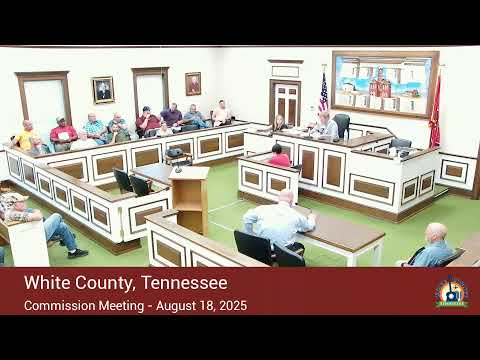
A White County resident identified as Hillary told the commission during public comment that a partnership between the Sparta Police Department and U.S. Immigration and Customs Enforcement (ICE) could create significant fiscal and civil-rights risks for local taxpayers.
Hillary urged commissioners to press the Sparta sheriff and city leadership to reconsider or limit any deeper involvement with ICE. She described the ICE 287(g) task-force model — under which local officers are deputized to perform immigration-enforcement duties — and warned it can make local officers an extension of federal immigration enforcement, with consequences for civil liberties and local budgets.
“ICE doesn’t cover these bills for lawsuits that are filed for the wrongful arrest,” Hillary said, adding that the costs typically fall on local governments and taxpayers. She cited several court actions and settlements from other jurisdictions, saying those cases show how quickly litigation costs can grow. Examples she cited on the record included large settlements and claims nationally and a local example of daily detention-cost shortfalls: she said Knox County had paid nearly $130,000 of taxpayer money this summer to cover the gap between detention costs and ICE reimbursement.
Hillary urged the commission to take three steps: urge the White County sheriff not to participate in ICE enforcement that would increase local fiscal risk; encourage Sparta’s leadership to reconsider an existing ICE partnership; and insist on strong safeguards — judicial warrants, clear policies and officer training — if the partnership continues.
Why it matters: the resident framed the issue as a county fiscal and civil-rights concern, saying local taxpayers can bear costs for lawsuits or detention reimbursements even when the agreement is with a city police department. Commissioners did not take formal action on the remarks during the meeting.
Context and evidence: Hillary referenced the ICE 287(g) model explicitly, discussed legal claims and settlements reported in other jurisdictions, and identified Sparta’s police agreement as funded through the city budget rather than the county. Her remarks were delivered during the public-comment portion of the meeting and were not followed by a commission motion or vote.