Get Full Government Meeting Transcripts, Videos, & Alerts Forever!
Get email alerts on the Transportation topic
No spam. Unsubscribe anytime.
Troy board approves bus purchases and route schedule; district outlines fleet lifecycle
Summary
Trustees approved a bus bid resolution and the district’s 2025–26 bus-stop schedule; staff described costs, delivery delays and the district’s 15-year bus-rotation plan.
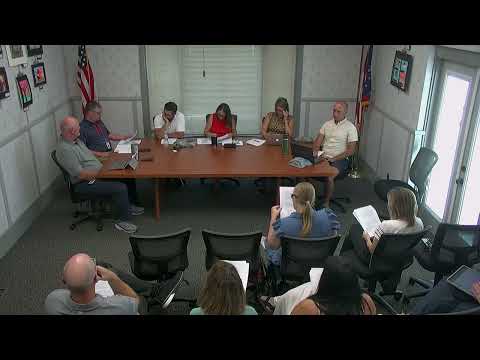
TROY — The Troy City School Board approved a bus bid resolution and the district’s bus-stop schedule for the 2025–26 school year after staff described fleet needs, lead times and costs.
Board members passed a resolution to participate in a cooperative bus bid and authorized ordering buses through the Southwest Ohio EPC package; the board’s resolution was recorded as moved and seconded and approved by roll call.
District staff told the board that typical delivery lead time for ordered buses is now about 18 months. The treasurer and transportation staff said three buses ordered in the prior purchase cycle were treated as last year’s expense and that a further order will be for the 2026–27 school year because of delivery timing.
Staff provided cost figures: a standard route bus was described as “just over $140,000,” while a special-education bus was placed in the mid-$150,000 range. They noted electric buses or hydrogen alternatives can cost substantially more.
The board was given details on the fleet: the district keeps roughly 39–40 buses in inventory, operates on a 15-year replacement rotation for purchased buses, and typically has about eight to nine backup vehicles. Staff said used buses are traded in or sold through dealers when retired.
Trustees also approved the 2025–26 bus-stop schedule. Transportation staff explained that the published routes are an educated plan subject to timing and small adjustments after school starts, when routes are timed and parents finalize transportation sign-ups.
Board members discussed operational realities such as multi-house stops, new subdivisions that prompt routing changes, and how student choices (some high-school students find alternate rides) can change ridership on a short timetable. No dissent was recorded regarding the bus purchases or schedule approvals.