Get Full Government Meeting Transcripts, Videos, & Alerts Forever!
Leesburg planning commission continues zoning rewrite, debates nonconformities, enforcement and definitions
Summary
Leesburg — The Leesburg Planning Commission at its work session reviewed Articles 7–9 of a proposed zoning ordinance rewrite, focusing on rules for nonconforming uses and structures, enforcement procedures and penalties, and glossary/word‑usage definitions.
Leesburg — The Leesburg Planning Commission on [date not specified] continued its review of a first draft of a zoning ordinance rewrite, concentrating on Article 7 (nonconformities), Article 8 (enforcement, violations and penalties) and Article 9 (word usage and definitions).
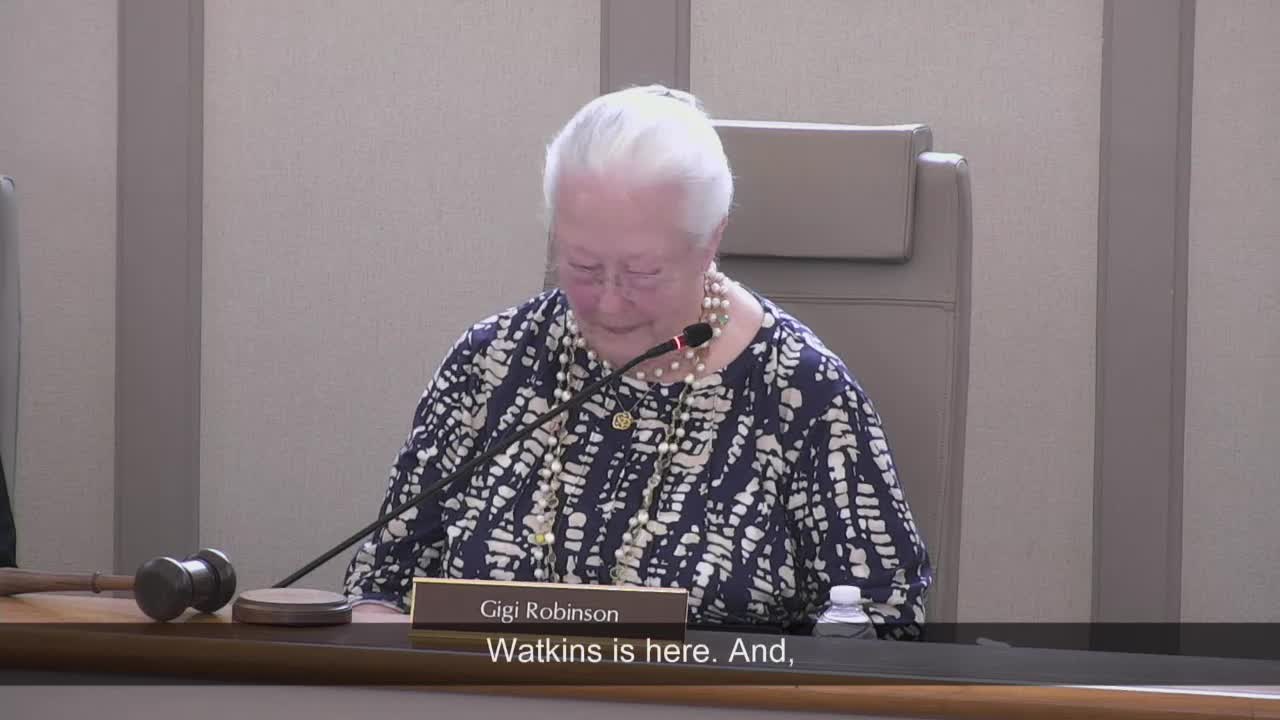
Director David framed the session, saying the rewrite project began in 2023 and that the first draft was released March 6, 2025, followed by a 60‑day public comment period. Mike Watkins, the town's zoning administrator, joined staff in explaining key points, including protections for legally established uses and structures that no longer meet current standards, the burden of proof on property owners to document lawful preexisting status, and the town's enforcement tools.
The commission spent the bulk of discussion on Article 7, which addresses nonconformities — uses, structures, lots or site features that were lawful when established but no longer conform because the ordinance changed. Staff described typical examples (a business now located in a residential zone, a building not meeting current setbacks or height limits, smaller lots created under prior rules, and legacy signs). According to staff, nonconforming uses may continue if they were lawful when created, but expansions generally must meet current requirements and a nonconforming use can be lost if the use is vacant or inactive for two or more years. Nonconforming structures may be rebuilt within the same footprint if destroyed by causes beyond the owner's control, typically within two years.
C…
Already have an account? Log in
Subscribe to keep reading
Unlock the rest of this article — and every article on Citizen Portal.
- Unlimited articles
- AI-powered breakdowns of topics, speakers, decisions, and budgets
- Instant alerts when your location has a new meeting
- Follow topics and more locations
- 1,000 AI Insights / month, plus AI Chat