Public commenters urge plaque for Trinity River Audubon Center, public‑art location for William Blair Park and raise South Dallas business access for FIFA
Loading...
Summary
Three public speakers supported a proposed historical marker at Trinity River Audubon Center, recommended prompt park review of a public‑art installation at William Blair Park, and asked city staff to ensure South Dallas businesses can participate in upcoming FIFA events.
Three public commenters addressed the Park and Recreation Board on items including a historical marker at the Trinity River Audubon Center, a public‑art installation at William Blair Park, and economic opportunities tied to FIFA events in South Dallas.
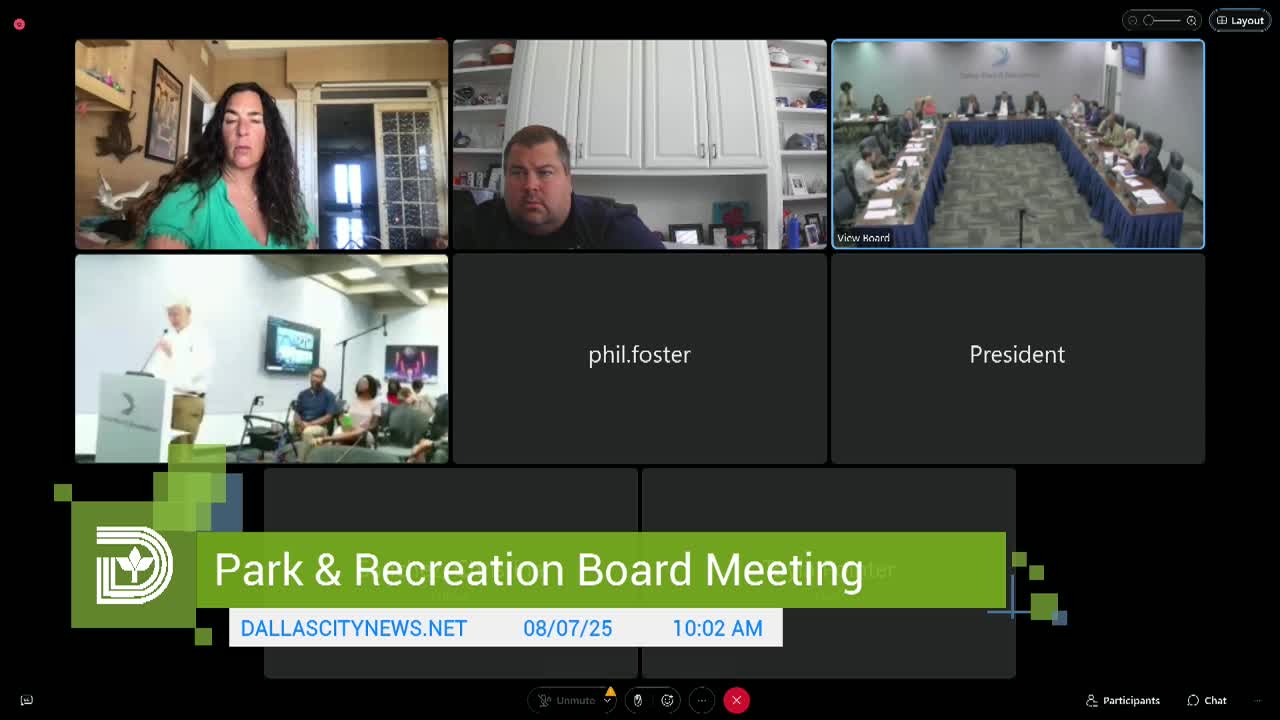
Ken Roberts said he supported the agenda item about a marker at the Trinity River Audubon Center and reviewed the site’s industrial history and reclamation: “My name is Ken Roberts, and I'm speaking in support of the agenda item on the water. Trinity River Audubon Center is still a part,” he told the board. Roberts summarized the site’s history of sand and gravel mining, landfill operations and the later environmental cleanup and restoration that led to the center’s opening.
Zach Thompson, who identified his address as 3608 South Fitzhugh, praised the transfer of responsibilities to Dallas Park and Recreation and asked staff to ensure property owners in the South Dallas Airport area are included in planning. Thompson also asked the department to ensure African American and Spanish‑language business participation in the city’s FIFA‑related activity planning.
Hassani Burton, founder of the South Dallas Renaissance Initiative and a member of the City of Dallas Public Art Committee, said the committee had approved a 2025–2028 plan that includes a piece sited for William Blair Park. Burton asked the board to approve a location promptly once the public art committee forwards the site proposal and offered to assist the board and staff as the review proceeds.
Ending: Board members thanked the speakers and staff indicated the marker/ commemoration process would advance through the historical commission and state review after board concurrence; staff said the public‑art and business‑opportunity issues would be coordinated with relevant departmental staff.