Get Full Government Meeting Transcripts, Videos, & Alerts Forever!
Get email alerts on the Child Health Safety topic
No spam. Unsubscribe anytime.
Ten‑year community effort to reduce African American child deaths shows program gains but county data rose during COVID years, presenters say
Summary
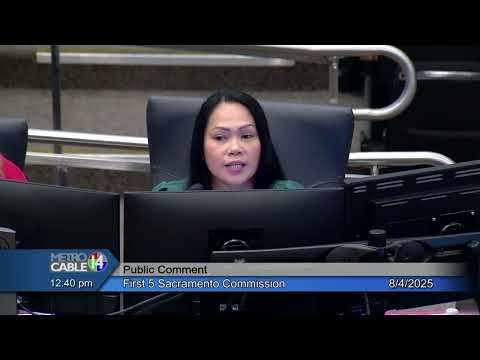
First 5 Sacramento and community partners reported program outcomes and countywide data Aug. 4, saying pregnancy peer support, family resource center services and a safe‑sleep campaign have reached hundreds of caregivers and stabilized hundreds of families, while countywide infant mortality for African American births rose during the 2020–2022 COVID years.
First 5 Sacramento and partner agencies on Aug. 4 presented a multi‑pronged, decade‑long effort to reduce disproportionate rates of African American child deaths and described both program outcomes and recent countywide trends.
Linda Fong Samara, the long‑time lead on the reduction effort, and partners from the Sierra Health Foundation and external evaluators at Applied Survey Research described a collective impact model that combines targeted neighborhood work, family resource centers, pregnancy peer support, safe‑sleep education and a “concrete needs” rapid‑response program.
What programs reported - Black Mothers United (BMU) pregnancy peer support: Evaluators reported that in the 2020–2022 period there were 241 BMU births and one infant death during the 12‑month follow‑up window (a numerical rate of 4.1 deaths per 1,000 births for BMU participants). Applied Survey Research reported that, for the 2020–2022 births, the BMU infant mortality rate was lower than the countywide African American infant mortality rate (12 per 1,000) and lower than the countywide total rate (5.2 per 1,000) for the same period. Program data showed improved enrollment in supports such as WIC and CalWORKs and reductions in self‑reported anxiety and moderate‑to‑severe PHQ‑9 depression scores for matched participants at postpartum follow‑up; doulas were associated with especially positive birth outcomes in the cohort cited (24 of 26 infants delivered full term with healthy birth weight when a doula provided support).
- Safe Sleep Baby: More than 1,000 caregivers received the one‑hour workshop in the fiscal year and more than 600 cribs were distributed across cohorts; about one‑third of training participants and one‑third of crib recipients were African American. Follow‑up calls with samples of participants showed increases in reported safe‑sleep practices; African American participants were significantly more likely to report always placing infants on their backs at follow‑up compared to intentions measured at intake.
- Family Resource Center programs (Birth & Beyond, Mann Arcade/Valley High Village): Home‑visiting, group parenting education and crisis case management participants reported increases in protective factors, parenting knowledge and access to immediate needs. Case management examples included connecting families to diapers, food boxes, housing leads and temporary transportation that families said helped them stabilize and move to longer‑term housing.
- Concrete Needs rapid‑response funding: Community partners described stabilizing 363 families in identified high‑risk ZIP codes, with $787,000 allocated to immediate needs such as emergency hotel stays, rental and mortgage assistance, transportation, groceries and furniture. Partners said the stabilization was typically coupled with ongoing case management to address durable barriers.
Countywide trends and context Applied Survey Research and partners emphasized that recent countywide data include calendar years 2020–2022—the period most affected by the COVID‑19 pandemic and related service disruptions. Evaluators reported that the county’s African American infant mortality rate rose to 12 per 1,000 births for 2020–2022, an increase versus prior benchmark periods. Staff and presenters said the pandemic likely contributed to service access disruptions and other stressors that affected outcomes; they cautioned that the pandemic years complicate direct interpretation of trend lines.
Community testimony Multiple community partners and program participants addressed the commission: Heart Health First and Black Mothers United staff described hesitancy among some mothers to engage during the pandemic and a rebound in face‑to‑face enrollment as safety concerns eased. A parent served by the Roberts Family Development Center described receiving wraparound help after a family medical emergency; program staff said the intervention included housing assistance and other services. Providers emphasized the importance of trusted community partners and long‑term relationships for reaching families in crisis.
Why it matters Presenters said the combined strategy—community‑led entry points, targeted rapid response for concrete needs and perinatal peer support—has demonstrable program success for participants and helps reduce risks for infants and families in the neighborhoods served. They also noted that countywide metrics remain uneven and that the pandemic appears to have reversed some earlier gains in certain outcomes.
Next steps Presenters said First 5 and partners will finalize a new strategic plan for the RAACD work that incorporates community input gathered during town halls and advisory sessions, including priorities to reduce disparities and to build long‑term, thriving, healthy communities. Evaluators and providers asked commissioners to sustain partnerships and funding that support both immediate stabilization and longer‑term systems change.