Get Full Government Meeting Transcripts, Videos, & Alerts Forever!
Get email alerts on the Solid Waste And Ossf Enforcement topic
No spam. Unsubscribe anytime.
Grimes County officials review solid-waste, 9-1-1 and septic-enforcement budgets; staff outline limits on proactive inspections
Summary
Kat Lee, department head for 9-1-1 addressing, environmental services and solid waste, presented Grimes County’s FY2026 requests for operations at five disposal sites, two countywide cleanups and 9-1-1 addressing and described limits on OSSF enforcement when no formal complaints are filed.
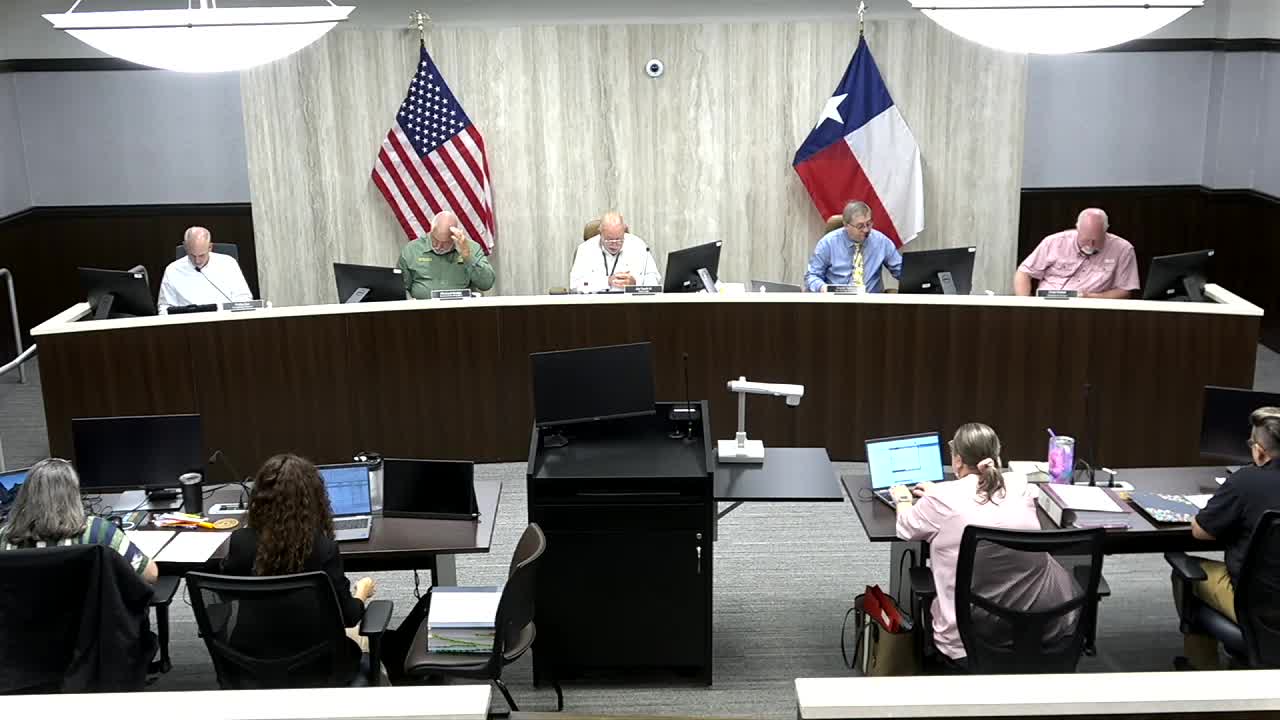
Kat Lee, department head for 9-1-1 addressing, environmental services and solid waste for Grimes County, presented her FY2026 budget requests to the Commissioners Court on July 29 and described ongoing operations at five county disposal sites, planned cleanup events and constraints on onsite sewage facility (OSSF) enforcement.
Lee told the court she has one full-time employee who runs the BDAS site and five part-time employees who staff the other sites. "We have 5 sites," Lee said, describing a staff structure of one full-time site manager and multiple part-time attendants. She asked the court to fund recurring items including fuel, vehicle maintenance, sign materials and two annual county cleanups.
The county judge explained the preliminary budget includes a proposed $1.60 hourly increase for every county employee and that the judge did not raise most departments' fuel lines because pump prices are down and a new state law exempts county employees from paying the 20¢-per-gallon highway tax at county fuel depots. "The governor has indeed signed the new legislation that exempts county employees from having to pay the highway tax on fuel which is 20¢ a gallon," the judge said while explaining the preliminary assumptions.
Why it matters: Solid-waste operations and OSSF enforcement affect public health, road responsibilities and recurring contract costs. The county’s decisions on equipment, cleanup events and vendor contracts will influence how often residents must use county collection sites and how quickly complaints about failing septic systems are addressed.
Key budget figures and program details presented - Solid-waste pickup/contracted collection: $129,000 requested in FY2026; Lee reported about $90,000 spent so far this year and that the current contract with the provider runs roughly a month behind on invoicing. The county will go out to bid for the 2026–27 cycle. - Rentals and contracts (porta-potties, cleanup events): $29,000 requested; that sum covers porta-potty rentals for sites and two countywide cleanups each year; Lee said an additional pilot community cleanup could be run, but that would require funds beyond the $29,000 line item. "29,000 would do the 2 cleanups and our porta-cane rentals," Lee said. - Operating and sign materials: requests rose to cover higher costs for sign blanks, stop signs and brackets; Lee said the county has begun buying some signposts at retail stores to reduce delivery costs. - Reverse 9-1-1 (emergency notification): $5,500 budgeted; Lee said the annual bill is static and that the county intends to run a test of the system during hurricane season and increase public outreach to add voluntary cell-phone contacts. Landline numbers are automatically included; cell phones are voluntary.
OSSF enforcement and enforcement limits Court members and Lee discussed challenges enforcing onsite sewage rules for older and unpermitted systems. Commissioners described many older systems that may be failing and said county staff generally cannot take action absent a formal complaint. Commissioner remarks emphasized that neighbors often will not file complaints because they prefer anonymity or fear retaliation. One commissioner described a past inspection in which a neighbor reported raw sewage bubbling out of a masonry-built system that ran into a drainage used by children.
Court members discussed options to improve detection and enforcement, including better data-sharing with utilities and lenders. Court members and Lee said providing the addressing office and other departments with automated notifications when utilities request a new meter or when an address is issued could create a procedural "punch list" — driveway permit, OSSF permit, well permit — for follow-up. Lee said utility companies previously provided lists of new hookups but that the notification had stopped years ago; staffers are again working with Mid-South and Entergy to restore those notifications.
Outreach and cleanup plans Lee described two annual countywide cleanups tied to Keep Texas Beautiful and additional small community cleanups as a pilot; commissioners encouraged outreach to precinct civic groups and retirement communities to boost participation. Lee said grant funding through the regional council of governments and the Solid Waste Advisory Council (TCEQ grant funds) has been inconsistent and that some cycles operate as reimbursement grants with an in-kind match, which complicates planning.
What the court directed or discussed for follow-up - Go to bid for the solid-waste pickup contract in 2026–27 as the current contract term ends. - Pilot a community cleanup in one precinct in addition to the two countywide events covered by the $29,000 request and evaluate cost and participation. - Audit reverse-911 enrollment and expand public outreach so residents can add cell numbers; staff and commissioners will coordinate outreach at local civic meetings. - Continue efforts to coordinate address/meter notifications with utility providers so new addresses trigger interdepartmental follow-up on driveway, OSSF and well permits.
Ending note: Lee and commissioners agreed repairs and normal maintenance on solid-waste sites are down from earlier years when facilities required major upgrades, but commissioners said they want the court to remain alert to spikes in seasonal volume (disaster debris, burn-ban increases) that can push collection costs up.