Get Full Government Meeting Transcripts, Videos, & Alerts Forever!
Get email alerts on the Behavioral Health Substance Treatment topic
No spam. Unsubscribe anytime.
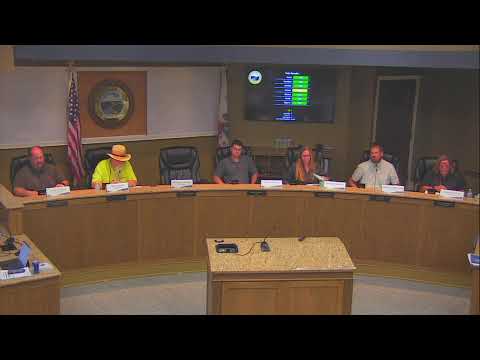
Oroville planning commission denies Aegis outpatient clinic use permit
Summary
The Oroville Planning Commission voted 6–0 with one recusal to deny a use permit for an Aegis outpatient treatment clinic proposed for the former FKO building, citing incompatibility with surrounding land uses and concerns about site design, traffic and public-safety impacts.
The Oroville Planning Commission voted to deny a use permit for an Aegis outpatient treatment center proposed for the former FKO building at 1121 Orodam Boulevard, approving a denial resolution by a 6–0 vote with one recusal.
Staff and the applicant presented competing information during a public hearing that drew more than a dozen public speakers and questions from commissioners. Staff said new materials submitted since the June hearing and additional local data led most staff members to no longer recommend approval; applicant representatives and supporters urged the commission to approve the clinic, citing treatment need and legal protections for people in recovery.
The project would convert half of a roughly 5,500-square-foot retail building into medical offices, leaving the other half vacant for storage or future uses, according to the staff presentation. The site is roughly 68,000 square feet and, staff said, includes adequate on-site parking. Proposed operations were described as primarily 5 a.m. to 1 p.m., seven days a week, with 15 to 20 employees on site and security measures including cameras and alarmed dispensary enclosures.
Amy (regional director for Northern California for Aegis Treatment Centers) told commissioners, “We literally save lives every single day,” and said Aegis operates other Northern California clinics and that roughly 90 Oroville-area patients currently travel to Chico for medication and treatment. Becca Mitchell (Aegis vice president, appearing by phone) said most patients at other Aegis sites receive some take-home medication after the initial treatment period and that roughly 6 percent of Chico patients are unhoused; she said the company tries to obtain housing and social services for patients.
Opponents cited pedestrian and traffic safety, proximity to child-attracting businesses, and uncertain operational details. Laura Fillmore, who said she owns the FKO building, told the commission the vacant site currently attracts encampments and nuisance activity and said a staffed clinic would be preferable to continued vacancy. Other residents and business owners described concerns about morning congestion, illegal street crossings near a bus stop directly across the street, and potential off-site impacts.
The city packet included a July 17 letter from the applicant noting that clients are members of a class protected under the Americans with Disabilities Act and that “public perception” cannot be the basis for denial. Staff also provided Caltrans 2023 traffic counts for Highway 162 showing an average of about 25,000 vehicle trips each way per day, and additional materials including arrest-data summaries from Chico and correspondence from other city planners.
Commissioners debated whether the proposed use met the required municipal-code findings for a use permit. One commissioner said they could not agree with the finding on “need” and expressed preference for locating such services in medically zoned areas closer to the hospital or other medical uses. The police chief, who participated in the hearing, said methadone and other opioid-treatment medications are regulated and can be diverted, but that diversion is not necessarily more problematic than other public-safety issues the department handles.
A motion to deny, citing “incompatibility with surrounding area and land uses, failure to demonstrate adequate site design and operational safety safeguards, [and] potential adverse impact on public health and safety and welfare,” was made, seconded and carried. The denial resolution in the packet was the model the commission adopted; commissioners specified that the denial was not based on discriminatory purpose. The commission noted the applicant may appeal the decision to the city council within the time period set by city rules.
The record before the commission included staff reports, site plans, letters from the applicant, research on other Aegis clinics, Caltrans traffic counts, and public comments. Staff indicated the commission has authority to modify or revoke a permit if issues arise after approval; supporters of the project pointed to that safeguard in urging approval. The denial closes the current application; the applicant was advised of appeal rights to the city council.
Less critical details: staff said the applicant agreed to restripe the lot, remove two Connex storage boxes, update landscaping and secure the trash enclosure; the applicant proposed a path of travel from the front door to the Caltrans sidewalk for wheelchair access. The staff packet included two resolutions (approval and denial) so the commission could choose findings and conditions if it wished to approve or deny.