Get Full Government Meeting Transcripts, Videos, & Alerts Forever!
Get email alerts on the Municipal Revenue topic
No spam. Unsubscribe anytime.
Columbus rejects proposals to outsource business‑license work; staff reports progress on collections and online payments
Summary
An evaluation committee unanimously rejected proposals to outsource Columbus’ revenue/business‑license operations and staff reported incremental improvements to collections, online payments and enforcement.
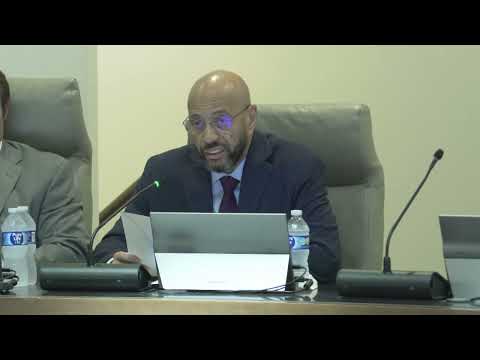
The Columbus City Council heard an update on July 22 from City finance and management staff after an evaluation committee reviewed responses to a request for proposals (RFP) to outsource the city’s revenue and business‑license functions.
Deputy City Manager Hodge told council the RFP drew three proposals but “the committee did vote unanimously to reject all of the proposals.” The committee concluded none of the submissions provided the full mix of local customer service, staffing and technical capabilities the city sought.
Finance Director Angelica Alexander described progress the in‑house revenue team has made since earlier audits and a forensic review. Key operational metrics she reported to council included:
- Business licenses processed through week 28 (ending July 13): more than 6,800 (about 3% higher than the same point in 2024). - Problem accounts identified: 61 problem accounts (value about $255,000) where payments were received but processing remains incomplete. - Pending/partial accounts: 59 accounts pending; one short‑term vacation rental operator alone accounts for 34 of those pending licenses. - Courtesy delinquency notices: staff mailed about 1,600 courtesy notices in early July and said roughly 160 recipients had responded so far; about 1,400 remained delinquent as of the report date, with a July 25 response deadline before referral to code enforcement. - FY25 occupation tax revenue (unaudited): approximately $21.2 million recorded; the finance director said FY25 is slightly lower than FY24 and that the department separated penalties and interest in the FY25 reporting ($400,000 recorded in penalties and interest).
Hodge told council the committee had sought vendors with both software and local staffing or on‑the‑ground customer support; one vendor offered only software, one offered minimal staffing and another proposed an online‑first approach with limited local service. The committee judged none of the proposals a fit and recommended either continuing with the in‑house revenue division or reissuing a more narrowly scoped RFP that addresses specific pain points.
Councilors pressed for additional details. Several asked staff to identify the top problem areas (e.g., short‑term rentals, overdue excise taxes, license renewals) where outside help might have the greatest impact. Councilor Joanne Kogel asked for an introduction to the new revenue manager and for a short list of the RFP shortcomings so council could weigh whether to reissue the procurement in a revised form.
Finance staff said they have ongoing standing meetings with IT to refine the city’s Tyler‑based system, to roll out an online self‑service portal for excise taxes, and to automate delinquency notices and alcohol license workflows. Staff also noted the city’s work to reconcile previously unprocessed accounts and to collaborate with the tax assessor to cross‑reference commercial parcels and business licenses.
On ARP‑related small business grants, staff reported state reimbursement of roughly $3.5 million to the city and said $132,000 remained available for small businesses (and $68,000 for nonprofits); staff will contact 137 partially completed applicants to try to use those remaining funds before the grant closeout.
Why it matters: Business license and excise‑tax collections are an important and recurring revenue source for Columbus. The council will decide whether to retain and continue investing in the in‑house revenue operation or to reissue a procurement targeting specific tasks such as collections, audits or customer‑facing services.
Speakers quoted in this article are included in the speaker list below. Ending: The evaluation committee’s unanimous rejection of the RFP returned the decision to council for direction; staff recommended continued in‑house improvements while leaving open the option to reissue a narrower RFP.