Get Full Government Meeting Transcripts, Videos, & Alerts Forever!
Get email alerts on the Tax Policy topic
No spam. Unsubscribe anytime.
Council hears overview of proposed statewide real property tax referendum and local implications
Summary
Town leaders discussed a legislative memorandum on possible real property tax reforms to be polled by referendum; council members and staff warned of many open questions, exemptions for public safety and education, and uncertain revenue-replacement mechanisms.
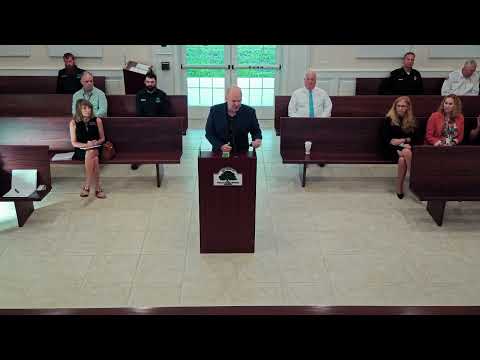
Town officials on Oct. 23 discussed a memorandum circulated by legislative leadership outlining options for statewide real property tax reform that, in the near term, would be presented to voters as a nonbinding referendum.
Mayor Foley told the council the memorandum lists a menu of options and emphasized two common features across the proposals: they “cannot affect public safety budgets” and they “cannot affect educational budgets.” The memo, he said, appears to be an initial voter poll rather than implementing legislation.
Why it matters: Several proposals under consideration could materially change how local governments raise revenue. Town leaders warned that without simultaneous adjustments to other revenue sources — such as utility rates, sales taxes or special assessments — reductions in ad valorem revenue could simply shift tax burdens to other groups or services.
What council members heard: Town staff and outside attendees described the procedural path if voters indicate preferences. Mr. Sweeney, a town staff member who briefed council on legislative timing, said the referendum “would affect everybody in Florida, arguably,” and outlined that a voter poll could prompt either a constitutional amendment or follow-on legislation requiring multiple sessions to resolve implementation details.
Council members and attendees raised specific concerns and unknowns: how competing voter choices would be reconciled if multiple options passed; the effect on special taxing districts and enterprise utilities; risks of increased homestead fraud; and the mechanics of replacing revenue that funds police and other services. Vice Mayor Atwater emphasized that enterprise utilities and special taxing districts could face an unequal shift of burden if reforms exempt some revenue streams.
Local scenario modeling: The mayor said staff ran scenario analyses for the town. One scenario examined a senior homestead full exemption (the memorandum example named in council discussion as HDAR 205) that would zero out property taxes for homesteaded residents age 65 and older; the mayor and staff said modeling shows that, if the town maintained current revenue levels, the millage rate applied to nonexempt properties would need to increase. The mayor stressed many inputs are unknown — migration, homestead filings, and other changes — and called the referendum a “long way to go” before any binding action.
Next steps: Council directed staff to continue monitoring developments and to work with state associations and local legislators to better understand implications; staff provided the council with scenario spreadsheets and said more analysis will follow. No formal town action or policy change was adopted at the meeting.