Get Full Government Meeting Transcripts, Videos, & Alerts Forever!
Get email alerts on the Property Tax Exemptions topic
No spam. Unsubscribe anytime.
Vanderburgh appeals board denies Indiana Landmarks property-tax exemption for former YMCA site
Summary
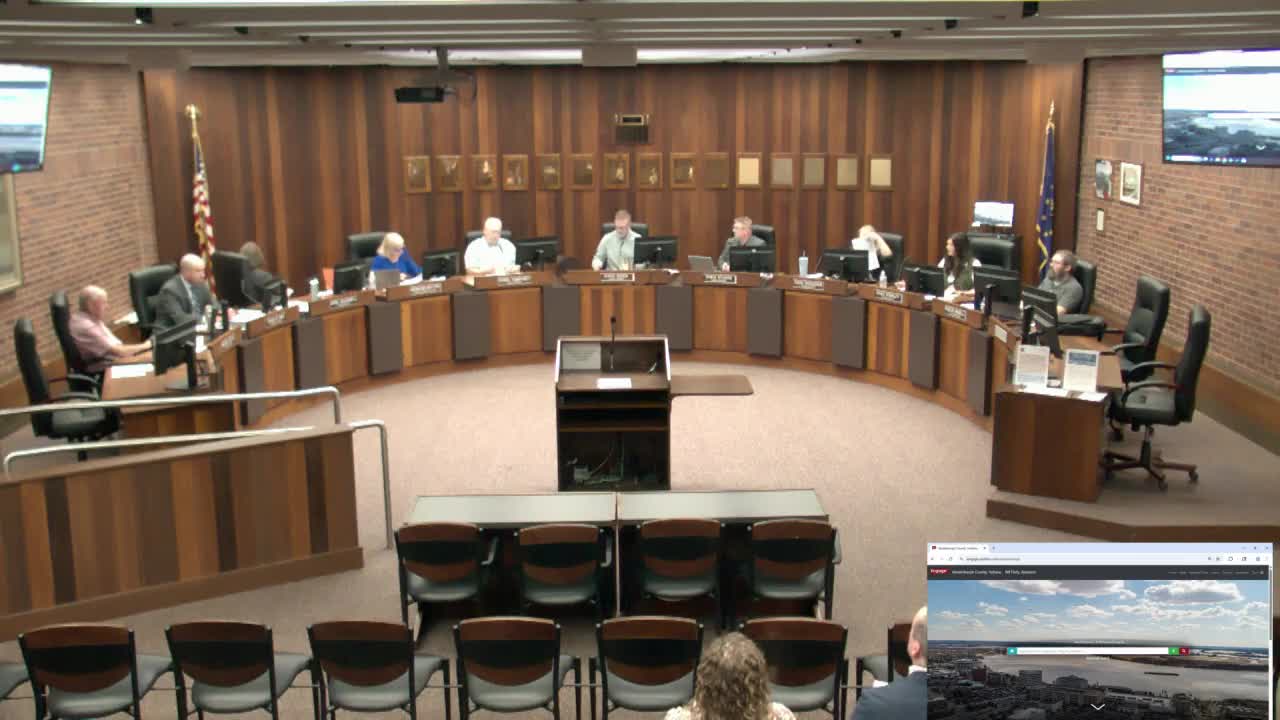
The Vanderburgh County Property Tax Assessment Board of Appeals voted to accept the county's recommendation to deny a 2025 charitable-use exemption sought by Indiana Landmarks for a former YMCA property in downtown Evansville, after a lengthy debate over whether stewardship and preservation steps suffice for exemption.
The Vanderburgh County Property Tax Assessment Board of Appeals voted to accept the county's recommendation to deny a 2025 property-tax exemption requested by Historic Landmarks Foundation of Indiana, Inc. (doing business as Indiana Landmarks) for a former YMCA property at 220 Northwest Sixth Street.
Board members accepted the county recommendation that the organization had not met the statutory burden to show the property was owned, occupied and used for a charitable purpose. The board's motion to accept the county's recommendation was made and seconded and passed unanimously with board members Chris Stewart, Dan Humphrey and Chris Sager voting yes.
Indiana Landmarks representatives, including Brad Ward, president of Indiana Landmarks, and a staff member identified as Stephanie, told the board the organization acquired the property in 2023 to preserve it from demolition and to steward a future reuse that could include affordable and market-rate housing. "Our intent was to step in, avoid it being demolished," Ward said, adding that Indiana Landmarks' role is to stabilize properties and find a future steward rather than to develop them. He said Indiana Landmarks requires covenants when it transfers properties to future owners to preserve historic integrity.
The county representative explained the assessor received a Form 136 with supporting documentation, conducted a site visit and was told the taxpayer intended to hold the building for two years and then either sell it to a developer or return it to the previous owner, which the county said could result in demolition. That planned holding-for-sale timeline was cited by the county as the basis for denial.
Board members and outside counsel debated whether the board had authority under statute to "go back" and correct a prior denial for up to three years in cases of objective administrative error. Attorney Brian Cusimano told the board that the tax court has repeatedly required that the three-year correction applies only where there is a clear objective error (for example, clerical mistakes or misfiles), not where the prior denial rested on a subjective, fact-intensive determination of predominant use. "I think the objective criteria that are typically looked for for that 3 year go back are things like ... they put the exemption on the next door neighbor rather than the property in question," Cusimano said. He added that the records show the petitioner did not timely appeal the 2024 decision.
Indiana Landmarks and its counsel argued the organization had taken concrete preservation steps beyond mere ownership, including ongoing maintenance, weekly outreach with the mayor's office and state agencies, and seeking funding sources such as IEDC, LILI and REDI funds to support rehabilitation and reactivation. "We would not exit without those covenants in place to our ability to protect and preserve the building going forward," Ward said, adding the group routinely places covenants on transfers to protect historic fabric.
The board and counsel differed over whether those stewardship activities met the legal standard when no restrictive covenants were yet recorded on the property. One board member said, "Without any kind of covenants or restrictions encumbering the property for its future use, I just don't see how I can get there," and cited the statutory and case-law requirement that the petitioner carry the burden of proving predominant charitable use.
After discussion, a board member moved to accept the county's recommendation to deny the exemption; the motion was seconded and passed. The board clerk noted for the record that materials shared in the meeting chat should be added to the record.
Votes at a glance
- Historic Landmarks Foundation of Indiana (Indiana Landmarks), 220 Northwest Sixth Street (Parcel 82-06-30-020-035.005-029): Motion to accept county recommendation to deny 2025 exemption — PASSED (Chris Stewart: yes; Dan Humphrey: yes; Chris Sager: yes). Note: petitioner asserted ownership beginning in 2023 and said it had been preserving the property; county cited planned holding-for-sale and absence of recorded restrictions as reasons for denial.
- 1001 Allens Lane (parcel 82-06-07-034-192.032-020; listed under Loretta Niemeyer Trust care of Delamuse/WMuse LLC): Motion to table to allow appellant time to obtain an appraisal — PASSED (board voted to table; motion was seconded). The county indicated no objection to the delay to allow the taxpayer to obtain an appraisal for review.
- Consent items accepted (county recommendations): Old National Bank (4500 Washington Ave.; parcel 82-06-26-017-121.035-027) — approved; Riverwind Properties / Riverwood Properties LLC (2267 E. Illinois St.; parcel 82-06-22-012-055.007-027) — approved; multiple University of Evansville parcels (various South Frederick / Lincoln Ave parcels listed on the agenda) — approved. The board then voted to accept remaining recommendations on the agenda.
Why it matters: The case highlights an ongoing legal and practical question for Indiana tax assessors and appeals boards: whether a historic-preservation nonprofit's stewardship and preparatory preservation activities are sufficient, in the absence of recorded covenants, to establish that property is predominantly used for a charitable purpose and thereby qualify for property-tax exemption. The board's decision leaves intact the county's position that mere ownership plus preservation efforts do not automatically satisfy the statutory burden without stronger objective evidence or recorded restrictions.
The board adjourned after the remaining items were resolved by consent votes.