Get Full Government Meeting Transcripts, Videos, & Alerts Forever!
Get email alerts on the Special Education topic
No spam. Unsubscribe anytime.
Board hears spike in special-education enrollment; directors discuss screening and interventions
Summary
Board members asked about special-education enrollment and Associated costs. Administration reported 1,739 students receiving special education services, including 238 in autism support, and described screening, MTSS interventions, and Orton-Gillingham-based reading supports at the elementary level.
The Board pressed district special-education administrators for current enrollment and cost context, and administrators reported a continued, gradual rise in special-education enrollment and outlined early screening and intervention strategies.
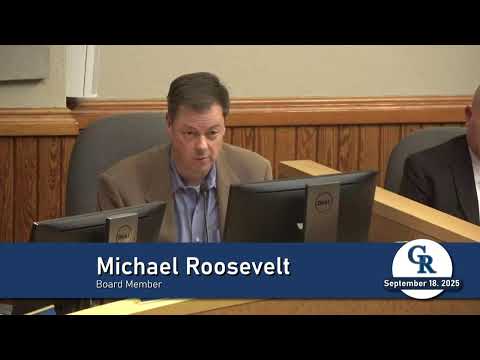
Board member Mr. Roosevelt asked for enrollment and cost figures. The district’s special-education lead, Dr. Oberman, said on the record, “Currently, we're at 1,739 special education students within the district,” and added that autism support enrollment is “currently at 238 students” and that last year’s autism-support count was 205.
Mr. Roosevelt referenced a recent document that he said shows per-pupil spending of roughly $17,272 for regular education and $50,320 for special education in the 2025–26 school year. He presented that figure as a context for the board’s budget discussions; the document itself was cited by Mr. Roosevelt during his remarks.
Administrators explained that increases in special-education enrollment do not necessarily produce proportional cost increases; costs depend on the categories of disability and required services. Dr. Oberman noted that some autism-support classes are capped at eight students and that many students require one-on-one services.
District staff described screening and early intervention practices. Dr. Oberman said the district uses early screeners and an MTSS (multi-tiered system of supports) framework to provide tiered interventions in kindergarten and early grades, and that immediate evaluation is not always appropriate for very young children. He added that teacher-preparation changes in Pennsylvania include increased attention to the “science of reading” and structured literacy.
Addressing reading interventions specifically, the administration said, “All of our elementary schools currently have Orton-Gillingham-based interventions, which is a big part of addressing those reading deficits. All the teachers have been trained on those programs, directly.” (Dr. Oberman)
What’s next: board members suggested the district consider targeted audits or third-party reviews to identify improvement areas in reading and math supports; several members expressed a desire to examine special-education operations and staffing as part of continuous improvement work.
Clarifying details captured from the discussion appear below.