Get Full Government Meeting Transcripts, Videos, & Alerts Forever!
Get email alerts on the Behavioral Health Gme topic
No spam. Unsubscribe anytime.
State working group hears presentations on psychiatry residency expansion, workforce gaps
Summary
Presenters described psychiatry workforce shortages in Connecticut, new residency programs (including the state’s first FQHC-based psychiatry residency), recruitment and retention challenges for trainees and faculty, and next steps for the working group’s report to the legislature.
Renee Serkin, psychiatry faculty at the Frank H. Netter MD School of Medicine, told a state behavioral health and graduate medical education working group on Aug. 19 that Connecticut faces large shortfalls in psychiatric care and that new residency programs are intended to increase access and retention.
"One in five adults suffer with mental illness, only four in 10 receive treatment, and only one in 10 for substance use disorders," Serkin said, citing workforce data and HRSA projections that show shortages across urban and rural areas in the state. She said national projections show the psychiatrist workforce could fall by about 27% in five years as older clinicians retire.
The presentation outlined three recently accredited psychiatry residency programs that expand training in Connecticut: a rural-track program affiliated with Quinnipiac and Hartford HealthCare, an Eastern Connecticut Health Network program located in a high-need region, and the state’s first federally qualified health center (FQHC)–based psychiatry residency at Connecticut Institute for Communities in Danbury. Serkin said the new programs together add roughly 12 psychiatry graduates per year.
Diana Paez, program director at Connecticut Institute for Communities, described building the FQHC-based program since its 2023 approval and the program’s early recruitment. "We got about 650 applications," Paez said of ERAS submissions in her program’s second cycle, and she said the program has filled four positions after participating in the main match and the off-cycle process.
Paez outlined practical challenges in community-based training: identifying applicants whose personal circumstances and career goals align with the program mission; recruiting and retaining faculty in a competitive market; and meeting ACGME supervision rules. "ACGME requires the trainee and the supervisor to be in the same physical place even if they are doing, like, telehealth," she said, noting that remote work options popular since the pandemic complicate compliance and faculty scheduling.
Speakers discussed which trainees remain eligible to work in the U.S. after residency. Paez told the group that about 30% of her residents trained at non-ACGME schools outside the U.S.; other presenters reported a mix of international medical graduates and U.S.-trained graduates from Caribbean schools. Panelists warned that federal immigration, visa and accreditation constraints are factors beyond Connecticut’s control that can limit retention even when trainees want to stay.
Attendees also discussed funding and sustainability. Serkin and Paez described HRSA awards that supported program development, including the Rural Residency Planning and Development Program grant and the Teaching Health Center Graduate Medical Education (THCGME) grant. Presenters and members said those federal programs remain active for current grantees but that future funding levels are uncertain; working group members said hospitals and health systems have sometimes treated grant support as supplemental to an existing institutional commitment to training.
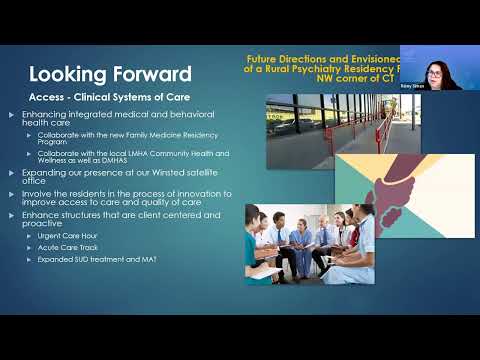
Panelists said residency-based training at community sites can expand access to services such as urgent psychiatric care and opioid and substance-use treatment, and that trainees bring scholarship and quality-improvement projects that broaden local clinical capacity. Several speakers emphasized that the programs serve largely Medicaid, Medicare and uninsured populations and that community placement can improve the chances residents will continue working in-state.
The working group also addressed practical steps for the report the group must deliver to the legislature. Margaret (working group member) said she will compile recommendations from presenters and circulate proposed language to the group; she told members the report is due Jan. 1 to the legislature and noted that the Department of Public Health review is not required but would be a courtesy. "The report is due, January 1 to the legislature," Margaret said.
At the start of the meeting the group approved the minutes from the previous convening after reaching a quorum; a motion to approve was made and seconded and the minutes were adopted (no roll-call tally was provided in the transcript).
The working group will continue refining recommendations at upcoming meetings and asked members to be prepared to discuss draft language in September and October ahead of the January submission. Presenters and members said the group should continue monitoring federal funding streams, ACGME policy constraints and strategies to recruit trainees from underserved regions as ways to improve retention and service capacity across Connecticut.