Get Full Government Meeting Transcripts, Videos, & Alerts Forever!
Get email alerts on the Public Consumption Cannabis Beverages topic
No spam. Unsubscribe anytime.
Portsmouth amends beverage ordinance to prohibit public consumption of THC-infused drinks
Summary
The council unanimously moved to expand Chapter 89 — the town's public consumption rules for alcoholic beverages — to include cannabis-infused beverages (THC drinks), closing an enforcement gap speakers said exists under current state rules.
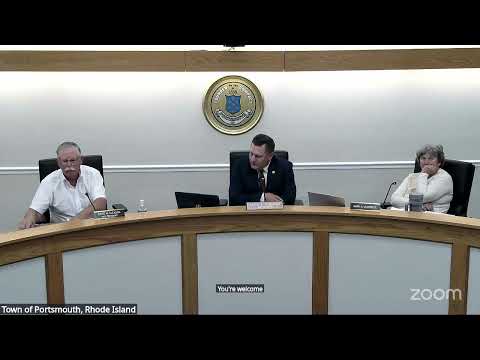
The Portsmouth Town Council unanimously approved an amendment to Chapter 89 of the town code on Sept. 9 to add “cannabis-infused beverages” (commonly called THC drinks) to the list of products for which public consumption is prohibited. The measure passed 7–0 after a public hearing.
Georgie Cranson, coordinator of the Portsmouth Prevention Coalition, told the council the absence of explicit local language covering THC beverages creates a loophole that complicates enforcement and gives the impression these products are harmless. Cranson said some THC drinks can contain multiple servings and that state regulation has lagged; she urged the town to act to keep public spaces family-friendly and to reduce misuse.
Councilors opened the public hearing with a motion, heard no members of the public for or against the change, and then closed the hearing. A motion to amend Chapter 89 to include cannabinoid-containing beverages passed 7–0.
Cranson told the council she had researched state-level activity and said as of mid‑2025 no Rhode Island municipality had yet adopted such an ordinance; she also described state regulatory limits that were in flux (for example, resealable packaging and maximum THC-per-container rules being considered by state regulators). The council did not propose hours or location exceptions and the amendment mirrors the existing prohibitions on public consumption for alcohol and smoking in beaches and other public places.
Council members said the vote was intended to give clear local authority for enforcement officers and to align town rules with community prevention goals.