Get Full Government Meeting Transcripts, Videos, & Alerts Forever!
Get email alerts on the Microtransit topic
No spam. Unsubscribe anytime.
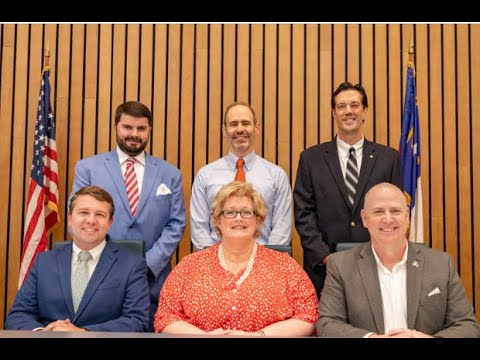
Wake County officials update Wendell commissioners on SmartRide microtransit service and growing demand
Summary
Wake County staff briefed the Wendell Town Board on SmartRide microtransit and GoWake Access usage, funding, operations, and planned trip caps after a year of growth driven in part by student riders and rising vendor costs.
Wake County transportation staff updated the Wendell Town Board of Commissioners Monday on SmartRide microtransit and GoWake Access services serving Wendell, Zebulon and Knightdale, reporting heavy year‑over‑year ridership growth, rising vendor costs, and plans to begin capping trips per rider to keep service within budget.
The county presentation explained how SmartRide, a microtransit pilot launched in 2019 and expanded in July 2024 to include Knightdale, is funded through a mix of local Community Funding Area (CFA) dollars and Wake Transit support, and is intended to fill first‑/last‑mile gaps to jobs, schools and medical appointments.
Wake County Transportation Manager Anita Davis, who led the briefing, said the program is funded in part by local CFA contributions and Wake Transit and emphasized the role of the demand‑response GoWake Access program for special populations. "GOAc Access demand response program has been a vital part of our community for the past 30 years in addressing significant gaps in transportation networks, specifically for special populations," she told the board.
Data presented by county analysts showed substantial usage in fiscal 2025: average SmartRide trip distance 8.25 miles, average in‑vehicle time about 24 minutes, 23,634 total passengers and 20,611 completed trips for the year. Amber Scott, Wake County data analyst, summarized the snapshot: "For the average trip distance, it was 8.25 miles. For the average trip duration, it was about 24 minutes. For the total passengers, we had 23,634. And for our total completed trips, we had 20,611."
The staff noted the student population has become a notable user group. East Wake High School riders in fiscal 2025 produced 1,654 completed trips and 1,819 total passenger boardings; Knightdale High School recorded 83 completed trips in its first year in the service area. Staff said SmartRide is used broadly — for medical appointments, employment, grocery shopping and school trips — not solely by commuters.
Board members pressed staff on operational limits and equity. Commissioners asked how any new trip cap would work and how students and essential riders would be protected. On the capping tool, county staff said the vendor’s new module will be able to "only cap the number of rides per rider per month or week or quarter," and that the county expects to roll that module out between July and August. Commissioners asked the county to provide the specific cap numbers and a rider profile so the board can judge likely impacts on work, school and medical trips.
Commissioner Jason Eamon urged Wake County and the county commission to weigh funding responsibilities, saying, "I heard 70, and I think the county should own a whole lot more," referring to Wake Transit’s proposed 70/30 cost‑share adjustment for CFA funding. Several commissioners also told staff to consider Wake County Public Schools as a partner because a disproportionate share of SmartRide’s new trips are for high‑school students.
County staff said operating costs have risen sharply. Presenters said a previously quoted per‑trip cost of roughly $20 has effectively doubled for the vendor after the contract moved to a fully allocated rate that includes fixed costs, pass‑through charges and vehicle maintenance — a change that prompted the county to seek additional funding and to add operational caps. The county said it will return with detailed cap numbers and an assessment of how caps could affect frequent student riders and other high‑need populations.
App adoption and booking patterns also shaped the discussion. County staff said the system’s call center remains the dominant booking method for fiscal 2025 while the vendor app (XformOS) is growing among younger riders; transitions between vendor apps likely reduced app use in the short term. The county has produced an instructional video, worked with the vendor on bugs, and surveyed riders to boost app adoption.
Wake County staff framed SmartRide as one of several complementary services in the region that include GoTriangle and GoRaleigh fixed routes and the GoWake Access paratransit program. They said SmartRide’s goal is to maintain short wait times (about 20 minutes on average) while containing costs and maintaining service for people who lack personal vehicles.
The board did not take a formal vote on the program. Commissioners asked staff to supply: (1) the proposed per‑rider cap(s) and the expected date of implementation; (2) anonymized rider profile data showing who uses the service most often; and (3) more detailed cost and funding options to present to Wake County and Wake Transit.
The county said it will provide the requested data and continue quarterly (and as‑needed) updates with the three geofenced towns. Presenters urged commissioners to anticipate funding tradeoffs if state or federal Medicaid transportation funding changes, because Medicaid demand reduction could shift trip demand into the microtransit and county funding streams.