Get Full Government Meeting Transcripts, Videos, & Alerts Forever!
Get email alerts on the Hazardous Waste Management Plan topic
No spam. Unsubscribe anytime.
DTSC, board revise hazardous waste management plan after public hearings; revised draft due in September, vote expected in November
Summary
DTSC and the Board of Environmental Safety said they are revising the statutory hazardous waste management plan after four public hearings; a revised draft will be released in September and the board anticipates approving a final plan in November.
DTSC officials and the Board of Environmental Safety told lawmakers that the first hazardous waste management plan required by SB 158 is being revised to reflect extensive public comments and board input, and that the board expects to vote on a final plan this fall.
Board Chair Andrew Raikstra said the board held four public hearings in Fresno, Berkeley, Los Angeles and Sacramento and that the board and DTSC staff are integrating stakeholder comments into a revised draft to be released in September. Raikstra said the board anticipates a final vote in November and that the board’s priorities include making the plan “comprehensive, actionable, forward-looking, equitable, and responsive to both emerging waste challenges and longstanding environmental concerns.”
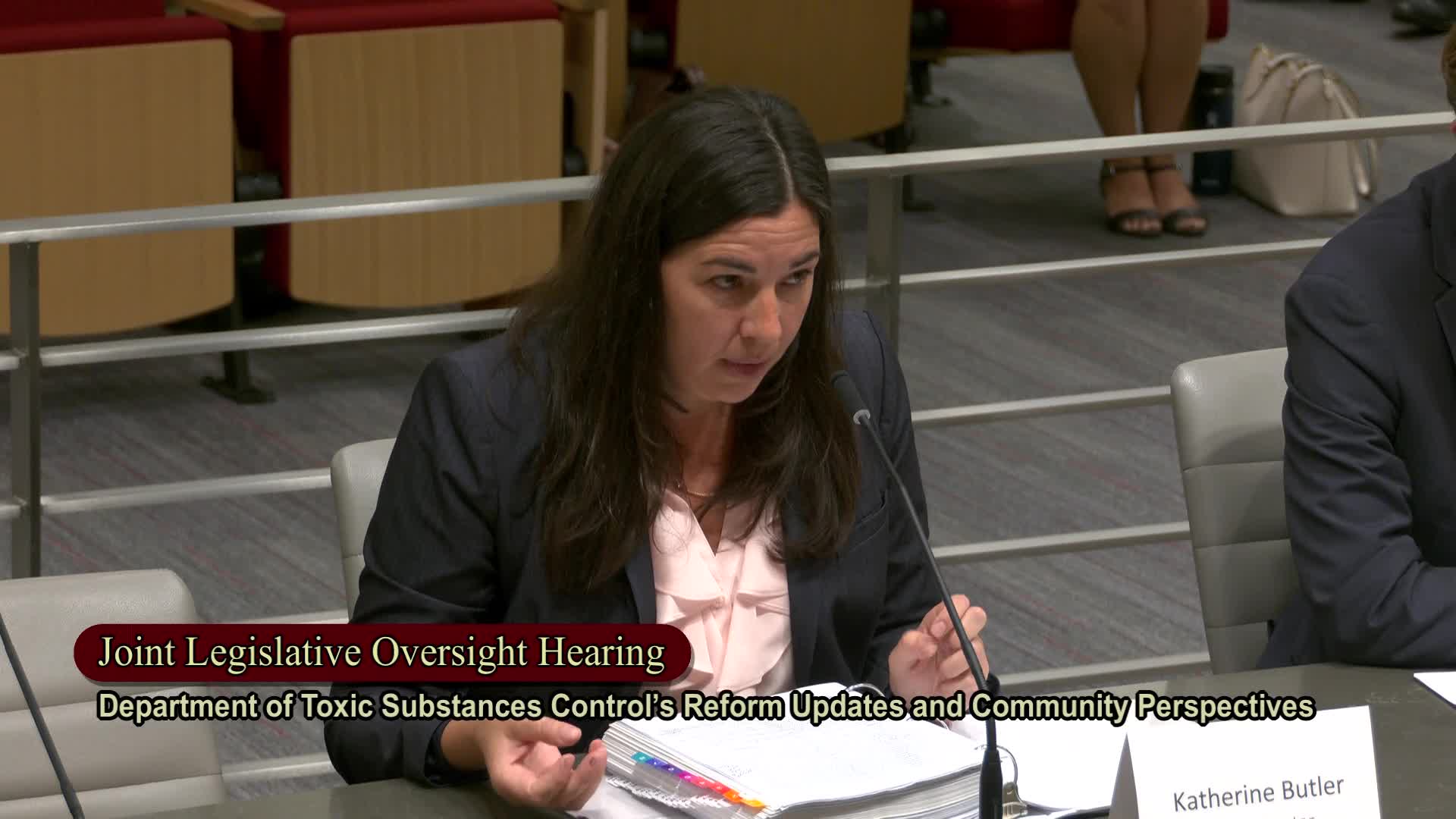
Director Katie Butler told the committees that DTSC met the statutory deadline for a first draft in March and has been revising it in response to board and public feedback. Butler said a prominent near-term change was removing a proposal that would have allowed certain non-RCRA metal-contaminated soils to be diverted to municipal landfills after sustained public concern.
Why it matters: The hazardous waste management plan is intended to map strategies for waste reduction, diversion and innovation across state and local actors; lawmakers and stakeholders identified gaps in data that DTSC said limit goal setting. Raikstra said the board wants clearer quantitative waste-reduction goals for specific waste streams and clearer next steps for implementation and funding.
Implementation timeline and constraints: Butler and Raikstra described a three-year update cycle for the plan and said staff capacity and data gaps constrain precise goal-setting this year. Both said finalizing the plan will likely require additional resources and that the board may authorize budget change proposals tied to plan implementation.
Bottom line: DTSC and the board said they are revising the plan to reflect stakeholder input and expect a revised draft in September and a board vote in November; stakeholders urged clearer quantitative goals, stronger emphasis on environmental justice and a prioritized hierarchy of actions.