Get Full Government Meeting Transcripts, Videos, & Alerts Forever!
Get email alerts on the Dtsc Enforcement topic
No spam. Unsubscribe anytime.
DTSC highlights stepped-up enforcement after reforms, cites Atlas Metals shutdown and Chiquita Canyon order
Summary
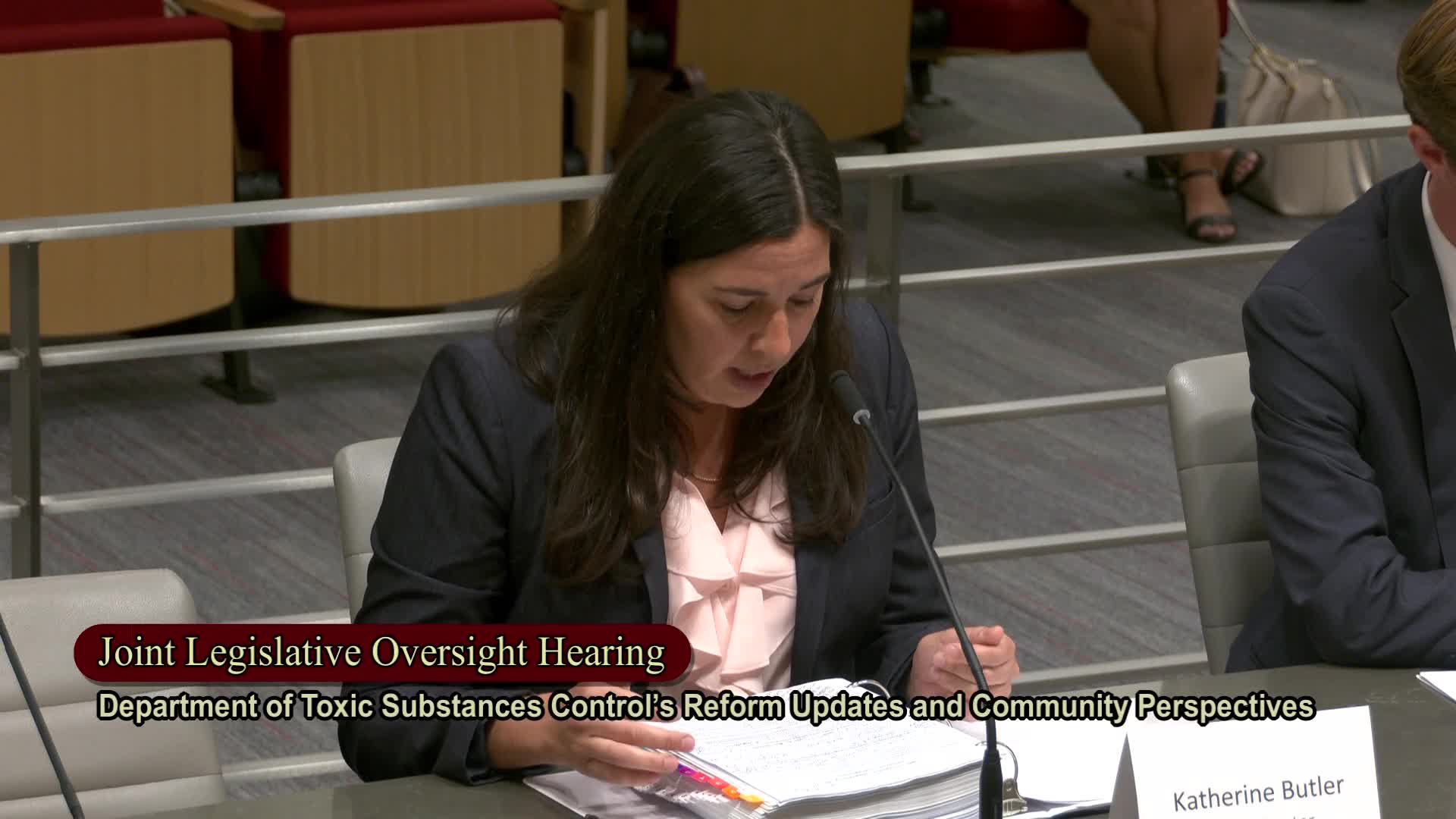
DTSC director Katie Butler told a joint Senate–Assembly oversight hearing the agency has strengthened enforcement, citing a criminal case against Atlas Metals and an imminent-and-substantial-endangerment order for Chiquita Canyon Landfill; she said the agency launched an online inspection map and is boosting community outreach.
Director Katie Butler told the joint oversight hearing of the Senate Environmental Quality Committee and the Assembly Environmental Safety and Toxic Materials Committee that the Department of Toxic Substances Control has prioritized enforcement, community engagement and interagency collaboration since SB 158 reformed the agency.
The enforcement pillar, Butler said, is “to bring a regulated entity into compliance,” but that the department will use criminal tools in the most egregious cases. She cited DTSC’s cooperation with the Los Angeles District Attorney’s office on an investigation that led to Atlas Metals being charged with five felony counts of hazardous-waste disposal and the facility’s shutdown; Atlas is located “immediately next to a high school,” Butler said. Butler also described recent enforcement at Chiquita Canyon Landfill, where DTSC issued an “imminent and substantial endangerment order and a summary of violations” and required corrective steps; the agency warned the landfill could face penalties “up to $70,000 per day” if it does not act promptly.
Why it matters: Butler framed enforcement as a front-line mechanism to protect communities living near hazardous-waste operations and to ensure regulated entities meet permit conditions. She emphasized that criminal investigations are reserved for serious wrongdoing, while inspections, training and civil enforcement are used to improve compliance more broadly.
Support for the enforcement message came from Board of Environmental Safety Chair Andrew Raikstra, who said the board has seen improved enforcement since reform and praised the development of public-facing tools. Butler noted DTSC unveiled an interactive inspection map to make inspection summaries and violations easier for communities to find; she acknowledged legacy public databases such as EnviroStor remain difficult to use and said the map is an interim step to improve transparency.
Public commenters and environmental advocates at the hearing urged faster action and broader use of DTSC authority. Several speakers described ongoing community health concerns at sites such as Exide and the Santa Susana Field Laboratory and said stronger, faster enforcement and better data-sharing are still needed.
Bottom line: DTSC officials told lawmakers the agency has expanded enforcement activity and community-facing transparency tools since SB 158. Community groups and some legislators urged more rapid use of authority, faster transparency and closer follow-through where residents report continuing exposures.