Washington County district attorney warns rising caseloads could strain office
Loading...
Summary
District Attorney Barry Bridal told the Public Safety Committee the office expects a 25% caseload increase (about 500–600 cases) and remains underfunded for additional prosecutor positions despite state pay progression funding; he said most prosecutors already carry 300–400 cases.
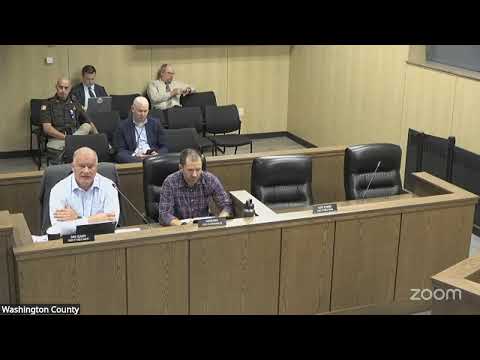
District Attorney Barry Bridal told the Washington County Public Safety Committee at its August meeting that his office expects a roughly 25% increase in case filings — “about 500 to 600” additional cases — and that the county’s current staffing and funding levels will put pressure on prosecutors’ workloads.
Bridal said the office currently has seven full‑time prosecutors, plus a 0.4 position funded by ARPA that was recently extended through Oct. 5 and temporarily filled by Sue Opper, “the former district attorney from Waukesha County.” He also noted a recent hire, Christy Gordon, who “recently joined our office as an assistant district attorney.”
Why it matters: Bridal warned that many of the county’s attorneys already handle between 300 and 400 active matters, and that further increases could force staff to prioritize some cases over others or risk burnout. “Some of the cases within the backlog were very serious felonies,” he said, and “the majority the great majority of our attorneys have between 300 to 400 cases” now.
Bridal attributed part of the rise in filings to his office taking “a more aggressive approach on charging decisions” and to a backlog of referrals the office is processing. He said the state budget provided pay progression funding — which he called helpful for recruitment and retention — but did not allocate additional positions after Joint Finance used a staffing analysis to target offices below an 80% staffing threshold. “Through their analysis, we were at just below 80%,” he said, and the state’s workload analysis recommended just over eight attorneys for Washington County, whereas Bridal said current and anticipated filings would require more than that.
Committee members thanked Bridal for the report and asked whether newly charged cases were generally less complex; Bridal answered that complexity varies. “Some cases within the backlog were very serious felonies, burglary offenses, auto theft defenses,” he said, and added that even lower‑level misdemeanors can require additional work when defense counsel requests investigations.
Bridal told the committee he plans to continue discussions with state legislators about staffing in the next budget cycle and said the office will continue coordinating with law enforcement to maintain public safety. He emphasized the office’s efforts to avoid attorney burnout while processing the increased caseloads.
Ending: Committee members expressed appreciation for the office’s work under pressure and did not take action during the meeting on additional county funding; Bridal said he would continue to advocate for relief in future budgets.