
Guam lawmakers press Guam Memorial Hospital on $28M operating shortfall, IT outages and vendor debts
Get AI-powered insights, summaries, and transcripts
Subscribe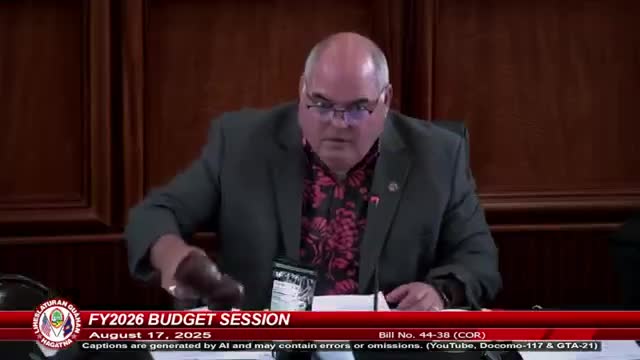
Summary
Guam Memorial Hospital Authority officials told the Committee of the Whole they face an estimated $28.2 million operating gap for FY2026, growing accounts payable and recurring IT failures that delayed billing. Senators urged amendments to close the gap and pressed hospital leaders on staffing, travel-nurse costs and deferred capital projects.
The Guam Legislature's Committee of the Whole heard extended testimony Sunday from the Guam Memorial Hospital Authority (GMHA) leadership and the Office of Fiscal and Budget (OFB) on a budget shortfall, aging infrastructure and operational strains that lawmakers said put patient care at risk.
GMHA executives told senators the authority faces an immediate operating shortfall and multiple deferred capital needs. "Currently, GMH first faces a $28,000,000 operational gap for the upcoming fiscal year," GMHA representative Lillian Posadas said in her opening remarks. She urged the legislature to approve floor amendments to close the shortfall and called for staff protections and equipment funding.
Why it matters: Senators said the shortfall and unpaid vendor invoices are already affecting supplies, linens, staffing and patient flow. The hearing examined competing priorities: funding for GMHA's day-to-day operations and a separate multi-year plan to build a new hospital.
Key figures and the budget gap - OFB director Mr. Guerrero briefed the committee on the numbers behind the requests. He said FY2025 total appropriations to GMHA included general-fund and other sources that summed to roughly $57.8 million. The substitute FY2026 bill as drafted provided about $41.9 million, and adding $5.2 million of FY2023 excess collections brought the substitute total to roughly $47.1 million. OFB and GMHA officials said that left a material gap compared with GMHA's request and prior-year funding levels. - GMHA described a $28.2 million operational shortfall if the bill passes without further amendments. The authority told senators its FY2026 capital improvement project (CIP) ask was $29.3 million; GMHA said $10 million of expected ARPA funding was not available, effectively reducing expected CIP cash.
Accounts payable and vendor risk GMHA officials reported accounts payable of about $25.6 million, with roughly $16.47 million over 90 days. "We do owe a significant amount," GMHA finance staff said, identifying major payables to a travel-nurse vendor and utility bills. Senators repeatedly asked how the hospital would pay vendors and warned that unpaid suppliers had reduced or paused deliveries.
IT failures, lost revenue and EHR planning GMHA and medical staff described two recent IT incidents that impeded registration, billing and clinical records. GMHA said the July outage lasted about four to five days before core systems were restored. Hospital staff told senators charges that normally flow daily were manually captured and later entered; management estimated daily charges on the order of hundreds of thousands and said outages forced overtime to catch up billing.
"When we lost the systems, the billers, coders, they don't have anything to do," a GMHA official said. The authority is seeking $5 million in FY2026 for IT network infrastructure and told the committee an estimated $60 million over five years would be required for a full, modern electronic health record (EHR) replacement; the first-year cost was estimated at about $14.5 million.
Staffing: local recruitment, travel nurses and hazard pay GMHA said it has reduced reliance on travel nurses but still owes roughly $4 million to travel-nurse contractors for services to date; the authority reported about 12 travel nurses currently on contract and budgeted roughly $4 million for travel nursing next fiscal year. Hospital leaders described stepped hiring, above-step recruitment and a graduate nurse incentive as tools to recruit local nurses.
GMHA also proposed a hazardous-pay amendment to recognize staff exposed to infectious or high-risk duties. Officials said they have not yet produced a full financial estimate because they must first define qualifying job classes.
CIP priorities and life-safety risks GMHA listed prioritized capital needs that include HVAC and roof repairs, replacement of main electrical distribution panels and emergency generation, and expansion or upgrade of IT. Officials and senators characterized the main electrical panel as a single point of failure and said the hospital had applied for FEMA hazard-mitigation and other federal grant programs while urging the legislature to consider targeted capital funding.
Revenue opportunities and other proposals GMHA said it is exploring revenue-generating partnerships, including renting space in the skilled nursing facility to an inpatient-rehab operator and pursuing federal legislation (H.R. 9128) that would designate GMH as a territorial safety-net hospital to improve Medicare/Medicaid reimbursement. Hospital leaders also described a tax-credit program administered by GEDA that could be used to subsidize equipment purchases if a vendor can participate.
Audit, consultant report and collections GMHA said it has received a draft consultant report through the Guam Economic Development Authority (GEDA) and is seeking specific deliverables and timelines; GEDA controls public release of the final report. The hospital told senators the draft flagged poor reimbursement from at least one insurance payer and recommended renegotiation.
Next steps and legislative options Senators on the health committee said they plan to file and consider floor amendments to increase GMHA appropriations, and oversight leaders urged the governor's team and BBMR to consider intra-year transfer authority or other short-term cash measures to address vendor obligations. The committee recessed the hearing and scheduled a follow-up session to continue questioning and consider proposed amendments.
Ending note Senators repeatedly framed the debate as a choice between investing in the hospital's immediate safety, staffing and basic operations, and planning for a new facility. "We need the money today in order to take care of that patient," Dr. Ricardo Eusebio, GMHA chief medical officer, told the committee during a moment of cross-panel discussion.
The panel left the hearing room with next-day follow-ups on the table, including requests for more detailed cost estimates for hazardous pay, a schedule of CIP priorities tied to specific funding sources, and a breakdown of accounts-payable aging to help the legislature prioritize any supplemental relief.