
Gaston County staff present updated countywide strategic plan, emphasize employee culture and efficiency
Get AI-powered insights, summaries, and transcripts
Sign Up Free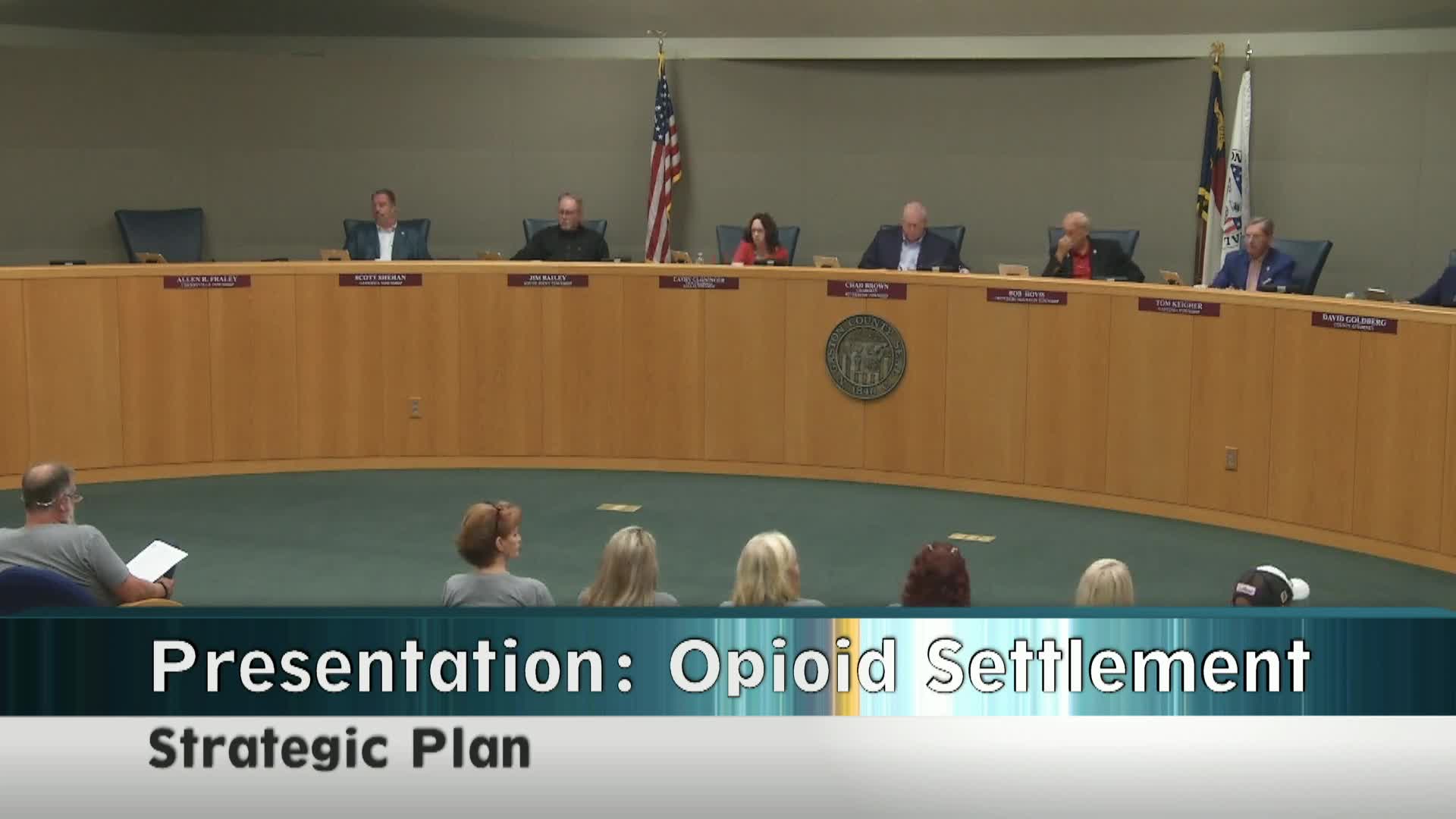
Summary
County management outlined a five-goal strategic plan update focused on workplace culture, organizational efficiency, civic infrastructure, sustaining growth and talent development; department-level plans and metrics are next steps.
GASTON COUNTY, N.C. — County staff presented an update to Gaston County’s fiscal year 2428 strategic plan Tuesday, laying out revised vision and mission statements, five strategic goals and the next steps for department-level planning and reporting.
Scott Adaway, financial and management services director, told commissioners staff began the update with the board’s January budget retreat and continued through a series of leadership workshops, staff focus groups and public engagement events involving the county’s nearly 1,900 employees. “The manager is very intentional about making this a ground up process of involvement throughout the whole county’s almost 1,900 employees,” Adaway said.
The updated vision presented by staff reads: “Gaston County Government will be a model of intentional collaboration, innovation, and efficiency to expand local opportunity and attract global investment.” The mission was summarized as “service driven, intentionally led, and resident focused.” Adaway described five top-level goals: workplace culture; efficiency and effectiveness; civic infrastructure; sustaining a growing Gaston County (transportation, education, tax base diversification); and talent (recruitment, retention and development).
Staff outlined specific strategies under each goal. For workplace culture, strategies include refining employee appreciation programs, improving countywide feedback and increasing information sharing about board priorities. Efficiency objectives include cross-department collaboration and process improvements; civic infrastructure strategies focus on nonprofit partnerships and regional coordination; growth strategies include infrastructure investments and countywide planning; talent strategies include in-house leadership training, mentorships and standardized recruiting and onboarding.
Adaway said county staff will use benchmark data (including North Carolina Association of County Commissioners materials) to develop a concise set of metrics and a reporting structure. Department-level strategic plans will align with the countywide plan and become more granular in September and October, he said. Centralina Council of Governments was identified as the contracted facilitator for the planning process.
Chairman Chad Brown and other commissioners asked questions about Centralina membership dues and whether the county receives credit toward technical services; Kasia Thompson, director of strategic engagement technical services for Centralina, said dues are “just under 50 cents per capita” and that members receive discounted pricing for services beyond membership. Commissioners also discussed ways the strategic plan has already influenced county actions, including a new “all care” employee benefit referenced by the chairman.
Adaway said the county will reduce the strategic plan’s metrics to a small number of outcome measures and will present department plans in the fall. The plan update is intended as a guiding document to be embedded into departmental work plans and budget priorities.