
CCSD audit advisory committee approves 2025–26 internal audit plan, accepts risk assessment
Get AI-powered insights, summaries, and transcripts
Subscribe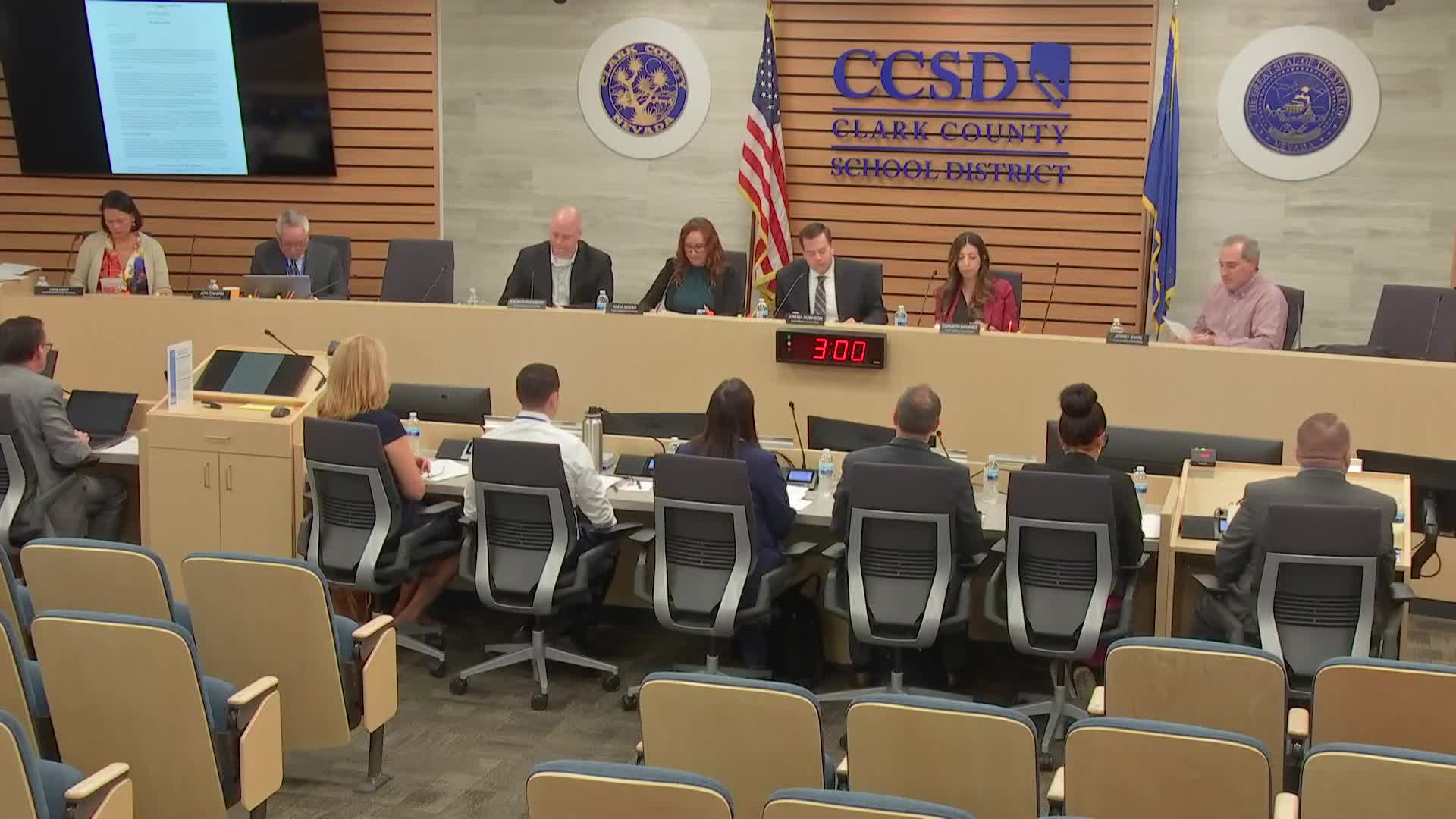
Summary
The Clark County School District Audit Advisory Committee approved the district internal audit department's risk assessment and the 2025'1026 audit plan, and received updates on audit staffing, EthicsPoint reports and the external auditor's planning letter.
The Clark County School District Audit Advisory Committee on Aug. 8 approved the internal audit department's risk assessment and the district's 2025'1026 audit plan, voted to re-elect Joshua Robinson as committee chair and received informational briefings on Nevada's open-meeting law, the external auditor's planning letter and EthicsPoint incident reports.
The approvals follow presentations from Jeanette Scott, CCSD director of internal audit, and Brian Frey, senior internal auditor, who described the annual risk-assessment process used to prioritize audits across the district's 360-plus schools and numerous departments. Scott also presented a rolling three-year audit schedule and a detailed 2025' 26 audit plan that allocates hours for school-bank audits, department audits, construction audits, reviews and training.
The committee's action matters because the internal audit plan determines where the district focuses limited audit resources and how quickly the department can follow up on findings across the district's schools and operations. Brian Frey told the committee that two areas rose in the risk ranking this year: school accounting, which recently had turnover in the administrator position and a districtwide accounting-software implementation, and procurement cards, whose "wide availability and ease of use" increase the potential for improper transactions.
Scott said the internal audit department is authorized for 13 positions when fully staffed and currently has three vacancies. "When we are fully staffed, our department is 13 people," she said, and described two coordinator-level positions recently added to focus on school activity fund audits. She told members the department conducted an unusually high number of school audits this past year and has two construction auditors funded by bond dollars dedicated to Capital Improvement Program reviews.
Justin Dayhoff, CCSD chief financial officer, presented the external auditor Eide Bailly's planning communication and told the committee the engagement letter "is reasonable given our planned expenditures, budget and what I'd expect for both timeline, revenues, and actuals for what we would expect coming for end of year close." The engagement and scope had previously been reviewed by this committee and approved by the Board of School Trustees earlier in the year, Dayhoff said.
The committee received an update on EthicsPoint incident-management reports from Chris Greathouse in Employee Management Relations. Between the prior meeting and July 10 the district logged 101 entries in EthicsPoint; four of those were categorized by reporters under accounting/auditing/internal controls or embezzlement and were reviewed by regions or district offices and closed as unfounded after local review.
John Okazaki, CCSD general counsel, gave an informational summary of Nevada's open-meeting law (NRS chapter 241), including the definition of "meeting," quorum rules, public-notice requirements and the legal consequence that actions taken in violation of the law are void. Okazaki cautioned committee members that a quorum (three of five members) present and deliberating can trigger open-meeting requirements even at informal gatherings.
Votes at a glance
- Adoption of meeting agenda (Item 1.02): motion to approve made from the floor; outcome: approved, ayes 5-0. - Election of chairperson (Item 2.01): Motion by Member Anna Marie Binder to re-elect Joshua Robinson as chair; second by Member Joe Throneberry; outcome: approved, ayes 5-0; Chair Robinson will serve July 1'June 30 term. - Approval of minutes (02/27/2024): motion by Member Joe Throneberry; second by Member Elizabeth Hammer; outcome: approved, 4 ayes, 1 abstention (one member abstained after noting they had not reviewed the minutes). - Approval of minutes (02/27/2025): motion by Member Joe Throneberry; second by Member Elizabeth Hammer; outcome: approved, 4 ayes, 1 abstention. - Approval of FY2025'1026 risk assessment (Item 2.05): motion by Member Joe Throneberry; second by Member Elizabeth Hammer; outcome: approved, ayes 5-0. - Approval of FY2025'1026 audit plan and rolling audit schedule (Item 2.06): motion by Member Elizabeth Hammer; second by Member Joe Throneberry; outcome: approved, ayes 5-0. - Acceptance of internal audit department update (Item 2.07): motion by Member Elizabeth Hammer; second by Member Joe Throneberry; outcome: approved, ayes 5-0.
Committee members asked for additional management follow-up and transparency on recurring audit findings. Member Joe Throneberry urged more visible accountability when audits identify repeated problems, asking whether deputy superintendents or regional leaders could be asked to report on remediation plans for areas with repeated or "priority" ratings. Scott explained that school audits receive one of four ratings (clean, normal, priority, at risk); priority-rated schools are reaudited within 9'12 months and at-risk schools within 6' 9 months and that follow-up reports are produced and distributed to management and the committee.
Scott described how school audits are managed operationally: due to volume the department cannot perform a separate, stand-alone follow-up for every individual school audit, so follow-up occurs when the audit rotation brings the team back to a school. She said the department performed about 149 school audits in the last year and that school-bank work receives a large share of audit hours because of the number of schools and transactions involved. Scott also said the audit plan includes designated hours for special requests (500 hours) and review/quality-control time (separate from preparer hours) to ensure work papers are reviewed by senior staff.
On staffing, Scott said the department had two new coordinator positions focused on school activity fund work and two bond-funded construction auditors. She said the department had conducted interviews and expected to fill vacancies during the first quarter of the fiscal year.
Greathouse described EthicsPoint workflows: most allegations received by EthicsPoint are routed to regional offices because they concern site-level staff; regions perform initial independent reviews and notify Employee Management Relations if investigations are likely to lead to discipline. Greathouse said casework is tracked monthly and that most cases are closed quickly; as of the report there were five cases opened in the prior two to three weeks.
The committee asked for clearer public access to school-audit reports. Scott said audit reports are public records and available on request through public-records channels but are not posted routinely on school websites because of the volume of reports.
The meeting ended after a brief discussion about future agenda items, including a possible committee-led survey of the Board of School Trustees to clarify expectations and the committee's role under new district leadership, and adjourned at 11:30 a.m.