Get Full Government Meeting Transcripts, Videos, & Alerts Forever!
Get email alerts on the Early Literacy Assessment topic
No spam. Unsubscribe anytime.
Pequannock schools adopt DIBELS 8 as universal reading screener; will test K–3 three times a year
Summary
Pequannock Township School District leaders said the district has chosen DIBELS 8 as its universal literacy screener after a January pilot. The paper-based screener will be administered at the beginning, middle and end of the year to guide tiered reading instruction and progress monitoring for early grades.
Pequannock Township School District officials said the district has selected DIBELS 8 as its universal literacy screener and will administer it three times a year to elementary students, primarily kindergarten through third grade, after a January pilot.
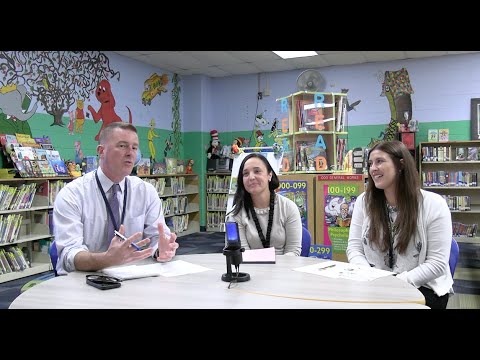
District leaders said the change aims to detect early reading difficulties and guide instruction. "It was important, to really look at assessment tools that were research based, that were connected to the science of reading," said Alyssa Bellardino, the district's PreK–12 ELA and media supervisor, who led the screening-tool selection work.
Bellardino and Melissa Barca DuPone, the district's reading specialist at North Boulevard School, described DIBELS 8 as a quick, component-based tool that complements existing measures and supports prevention and intervention. "This tool tells us if a child could be at risk for reading difficulties. It doesn't diagnose dyslexia. It doesn't say that there is special education required," Barca DuPone said, describing how the parent reports break down individual subtests.
Officials said the district piloted DIBELS in January to check timing, teacher workflow and the quality of data it provided. "When we first piloted this last, January ... we were like, this is the missing piece," Bellardino said, saying DIBELS supplied phonological- and phonics-focused data the district lacked from tools such as i-Ready and DRA.
District staff described the practical rollout: the screener will be given three times annually (beginning, middle and end of year), with most subtests delivered one-on-one and each subtest lasting about one minute. Staff said results will inform tiered instruction: high-quality Tier 1 classroom instruction for all students, Tier 2 small-group supports, and Tier 3 more intensive interventions such as reading lab or pull-out services.
Teachers and reading specialists emphasized progress monitoring. Barca DuPone said the screener supplies a rapid"pulse" and that the district will use multiple measures (including the district's existing foundational reading assessments and spelling inventories) to confirm patterns before changing instruction. "If you see something once, it's kind of an occurrence. Twice is a coincidence. Three times, we have a pattern," Michael Portis, superintendent of schools, said.
Staff also described how parent communication will work. Parent reports are color-coded; staff urged families not to treat a red indicator as a diagnosis but as a target area that the school is already addressing. "When you see any type of yellow or red on that parent report, that means we have to target that area," Barca DuPone said. District staff noted the reports show how close a child is to the next level and encouraged families to watch for growth across the three windows.
Implementation details cited by presenters: the screener focuses on foundational literacy components (phonemic awareness, phonics/decoding, fluency, comprehension), is paper-based for the one-on-one subtests so teachers can note behaviors, and is intended for K–3 monitoring (the district described the K–3 rollout as "huge"). Staff said classroom programs such as Heggerty and other tiered curricula will continue to be used and adjusted based on screener results.
Officials encouraged parent engagement and pointed to district resources. The presenters said a Parent Academy slideshow and an online feedback form are available, and they invited parents to contact reading specialists or building principals with questions.
District leaders framed the change as curriculum- and instruction-informing rather than a one-time measurement. Bellardino said the district aims to use screener data to adapt curriculum and instruction: "Curriculum is supposed to be living and breathing to a large extent."
The district did not announce a public timeline for sharing individual student results, nor did speakers provide a year for the January pilot beyond referring to a recent pilot; parents seeking specifics were directed to contact school reading specialists or the district office for details.