
DEQ says Montana Pole soils contained in CAMU; groundwater pumps may run indefinitely
Get AI-powered insights, summaries, and transcripts
Sign Up Free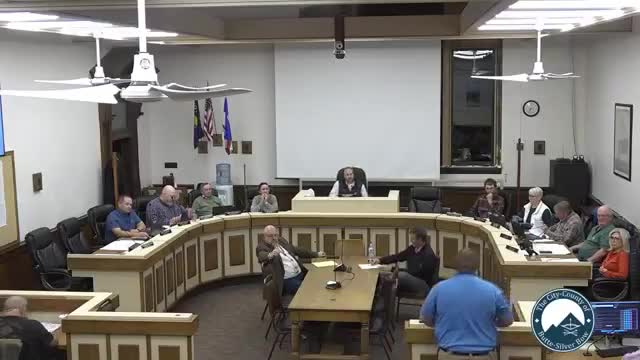
Summary
Jacob Wheeling, project manager for the Montana Pole Superfund Site at the Montana Department of Environmental Quality, told the Butte-Silver Bow Council of Commissioners on Oct. 22 that contaminated soils from the former wood-treatment plant have been placed in a corrective action management unit and that groundwater remains the key remaining problem.
Jacob Wheeling, project manager for the Montana Pole Superfund Site at the Montana Department of Environmental Quality, told the Butte-Silver Bow Council of Commissioners on Oct. 22 that contaminated soils from the former wood-treatment plant have been placed in a corrective action management unit and that groundwater remains the key remaining problem.
The DEQ presentation summarized site history and recent work and explained next steps. "That is where all the soils went that, after they were treated in the land treatment unit, they were put in the repository, because they didn't meet requirements for dioxins," Wheeling said of the CAMU, referring to soils treated on-site and then moved into the RCRA-compliant unit. He described the CAMU as a permanent repository: "The CAMU will stay with us forever," he said.
Why it matters: DEQ’s containment of treated soils narrows the cleanup focus to groundwater contamination and an under‑freeway source area. The council pressed DEQ on how long the water-treatment system must operate and on the site’s potential for future redevelopment if soils remain isolated.
Wheeling described the plant’s operations and contaminants. The facility treated utility poles and timbers from 1946 to 1984 using a diesel carrier with pentachlorophenol; current contaminants of concern include pentachlorophenol, polycyclic aromatic hydrocarbons and dioxin/furans. The site was placed on the federal National Priorities List in 1987, and the Record of Decision and a 2022 Explanation of Significant Differences led to construction of the CAMU.
DEQ said five of the six remedial phases in the ROD are complete or ongoing; the final phase will address a major source of pentachlorophenol that wheelings said is buried beneath Interstate 15/90. "We're going to begin scoping the final phase of remediation, which is phase 5. That will include treatment of the last major source of pentachlorophenol on-site, which is under the freeway," Wheeling said. He noted that the water‑treatment plant and two groundwater capture trenches currently intercept contaminated groundwater and route it to on‑site treatment.
On funding and longevity of operations, Wheeling said DEQ holds settlement funds invested for site work. "We have roughly $19,000,000 in that account right now. We are able to run the water treatment plant solely on interest. We are not drawing down on those monies at all," he said. He added that whether the plant can be turned off depends on the effectiveness of Phase 5 work. "If we're able to inject chemical oxidants into the groundwater and it treats the source area, the plume is most likely going to stabilize and we'll be able to turn off the water treatment plant. However, if those chemical injections don't reduce the contamination enough... it'll have to stay on. And it'll stay on as long as it needs to."
Council members asked about vegetation on the CAMU slopes after a 2023 storm event and about the plume extent. Wheeling said DEQ hydroseeded and rehydrated CAMU slopes in 2024 and plans to supplement watering and hand-seed bare spots if necessary. On plume boundaries he said DEQ samples groundwater twice yearly and offered to provide updated plume maps to commissioners: "I'll make sure to send you plume maps so you can see where it runs."
Public comment and local context: Earlier in the meeting, Joe Griffin, president of the Citizens Technical Environmental Committee, told the council that Superfund updates are important to the community and that CTEC invites DEQ to report to members. Several commissioners praised former DEQ staffer David Bauer for his work on the site.
What’s next: DEQ said it will continue scoping Phase 5, coordinate with nearby projects that will dewater (including work at the adjacent Beet Reduction Works), and follow up with plume maps and the presentation materials for commissioners.
Ending: Commissioners expressed interest in a site tour; Wheeling said DEQ can arrange visits to the CAMU and the water‑treatment plant.