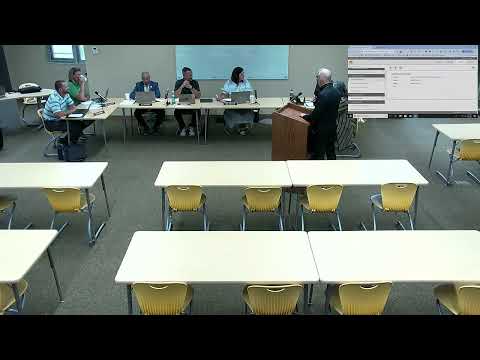
Board debate over waiving academic and activity fees ends without a vote after procedural hurdle
Loading...
Summary
Board members debated permanently waiving K–12 academic fees or removing high-school fees for the 2025–26 year, citing taxpayer relief and access to activities. The board did not adopt a change after a motion to amend the agenda ultimately failed due to a two-thirds requirement.
Board members at the Buckeye Valley Local School District spent an extended portion of the meeting debating whether to waive academic and activity fees that families pay for courses and extracurricular participation.
Board member Tom opened the discussion by urging relief to families, saying the district’s current surplus could absorb the fees. “I think the academic fees should be gone permanently and the sports fees should be gone, one year at a time,” Tom said, arguing fees total a small share of projected surpluses and that families are feeling tax pressure.
Treasurer Kelly provided the financial breakdown the board requested: the district collects roughly $118,000 in academic fees across K–12, of which about $85,000 comes from the high school for art, industrial tech, computer fees and a high-school tech fee used to offset Chromebook replacement. Kelly explained those course fees are tracked in designated accounts (fund 009) and, if waived, the general fund would need to supplant the expense.
Board members debated options: some favored waiving all academic fees districtwide to provide broad relief; others preferred targeted relief — for example, focusing on athletics, marching band and performing arts — or creating a district fund to assist families who cannot afford participation fees. Members also raised administrative logistics and timing: several speakers noted many fees are already loaded on student accounts or collected for fall activities, and refunds or credits would create administrative work for district staff.
The board attempted to add a vote on waiving high-school fees for the 2025–26 school year by amending the agenda. A roll call recorded three votes in favor and two opposed on the motion to amend the agenda (initial roll call: Mister Albany — yes; Mister Tumbrook — no; Mister Dickey — yes; Missus Gavin — no; Mister Jeffrey — yes). However, a later procedural clarification noted that amending the agenda after adoption requires a two-thirds vote (four of five members). That higher threshold was not met and the motion to amend the agenda did not pass; the board did not take a formal vote to waive fees during the meeting.
Several practical points were discussed: - Students who qualify for free and reduced-price meals do not pay fees, a public commenter said and the board confirmed. - The district already absorbs a portion of transaction fees and has historically applied an offset; Treasurer Kelly said the district sometimes pays about $2,000–3,000 monthly in transaction-related expenses and that the district effectively picks up roughly half of some online convenience fees. - Administrative complexity: several members and the treasurer said refunding fees already collected or removing loaded fees from PowerSchool would be logistically significant; one option suggested was to delay any waivers until the board could act before PowerSchool loads fees for the next year.
Public commenters weighed in. Katie Staley, a resident and taxpayer, urged clarity on public participation rules and pointed to community groups that assist families in meeting participation costs; she asked whether free/reduced students are exempt from fees (the board confirmed they are). Another commenter, Mark Taylor, said he was concerned about reliance on laptops as primary instructional tools and urged options for paper materials for parents who want them.
Next steps discussed at the meeting included asking staff to run reports showing how many fees have already been collected this year and exploring a limited pilot (for example, waiving high-school fees this year and K–12 fees next year) or an assistance fund for families. Several board members suggested revisiting the question in a future meeting or calling a special meeting if a majority wished to act sooner.