Get Full Government Meeting Transcripts, Videos, & Alerts Forever!
Get email alerts on the Federal Education Funding topic
No spam. Unsubscribe anytime.
Education leaders warn federal budget proposals could sharply reduce funding for Connecticut schools
Summary
Department of Education officials and education policy groups told legislators three competing federal budget proposals and related policy changes could reduce or delay funding for Title I, school improvement grants and other K‑12 programs, creating uncertainty for the 2026–27 school year.
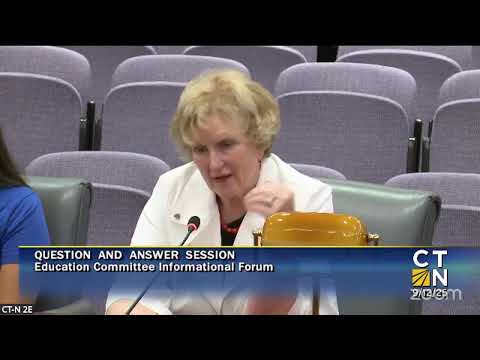
State education officials and independent analysts told the Education Committee that three competing federal budget proposals — the president’s, the Senate Appropriations Committee’s, and the House Appropriations Committee’s — contain sharply different funding levels and approaches that could materially affect Connecticut schools next year.
“The president, not unlike our process in the states, submits his budget, and then it needs action by the house, and the senate,” Commissioner Charlene Russell Tucker said. She noted the House plan would reduce U.S. Department of Education funding by about $12.1 billion (roughly 15%) and would eliminate some smaller program titles.
Analysts from the School and State Finance Project said Connecticut typically receives about $500 million annually in federal K‑12 funding (excluding one‑time COVID relief), and those funds are targeted to high‑need students and programs. Jeanette Luna, a policy analyst, told the committee President Trump’s proposal would consolidate 18 grants into a single “K‑12 simplified funding” block, reducing combined funding from about $6.54 billion to $2.0 billion nationally. The House plan would cut Title I funding by about $3.6 billion in its first year and proposes a rescission of current‑year funds that are scheduled to be distributed on Oct. 1.
“If those cuts or consolidations occur, the impact will largely fall on districts serving the highest‑need students,” Lisa Hammersley, executive director of the School and State Finance Project, said. The panel noted that roughly 70% of federal grant payments this year went to alliance districts.
Department staff said many federal grants are forward‑funded and that any enacted funding changes for federal fiscal year 2026 would primarily affect the 2026–27 school year. Senate language also proposed protecting timely grant awards and requiring the department to distribute funds on the dates they become available, a provision officials said would reduce the risk of late allocations that slowed districts this year.
Witnesses highlighted two practical outcomes: first, districts and superintendents are hesitant to add or expand programs because federal funds could be reduced or withheld; second, if federal support for required services such as special education is trimmed, states or local districts would likely have to make up the shortfall. “It is hard for any state to backfill all of those resources,” the commissioner said.
Committee members and witnesses urged continued monitoring and contingency planning. Analysts recommended preparing for a continuing resolution that maintains current funding levels, but also for scenarios in which Title I and other grants are reduced or consolidated.