Get Full Government Meeting Transcripts, Videos, & Alerts Forever!
Get email alerts on the Retail Zoning topic
No spam. Unsubscribe anytime.
Commission recommends limiting new liquor stores to LC-3 commercial districts
Summary
The commission voted to send a zoning-text amendment to City Council that would restrict new liquor stores to LC-3 (regional commercial) districts; existing liquor stores would be nonconforming uses.
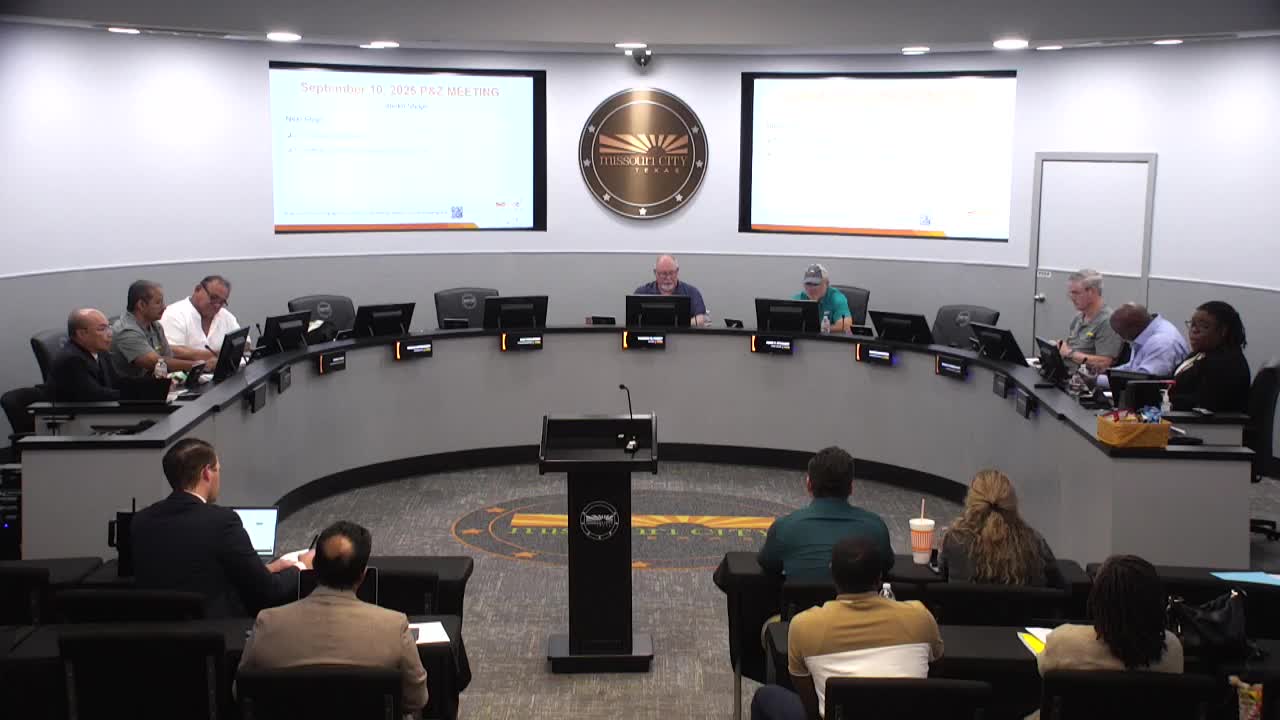
On Sept. 10 the Missouri City Planning and Zoning Commission voted to forward to City Council a zoning-text amendment that would narrow where new liquor stores may locate by allowing them only in LC-3 (regional commercial) zoning districts.
Staff explained the draft ordinance would remove liquor stores as permitted uses in LC-1 and LC-2 (neighborhood and smaller commercial districts) while retaining them in LC-3 districts along higher-traffic corridors. Presenters clarified that businesses that sell beer and wine as part of grocery stores, pharmacies or other mixed-use retailers would not be affected; the change targets businesses whose primary commerce is packaged liquor and that require a specific state license.
Tendra Modi, who described experience operating liquor businesses in Missouri City, urged the commission to control the number and location of liquor stores and cautioned against clustering near residential areas. Modi said well-managed stores can avoid crime issues but supported tighter location controls; the speaker’s remarks were cut off when the three-minute public-comment period concluded.
Commissioners discussed the practical effect: existing, legally operating liquor stores would be treated as nonconforming uses and could continue under current protections; new liquor stores could not open in LC-1/LC-2 if the ordinance is adopted. Commissioners then voted to forward the draft ordinance to City Council with a positive recommendation. The motion was made by Commissioner Malley and seconded by Commissioner Bolden as recorded; the motion carried.
Next steps: staff will forward the draft ordinance and supporting analysis to City Council for public hearing and final action. The ordinance will not require immediate closure of existing stores; council action would be required for any additional restrictions affecting nonconforming uses.