Get Full Government Meeting Transcripts, Videos, & Alerts Forever!
Get email alerts on the Infrastructure topic
No spam. Unsubscribe anytime.
Cherokee Nation says federal IHS scattered-housing funding fell to $1.705 million; tribe uses Public Health and Wellness Fund to help people on waiting list
Summary
Officials told the tribal council that Indian Health Service (IHS) scattered-housing funds for FY25 dropped to $1,705,000 from prior years; the Nation has set aside just under $3.6 million from the Public Health and Wellness Fund to serve roughly 200 citizens on the waiting list while project awards for other water and sewer work were announced.
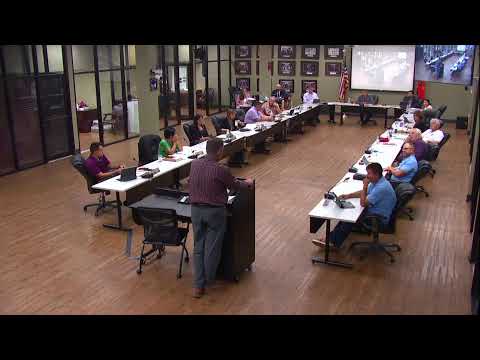
At a Cherokee Nation Tribal Council meeting, transportation and housing officials and the chief reported that Indian Health Service (IHS) scattered-housing funds for fiscal year 2025 dropped to $1,705,000 and that tribe funds will be used to serve people on the waiting list.
Michael, a transportation/infrastructure staff member, told the council: “That that amount is $1,705,000 even.” He reported the IHS scattered-housing announcement and additional IHS project awards, and said award letters for scattered housing were still pending.
The nut graf: The reduction in federal scattered-housing funding prompted the Nation to use tribal Public Health and Wellness Fund Act dollars to backfill needs so projects and individuals who have planned construction around expected IHS dollars are not left without support.
Michael described IHS project awards the Nation received this year: about $5,300,000 for Adair County rural water district 5, $678,000 for the Cherokee Cherry Tree sewer system, and just under $900,000 for individual water and sewer systems. He also reported completion or near completion of local infrastructure projects, including the Rocky Ford water line extension and the Kenwood water system improvements, and said the department participated in a community rabies clinic that provided about 250 vaccinations.
Chief (Cherokee Nation) expanded on the funding context, saying, “these cuts began in the previous federal administration, and they're continuing on.” The chief said the Nation is prioritizing limited federal and tribal funds “on the basis of need” and that the Public Health and Wellness Fund Act has been tapped to cover water and sanitation projects that would previously have relied on federal dollars. “As these federal dollars dwindle,” the chief said, “we have to see where we could find the money.”
Michael told the council the Nation identified roughly 200 Cherokee citizens on the waiting list for scattered-housing assistance, about 80 of whom have incomes below 80% of area median income. “What the chief and deputy set aside was just shy of $3,600,000 public health and wellness,” he said, and added that staff are preparing letters to confirm continued interest from people on the list.
Councilors asked staff about timelines and next steps; Michael said award letters for some programs were still forthcoming and that final inspections were expected soon for recently completed water-system projects. The chief said staff will bring program reforms back to the council next year so the program is “very transparent, it's very understandable” if the Nation must increasingly use tribal funds in place of federal dollars.
Ending: Officials emphasized that funding announcements do not yet represent completed disbursements for all projects; Michael said some award letters and administrative steps remain. Councilors and staff said they will continue outreach so applicants on waiting lists know whether they remain eligible and interested.