Get Full Government Meeting Transcripts, Videos, & Alerts Forever!
Get email alerts on the Transportation topic
No spam. Unsubscribe anytime.
Danvers study finds broad demand for walkability, more transit and downtown parking strategy
Summary
A town-commissioned transportation needs assessment led by MAPC found Danvers residents prioritize walkability, express concern about congestion and want expanded transit options. The planning team recommended pursuing Complete Streets grants, refreshing downtown parking studies and centralizing transportation planning.
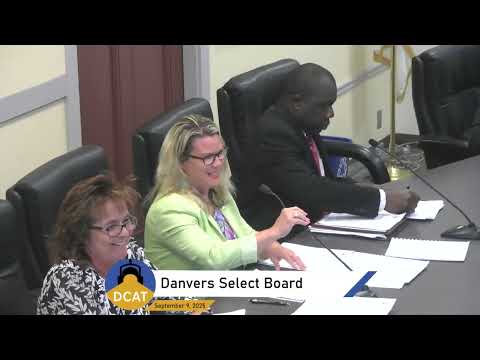
A town presentation at the Select Board’s September meeting summarized a 60-plus-page transportation needs assessment that found residents want more walkable streets, better sidewalks and more transit options.
The study, prepared with support from the Metropolitan Area Planning Council (MAPC) and presented by Aaron Henry (pinch-hitting for the original consultant), reported that about 650 Danvers households lack access to a vehicle, 22% of residents are 65 or older, roughly 28% of households include children and about 20% of residents report a disability. The consultants said walking dominated respondents’ preferred travel mode in the survey; bicycling ranked lower than expected.
The findings matter because town leaders can use the assessment as a basis for later planning and grant applications. The presentation noted Massachusetts encourages communities to include transportation as a chapter of a master plan and described the assessment as a foundation for that work.
Key findings and recommendations cited in the presentation included: improving and preserving sidewalks and crosswalks; deploying more rapid-flashing beacons and other short-term safety investments; pursuing state Complete Streets grant funding; refreshing the 2014 downtown parking study and considering a downtown parking-management plan funded in part by development mitigation fees; centralizing transportation planning across departments; promoting existing transit services such as the Salem Skipper; and pursuing additional study of transit restoration from the MBTA.
The report’s public-survey sample totaled just over 500 respondents (about 2% of town households), which the presenter said was statistically meaningful for the town’s population and sufficient to support the conclusions. The presentation also noted the town has high single-occupancy vehicle rates (an estimated 70% of trips are solo), making congestion and emissions important local policy topics.
Board members and residents asked follow-up questions about specific neighborhoods, connectivity across Route 128/Interstate 95, and how MassDOT projects will link to local sidewalks and bike facilities. Henry said MassDOT is planning a bike-path connection from the Nichols Street area toward Kirkbride Drive and that the town has emphasized connections to housing authority property and Conifer Hill apartments. He encouraged residents to participate in MassDOT public design hearings, which occur at roughly 25% design milestones.
Select Board members also discussed operational next steps: targeting Complete Streets grant applications, using mitigation fees for downtown parking/traffic studies, and working with the town’s planning and engineering staff to centralize project decision-making. The presenter said copies of the full report and the slide deck will be posted to the town website and that staff will return with follow-up information and answers to technical questions that arose during the meeting.
The Select Board did not take a formal vote on the assessment at the meeting; staff characterized the presentation as complete and said it will form the basis for future actions, grant applications and targeted downtown work.