Get Full Government Meeting Transcripts, Videos, & Alerts Forever!
Get email alerts on the Regional Transit Authority Mou topic
No spam. Unsubscribe anytime.
Charlotte council approves MOU to join regional transit authority, agrees to follow-up on appointment rules
Summary
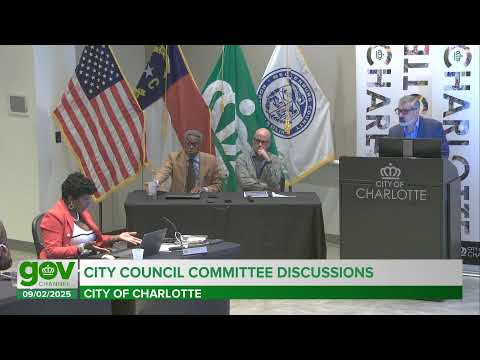
Charlotte City Council voted on Tuesday, Sept. 2, to approve a memorandum of understanding intended to align the city’s appointment process with a new regional transit authority created under the state’s PAVE Act, council members said. The motion passed 8-3.
Charlotte City Council voted on Tuesday, Sept. 2, to approve a memorandum of understanding intended to align the city’s appointment process with a new regional transit authority created under the state’s PAVE Act, council members said. The motion passed 8-3.
The MOU sets a shared timeline for receiving applications and making appointments to the 27-member authority established by the PAVE Act and adds a provision requiring at least one transit rider be appointed by the city and county. Council members said passage of the MOU does not remove the city’s ability to vet applicants or to replace its appointees later.
Councilmember Ed Driggs (District 7), chair of the Transportation Planning & Development Committee, said his committee recommended the MOU 4–1 and asked the full council to approve the agreement while continuing work on how the city will apply the statute’s qualification language. “By voting for the MOU now, you’re not limiting your ability to engage on behalf of constituents about concerns that they may have,” Driggs said. He told colleagues the state law sets deadlines that will require the region to begin standing up the authority by January and for municipal appointments by December.
Why it matters: the PAVE Act requires a board and a set of studies to be in place by early 2026 if the authority is to receive and administer a half‑cent sales tax proposed for the November ballot. City staff and council members said approving the MOU now preserves Charlotte’s seat at the table while giving the council time to define the screening process, candidate rubric and other local priorities before appointments are finalized.
What council debated and decided
Committee background: Driggs said the transportation committee had a “robust conversation” in which members noted the MOU largely restates procedural parts of the statute and that it establishes a timeline for applications and appointments. Driggs said the committee endorsed the MOU with the caveat that staff and the council attorney will bring back guidance on how to interpret the statute’s requirement in paragraph d (that trustees “shall have demonstrated experience or qualifications” in fields such as law, finance, engineering, public transportation, urban planning, logistics, government, architecture or economic development).
Legal interpretation: Anthony Fox, interim city attorney, told councilmembers that the PAVE Act (the state law creating the authority) includes the paragraph d membership requirement but does not define how narrowly or broadly to interpret categories such as “public transportation.” “It will be for this body to determine whether or not that experience meets what this body believes to be demonstrated experience and qualifications,” Fox said. He said the attorney’s office will research definitions and comparable examples and return with a memo to help the council set a rubric.
Transit-rider representation: The MOU specifically commits Charlotte and Mecklenburg County to appoint at least one transit rider to the authority board. Several council members — and a speaker from the public, James Lee — urged that the city prioritize appointees with lived transit experience. Lee said he had waited hours for buses and that riders who “live the experience” should be represented. Supporters of the MOU, including Councilmember Malcolm Graham, said the city can appoint multiple riders if nominees also meet the statutory categories (for example, a rider who also demonstrates experience in public transportation, planning or finance).
Timing, studies and control of assets: City Manager Marcus Jones and staff explained that the PAVE Act requires several studies to be delivered to the authority by Jan. 1, 2026, and that tax revenue would not transfer to the authority until October 2026 if voters approve the ballot measure. Jones said municipalities have some latitude under the statute and that the MOU is meant to align appointment timelines so the authority can be stood up if the referendum passes. He also said the council retains the ability under state law to remove and replace its designees in the future.
Dissent and requests for more work: Councilmember Renee Johnson — who voted no in the committee and again opposed the measure in the full council — said residents’ concerns raised in public comment were not yet addressed and urged the council to complete more outreach and to resolve substantive policy issues before approving the MOU. Councilmember LaJuana Mayfield also said she had not received answers to some questions and opposed moving forward without more detail. Several other council members said they supported approving the MOU now while committing the transportation committee and staff to additional work on candidate qualifications, community engagement and fare and service details.
Vote and next steps: The motion to approve the MOU was moved by Councilmember Evan Peacock (District 6) and seconded (second not specified in the record). The council recorded the motion as approved by a voice/hand count, with a tally reported in the meeting as 8 in favor and 3 opposed. Councilmembers and staff said the committee will return with a report and with recommended language and procedures to clarify how the city will evaluate applicants and what information will be collected during the application process. The application window described in the MOU runs from early September through early December, with trustee appointments scheduled between Nov. 8 and Dec. 12.
Public comment and outreach: Staff and several council members said a broader public-engagement and information program remains needed before the November referendum. Councilmembers suggested a working group of council members and a schedule of workshops and public briefings to respond to community questions about board composition, small-business participation, “orphan roads” funding and anti-displacement policy preferences.
What the MOU does not decide tonight
Council and staff repeatedly emphasized that approving the MOU does not finalize the city’s appointees, change the statutory membership formula, or transfer revenues. The council expressly reserved the right to set a local rubric for judging whether applicants meet the statute’s “demonstrated experience or qualifications” requirement and to remove or replace appointees after they are seated.
Ending
Council leaders said they will return to the transportation committee and the full council with a staff memo on the legal interpretation of the statute and with a proposed candidate rubric. The MOU’s approval moves Charlotte into the regional coordination timeline required by state law; the referendum on a new sales tax remains a separate public vote scheduled for November.