Get Full Government Meeting Transcripts, Videos, & Alerts Forever!
Get email alerts on the Procurement topic
No spam. Unsubscribe anytime.
Fort Smith directors question chemical procurement after steep liquid-chlorine price; item tabled
Summary
Directors pressed staff on sole-source chemical purchases after one director said the city's liquid-chlorine price is roughly four times a published index. The board pulled and tabled the liquid-chlorine purchase for further bidding; staff agreed to seek additional suppliers and report back.
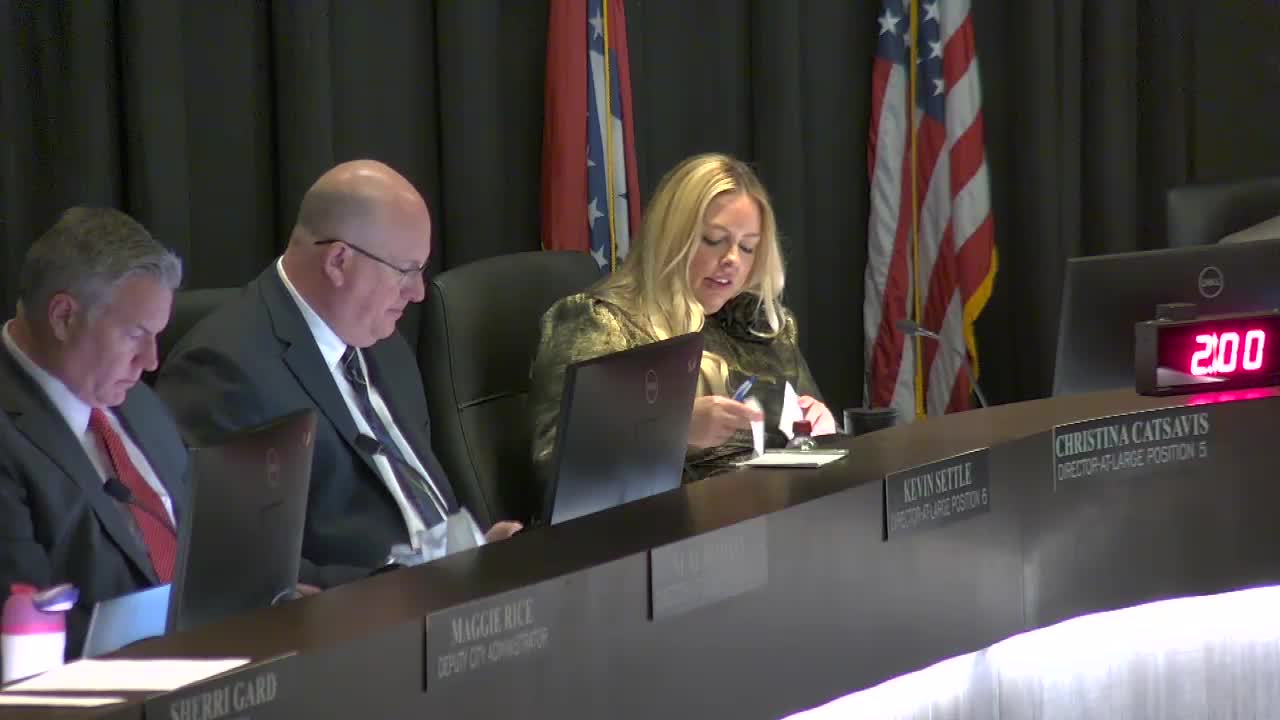
Board members on Sept. 2 expressed concern about the city's process for purchasing water- and wastewater-treatment chemicals after a director said the proposed liquid-chlorine price appeared far above published indices.
During consent-agenda discussion, Director Christina Kosiewicz questioned why the city was waiving competitive bidding for what she called a commonly available product and said she found a published U.S. liquid-chlorine price index at about $750 per ton while the city's purchase showed a price near $2,924 per ton for 140 tons. "We're paying almost 3,000. That's a 4 time markup," she said. Kosiewicz asked why purchasing was not soliciting wider bids and said she would not vote to waive competitive bidding for similar items without more outreach.
Public Works and utility staff and others responded that liquid chlorine used for drinking-water treatment is compressed gas stored in one-ton cylinders, that transportation and hazardous-material handling add cost, and that supply consolidation and Department of Homeland Security restrictions influence availability. A staff speaker noted many manufacturers have consolidated and said historically the city had limited bidders for that product. Purchasing staff acknowledged the concern and agreed to look beyond the immediate region for bids.
Director Kosiewicz also raised concerns about items that lock the city into proprietary systems, citing potassium permanganate and earlier procurements of AMI meters. Other board members asked staff to direct the purchasing department to more actively solicit bids for routine and high-cost items. The board pulled the liquid-chlorine ordinance (consent item 7D) and voted to table it to allow staff time to seek additional bids; the motion to table passed on a 6-0 vote.
Why it matters: The city’s wastewater and drinking-water systems rely on treated chemicals that represent recurring operating costs. Large price differences for high-volume purchases can affect the utilities’ budgets and, ultimately, ratepayers.
What the board directed: Staff and purchasing were asked to solicit additional bids and return with options. One staff member suggested that shipping hazardous compressed chlorine across long distances would add costs (hazardous material fees and transport), but directors requested evidence of market scarcity before approving sole-source purchases.
Clarifying details captured at the meeting - Director Kosiewicz cited a U.S. liquid-chlorine price index of approximately $750 per ton and a city bid price near $2,924 per ton for 140 tons. - The city uses one-ton compressed chlorine cylinders for drinking-water treatment; staff noted transportation and hazardous-material handling raise costs. - Purchasing staff indicated that historically only a small number of suppliers bid on these chemicals, which is why the city used sole-source arrangements in some past procurements.
Next steps: The board asked staff to return with competitive bids or alternative sourcing options for the liquid-chlorine purchase and to consider broader procurement outreach for other chemical and proprietary-system purchases.