Get Full Government Meeting Transcripts, Videos, & Alerts Forever!
Get email alerts on the Municipal Debt Bonds topic
No spam. Unsubscribe anytime.
San Antonio staff outline bond timing, debt service and options to refinance stormwater funds
Summary
City finance staff reviewed San Antonio's portfolio of property-tax-backed and other debt, outlined potential bond timing and urged council direction on using stormwater trust funds and bond frequency to close capital funding gaps.
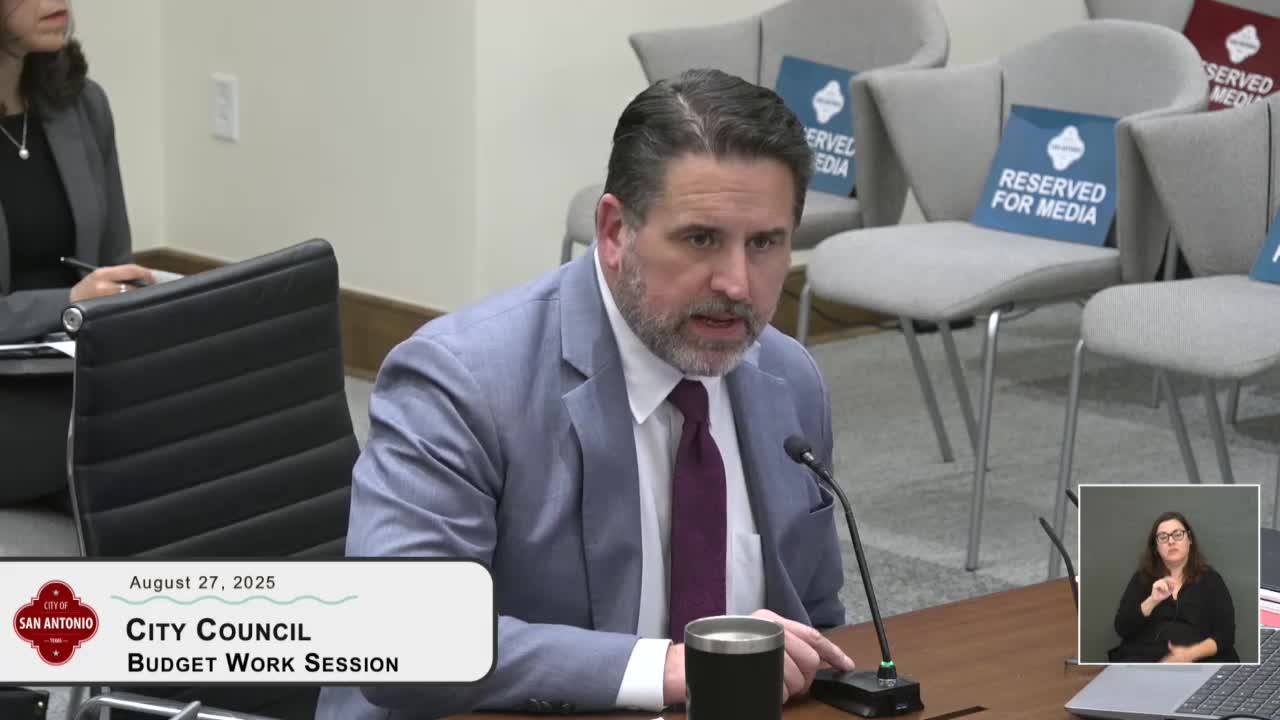
City finance staff on Aug. 27 presented the City of San Antonio's debt-service plan to the City Council, describing the city's mix of general obligation and revenue-backed debt, current credit ratings and options for bond timing and refinancing.
The presentation, led by the city's finance director, focused on how property-tax-backed obligations, certificates of obligation and short-term tax notes are being used to fund 186 projects in the 2022 capital program and other capital priorities. Staff said the city maintains high bond ratings relative to many Texas peers and identified a roughly $25 million reserve held for debt-service shocks.
Why it matters: Bond timing and the structure of debt determine how much capital the city can afford to commit without raising the property tax burden. Council members pressed staff for sensitivity analyses and options for smaller, more frequent bond packages in place of the current five-year cycle.
City finance director Erick (identified in the presentation as the lead finance official) told the council the debt plan assumes a portion of debt will continue to be supported by the property tax rate that is currently used for debt service (the presentation referenced a 21-cent portion of the tax rate directed to debt service and a separate 33-cent property tax figure provided for context). Staff also said the city holds roughly $25,000,000 in a reserve intended to absorb shocks to debt service.
Staff described principal components of city debt: general obligation (GO) bonds approved by voters, certificates of obligation (COs) and short-term tax notes with maturities up to seven years used for shorter-lived capital items such as HVAC, technology replacements and certain facility projects. The presentation also noted revenue streams and fees that support enterprise-related obligations, including passenger facility charges (PFCs) and an airport rental car fee the Federal Aviation Administration must approve.
On credit ratings, staff said San Antonio's ratings were high compared with many Texas cities and referenced national rating agencies, including Fitch. The finance briefing included recent market activity in which staff said investor interest helped produce lower borrowing costs and generated reported savings on recent issuances.
Council members repeatedly asked for scenario analyses. Several members urged staff to model more frequent bond issuances (every three years or less) so the city could issue smaller packages that might be more likely to be completed on schedule. Councilmember Chad Mungu—da and others argued that five-year bond cycles create large, complex packages that are harder to deliver and delay project completion.
Council direction and staff follow-up - Staff committed to returning with a focused sensitivity analysis on debt capacity and bond timing; in response to council questions staff estimated they could return with additional analysis on stormwater (watershed/drainage) funding and related options in roughly 35—5 days, and indicated other analyses may take up to about 60 days for fuller refinements. - Staff said they will explore options to refinance or call existing stormwater-related debt where permitted and to examine whether proceeds from those activities could be reallocated to priority projects.
Unresolved items and constraints - Council members and staff noted that state legislative changes under consideration could affect future property-tax capacity; staff said the proposed state changes were not yet final and that any enacted change would affect planning for future bond packages. - Several council members asked whether the city should put a tax-rate increase tied to a specific bond package directly on the ballot (an approach used in some other Texas cities); staff said that option exists but has not been used routinely in San Antonio and would require further analysis.
What's next: Staff will return to the council with the requested sensitivity and stormwater funding analyses within the timeframes discussed so council members can decide whether to pursue a bond election as early as 2026 or the next regularly scheduled bond cycle in 2027.