Get Full Government Meeting Transcripts, Videos, & Alerts Forever!
Get email alerts on the Zoning Moratorium topic
No spam. Unsubscribe anytime.
Gallatin planning staff recommends short moratorium on rezoning during zoning-code update; committee sends proposal to planning
Summary
City planner presented the ZOCO zoning-code update and recommended a time-limited moratorium on rezoning until adoption of the new code; the committee voted to process a moratorium ordinance through the planning commission and return to council.
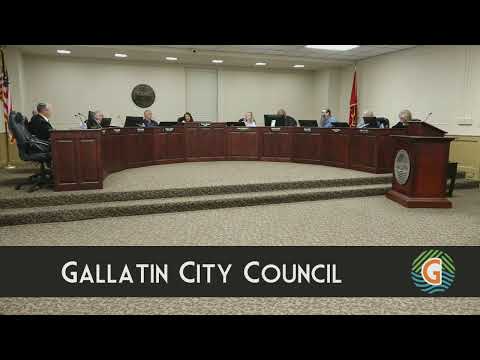
City planner Brian Rose updated the Gallatin City Council Committee on Aug. 26 about the ZOCO zoning-code update and recommended a limited moratorium on new rezoning approvals while the city adopts a new zoning code.
Rose said the new zoning code will rezone all property within city limits to a new district map and that applications submitted under the old code while the new code is pending could create conflicts. "We feel that we can justifiably put this time frame at 9 months or until the adoption of the new code, whichever comes first," Rose said.
Rose told the committee that the planning department had submitted public-review comments to consultants, that a final draft is expected in a couple of months, and that the new districts are intended to closely resemble current districts so as not to decrease rights under current zoning. He said the moratorium would be narrowly targeted: it would not apply to development requests that do not require rezoning, would not affect accepted rezoning applications filed before adoption of the moratorium, and would terminate automatically upon adoption of the new code.
Staff noted there are currently three rezoning requests in active progress; two are scheduled for second reading on Sept. 2 and the third was recently recommended by the planning commission and expected to reach council in early November. Rose recommended a nine-month limit on the moratorium to allow time for planning commission and council review while avoiding an open-ended ban that could be vulnerable to legal challenge. A staff speaker noted case law supports a time-limited moratorium connected to code adoption and that specificity of duration is more legally defensible.
Council members asked about timeline impact on industrial projects and staff workload. Rose and staff said zoning is a small portion of the planning department workload and that other planning functions (plats, site plans, master plans) would continue. Rose estimated a typical rezoning application currently takes roughly 4.5 months from filing to final approval; he warned that the current law vests rights at filing, which is a reason to act before applications proliferate.
Vice Mayor Hayes moved, and Councilman Jevons seconded, that staff process a moratorium ordinance through the planning commission and return it to council; the committee voted to send the proposal to planning. The committee instructed staff to prepare an ordinance with a specific time frame and language terminating the moratorium upon adoption of the new code.
Ending: Staff will take the moratorium proposal through the planning commission for public hearing and return to the City Council for final consideration. If adopted, the moratorium would be limited in time and narrowly scoped to rezoning actions.