Get Full Government Meeting Transcripts, Videos, & Alerts Forever!
Get email alerts on the Public Transit topic
No spam. Unsubscribe anytime.
Regional planners outline microtransit proposal; commissioners raise concerns about Keene focus and county role
Summary
Southwest Regional Planning Commission presented a 'next generation' microtransit plan focused on the Keene urban area and a phased countywide approach. Commissioners questioned asking rural towns to fund a service they may not use and debated whether Cheshire County should sponsor the system.
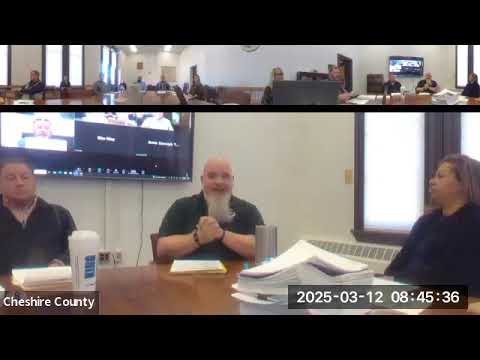
Representatives of the Southwest Regional Planning Commission briefed the Cheshire County commissioners on March 12 about a proposed “next generation” transit system that would use microtransit technology — app- or call-center–based shared rides — to expand mobility across the Monadnock region.
JB Mack, assistant director at the Southwest Regional Planning Commission, and Terry Johnson, the region’s mobility manager, described analyses and community outreach that led to a microtransit model. Presenters said the Keene area’s existing City Express and Friendly Bus services provide a baseline and that expanding hours and roaming service into a larger microtransit zone could increase annual ridership in a medium scenario from roughly 29,000 to about 64,000 trips with a modest increase in operating cost.
The presentation proposed a phased rollout starting in Keene (expanded hours and territory) and later extending services countywide. Planners estimated that a core operating budget for the greater-Keene microtransit scenario could be shared among Keene, Marlborough and Swanzey and that Cheshire County could cover roughly 20 percent of a modest scenario (about $71,000 annually). Larger scenarios would require contributions from multiple municipalities and institutional partners such as Keene State College and Cheshire Medical Center.
Commissioners raised immediate concerns. Several said the proposal appeared Keene-centric and questioned asking small, rural towns to fund a service they might rarely use. One commissioner observed that many of the county’s smaller communities have populations under 1,000 and that paying into a regional operating budget for transit they cannot practically use would be a hard sell. Planners said the phased approach would begin modestly and would seek partnerships, institutional support, fare revenue and state funds; they also noted a potential state funding increase in upcoming budget cycles. Staff said the earliest feasible target for stand-up would be fiscal year 2027 and that the project team will continue outreach and refine sponsor and operating models.
No formal county commitment was requested at the meeting; planners asked the commissioners to consider whether Cheshire County could act as a sponsor — a role that could include managing grants or serving as a regional convener. Commissioners emphasized concerns about equity for rural towns and the county’s bandwidth to manage transit operations.