Get Full Government Meeting Transcripts, Videos, & Alerts Forever!
Get email alerts on the Legislative Procedure topic
No spam. Unsubscribe anytime.
Assembly floor dispute over referrals: appeals sustain speaker and motions on SB 280/ACA 8 split the chamber
Summary
Multiple points of order, appeals and roll-call votes punctuated the Assembly's handling of SB 280 (Cervantes) and ACA 8 during the June 4 session. The speaker's referrals and subsequent motions drew repeated appeals that were sustained; a motion to re-refer ACA 8 to Elections ultimately passed while other re-referral efforts failed.
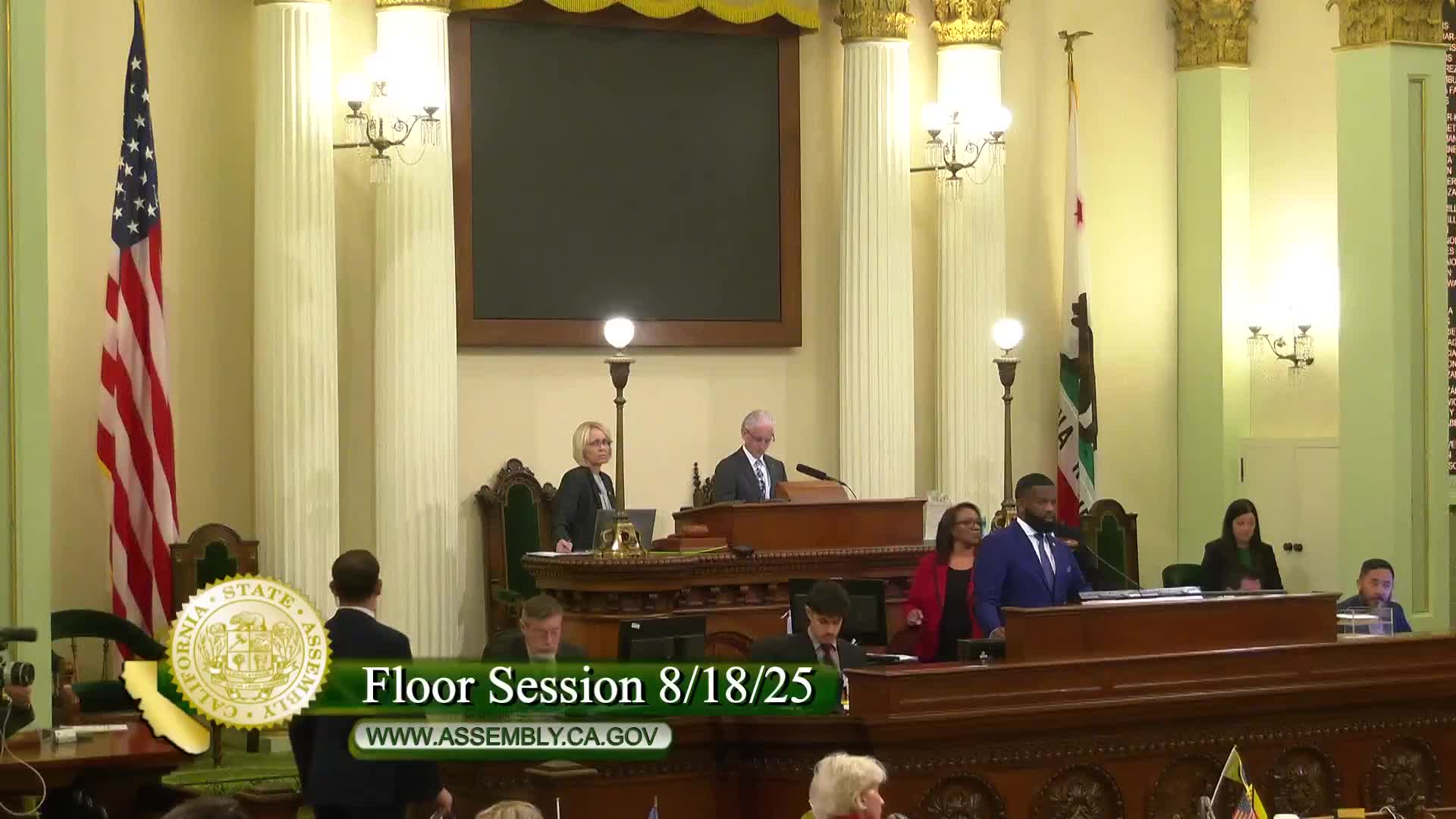
A contentious procedural sequence over committee referrals consumed a portion of the California Assembly floor on June 4, 2025, as members debated how to process SB 280 (Cervantes) and ACA 8.
Speaker Robert Rivas referred SB 280 to the Elections and Appropriations committees under Assembly Rule 77.2. Assemblymember DeMaio raised a point of order citing Article IV, Section 8(a) of the California Constitution and appealed the speaker's referral. The appeal required a second and was not debatable; the clerk recorded a roll-call vote that sustained the speaker's decision, Ayes 46, Nos 18, on the first appeal.
Later, Assemblymember Gallagher pressed points of order regarding germaneness under Rule 92 and sought to have SB 280 and ACA 8 re-referred to Elections and Judiciary committees. Gallagher's motion to re-refer failed on a roll-call vote, Ayes 18, Noes 48.
The chair's rulings were appealed multiple times during the back-and-forth. One appeal of the chair's decision was sustained by a roll-call vote of Ayes 49, Noes 17; another was sustained Ayes 52, Noes 15 in a later challenge. After those rulings, the majority leader successfully moved to re-refer ACA 8 from the Appropriations Committee to the Elections Committee; the roll-call result for that motion was recorded as Ayes 47, Noes 18.
Members also debated suspensions of notice and file requirements to allow informational hearings and faster scheduling for ACA 8 and SB 280. Several waiver motions and unanimous-consent requests were made; where recorded on the roll, they passed by similar margins (examples: 48–18, 46–18, 49–18 on successive suspensions and notice waivers). Assemblymember Gallagher repeatedly argued that the waivers circumvented required public notice and the constitutionally mandated 72-hour requirement for certain changes; the chair repeatedly ruled his points "not well taken." Gallagher and Assemblymember DeMaio urged higher thresholds in the floor debate but were unsuccessful in overturning the speaker's referrals.
Taken together, the floor exchanges show a multi-step process: (1) Speaker refers bills under chamber rules; (2) members raise constitutional and rule-based objections; (3) appeals to the body are taken and the speaker's rulings are sustained in successive roll calls; and (4) the chamber ultimately authorized the Elections Committee to notice ACA 8 and schedule hearings. The transcript records multiple roll-call tallies that reflect the chamber's divided votes on the proper procedural path, but not a final disposition on the substantive merits of SB 280 or ACA 8.
No final committee actions on the merits of SB 280 or ACA 8 are recorded in the floor transcript. The motions documented were procedural: referrals, appeals and suspensions of notice requirements to enable committee hearings and scheduling.