Get Full Government Meeting Transcripts, Videos, & Alerts Forever!
Get email alerts on the Property Tax Assessments Telecom topic
No spam. Unsubscribe anytime.
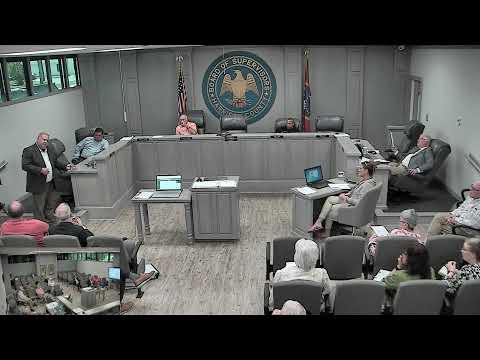
Harrison County supervisors deny AT&T objection, continue talks with C Spire over 2025 property-tax assessments
Summary
The Harrison County Board of Supervisors voted to deny AT&T Mobility’s objection to its 2025 business personal-property assessment after AT&T declined assessor-contracted site inspections; supervisors also discussed a similar protest from C Spire and moved not to pursue immediate further action while staff and the carriers continue document review.
The Harrison County Board of Supervisors voted to deny AT&T Mobility’s 2025 business personal-property assessment objection after AT&T representatives said county-hired consultants would not be allowed to inspect equipment on company sites.
The matter arose after AT&T filed a formal objection to the county’s proposed 2025 assessments for its taxable cell-site equipment and claimed that most of the company’s deployed equipment qualifies for a broadband-ad valorem exemption. AT&T’s lead tax manager, William Gengrey, told the board that AT&T had filed the required renditions and a certified sworn description to pursue the broadband exemption enacted in House Bill 1644 and signed March 28, 2025. Gengrey said AT&T’s records report original acquisition cost and original year new as required by Mississippi law and that the county’s consultant used a different, “highly speculative” method to estimate value.
Supervisor discussion focused on whether the county and its consultant should be allowed to verify what is on site. County staff and supervisors said the assessor’s office and its agents have a statutory right to inspect property to determine true value; board members said AT&T’s refusal to let the county’s contracted consultants access equipment weighed heavily in their decision. After an on-the-record motion to deny AT&T’s objection unless inspection access was granted, supervisors conducted a voice vote; the motion passed and the chair said “motion carries.” The exact roll-call tally was not recorded in the meeting transcript.
The board also heard from C Spire representatives, who raised many of the same objections about the county’s valuation method and the denial of broadband exemptions. C Spire counsel Kyle Williams and field operations manager Joseph Mofray said the company had provided extensive invoices and allowed county consultants and C Spire personnel to tour a selection of sites earlier in the year. They said those on-site reviews included opening cabinets and explaining equipment so the county’s consultant could observe the assets.
County consultants and the assessor’s staff, however, responded that the documentation C Spire provided was difficult to reconcile to the county’s renditions at the per-site, per-asset level. Assessors’ representatives said the invoices, internal work orders and supplier-portal records frequently lacked a clear item-to-asset linkage (for example, a unit serial or explicit site assignment) and that some sites’ renditions showed wide cost variances from one site to another even where equipment is “cookie cutter.” County-retained technical consultants also said they had found differences between what appeared on renditions and what they documented during field visits.
C Spire representatives said they were willing to provide further backup and to sit down with county staff to “connect the dots.” County leaders said the broadband-exemption question and valuation methodology are both significant legal issues — the board repeatedly described the exemption statute’s scope and whether it was intended for rural “fixed” broadband deployments as matters that may ultimately be decided in court. Board members noted that if exemptions are granted at the scale sought by the carriers, the county’s tax base and revenue for services could be affected.
After discussion, a supervisor moved to "not have the appeal" for the C Spire protest (effectively pausing an immediate contested appeal), the motion was seconded and the board agreed to continue working with the company on documentation. The transcript does not record a formal roll-call tally for that motion; the record shows the board agreed to keep communications open while the county continued document review and legal evaluation.
Why it matters: The disputes involve both (1) whether certain wireless equipment qualifies for a statutory broadband ad valorem exemption enacted in 2025 and (2) whether the county’s valuation method — using a consultant’s market-based/per-estimate approach — complies with Mississippi Department of Revenue guidance that emphasizes original acquisition cost and original year new for industrial personal property. The board’s denial of AT&T’s objection was based on the company’s refusal to allow county-hired consultants to verify equipment on site; C Spire’s case remains under active document and process review with the parties agreeing to continue working toward clarifications.
Board comments and next steps: Supervisors repeatedly said they were open to reviewing additional, verifiable documentation and to meeting with carrier accounting staff. County staff said they will continue to request supplemental evidence (for example, invoices tied to asset numbers or site IDs) and may proceed with legal defenses or further proceedings if the records and access remain insufficient. Both carriers signaled willingness to provide more detailed supplier documentation and to meet with county staff, though they also asked for confidentiality protections for proprietary invoices.