Get Full Government Meeting Transcripts, Videos, & Alerts Forever!
Get email alerts on the State Housing Legislation topic
No spam. Unsubscribe anytime.
Saint Helena workshop reviews state housing laws, density bonuses and local options
Summary
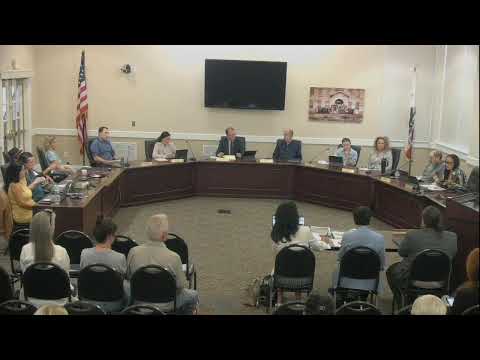
Saint Helena held a joint session of its City Council and Planning Commission to review recent state housing legislation and what it means for local policy.
Saint Helena held a joint session of its City Council and Planning Commission to review recent state housing legislation and what it means for local policy. The educational workshop featured a presentation by land-use attorney Barbara Kontz and a city staff overview of the community's housing pipeline and housing-element status.
The session focused on provisions in California housing law that limit the reasons cities can deny or condition housing projects, the procedures that can "vest" project rights, and the stronger enforcement role of the State Department of Housing and Community Development (HCD). Kontz summarized the Housing Accountability Act, density-bonus rules, recent budget "trailer" bills that expanded CEQA exemptions, and litigation trends affecting municipalities.
Why it matters: state law increasingly constrains local review and increases legal and financial exposure for cities that deny or heavily condition housing projects. Saint Helena officials and residents said that narrowing local discretion raises questions about fire evacuation, water availability and preserving agricultural character — issues residents said are especially acute in the Napa Valley.
Kontz told the joint meeting that the legislature's approach "is to curb the capability of local governments to deny or reduce the density of or make housing development projects infeasible." She described several key mechanisms that limit local authority. One is the "preliminary application," which she said can "freeze all the city's development standards in place" when an applicant files minimal materials. Another is a strict five-meeting cap: once an application is deemed complete, cities generally may not hold more than five public hearings or meetings on the project without risk of a legal challenge.
Kontz emphasized the central role of "objective standards" in the law: "a project can be denied only if it doesn't comply with the city's objective standards, or if it results in a specific adverse impact on public health and safety," she said. She added that courts and HCD scrutinize whether local standards are truly objective and verifiable, and she described how subjective tests such as "character of the neighborhood" can fail the statutory test unless narrowly and clearly defined.
She also explained density-bonus rules and waivers: projects that provide specified affordable units may receive increased density and are frequently eligible for waivers of local development standards. "Developers are allowed to obtain waivers of almost all city standards," Kontz said, and she noted that appellate decisions (for example, the Bankers Hill decision cited in the presentation) make it difficult for cities to deny waiver requests unless they can make one of several narrow findings.
On CEQA, Kontz reviewed the recent budget trailer bills that took effect immediately on passage and expanded exemptions for qualifying infill projects. For projects that meet the statutory criteria (site size limits, surrounding urban uses, minimum density and environmental safeguards), local agencies may be limited in their ability to require environmental review and mitigation.
City staff gave a concise account of Saint Helena's housing planning status. The city adopted its housing element in September 2023 and received a regional housing needs allocation (RHNA) of 256 units from the regional planning agency. Staff described the current pipeline of proposed projects totaling roughly 156 units: the Hunter subdivision (about 75 units, not counting 11 accessory dwelling units); a 10-unit 951/963 Pope Street project (100% affordable, expected 2026); an adjacent Our Town St. Helena project planned for 39 affordable apartments; and the Spring Grove townhome infill (proposed 41 units). Staff also said no application had yet been filed for a widely discussed 1933 Spring Street site, but the new owner had indicated potential interest at minimum densities the city would expect to yield roughly 71 units.
Public comment reflected a mix of perspectives. Residents and local stakeholders asked for more transparency about upzoning decisions, stronger protections for agricultural land and historic resources, and clearer, locally tailored objective standards for health and safety. Michael Morrison, a resident who said he is working with local partners and Sunshine Market's owner, asked the city to consider donating or dedicating city-owned property for "worker housing" and suggested a 50-unit site to support local employees.
Other public speakers pressed for follow-up on a particular Spring Street upzoning (1933 Spring Street), requested clearer disclosure of meetings with state officials, and asked the city to produce inventories of objective health-and-safety standards and the city's historic-resources list. Several residents raised wildfire-related concerns including evacuation capacity and insurance availability.
Council member and commissioners' remarks focused on options the city can still use, including: building a stronger record of objective public-health-and-safety standards (for example, sidewalk requirements or evacuation studies) that satisfy the statutory test; protecting designated historic resources; and increasing outreach to state legislators. Staff said it would follow up on several specific issues raised during the meeting and explore additional community outreach and code-review opportunities.
No new ordinance, zoning change or formal land-use approval was taken at the workshop. The only formal action recorded on the agenda (adoption of the meeting agenda) was approved by voice vote at the start of the session.
The council and commission closed the session by directing staff to report back on possible next steps, including further public outreach, a review of the city's objective standards and an inventory of sites in the housing element. Officials said additional meetings or study sessions would be scheduled to continue the conversation.