Fairport board approves consolidation plan to merge Minerva DeLand with Fairport High School
Loading...
Summary
The Fairport Central School District Board voted unanimously to approve a consolidation plan to merge Minerva DeLand School operations with Fairport High School and to add a standing "consolidation corner" to future agendas for updates and oversight.
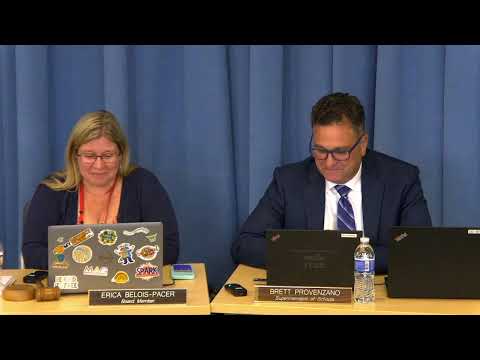
The Fairport Central School District Board of Education voted unanimously Tuesday to approve a consolidation plan to merge Minerva DeLand School operations with Fairport High School, the board said during its Aug. 19 business meeting.
The plan, moved by Board Member Mary Caitlin and seconded by Rich, was approved by a 6-0 voice vote. Superintendent Brett Provenzano told the board the endorsement is “meaningful” as staff operationalize the plan this school year.
Board leaders said the consolidated structure is intended to coordinate secondary programming, staffing, and schedules across grades nine through 12 while the district proceeds with facility work at the high school. The board added a regular update item, colloquially called the “consolidation corner,” to future agendas to provide public status reports on hiring, student supports and operational changes.
In public discussion before the vote, district leaders described steps already taken this summer: hiring earlier than in past years to fill anticipated positions, building lead‑teacher representation from both nine‑ and 12‑grade staff, and scheduling joint faculty and department meetings to create common norms and reporting templates. Brett Provenzano and other administrators said the district will run training for lead teachers, institute a common agenda for nine‑12 departmental meetings, and provide monthly reporting to the board.
School operations staff detailed practical steps intended to reduce disruption during construction: teachers temporarily reassigned to alternate rooms, conversion of larger-than‑typical classrooms into multiple resource rooms to meet current special‑education space standards, and a move plan based on staff surveys to determine who will “pack as you go” versus those who prefer to pack before a relocation. District leaders said they have accounted for additional special‑education caseloads and plan to add related‑service and resource spaces as part of the reconfiguration.
The administration also outlined investments in staff cohesion and wellness: expanded “morning workroom” gatherings, a welcome display of staff family photos in shared spaces, and targeted onboarding to help staff from different buildings get to know each other before students arrive.
The board president called the approval a step toward implementing the consolidation pillars developed with teachers, administrators and families; the vote followed presentation of those pillars and operational plans.
The board did not take separate action on scheduling or building projects in the motion; construction and facility work were discussed in other agenda items.