Get Full Government Meeting Transcripts, Videos, & Alerts Forever!
Get email alerts on the Capital Improvement Bond topic
No spam. Unsubscribe anytime.
School committee hears revised bond plan after cost review; walls at three elementaries set aside
Summary
District architects presented a redesigned Wickford Middle School and a reprioritized capital-improvement plan after updated cost estimates; committee members voiced concern that original promises to voters (including permanent classroom walls at three elementary schools) may not be achievable within current bond funding.
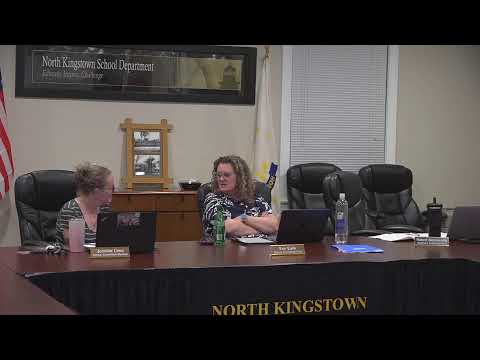
North Kingstown School Committee members received a detailed update Aug. 19 on the district’s 2024 bond-driven capital improvement projects and a revised plan for Wickford Middle School.
The presentation, led by Perkins Eastman architect Tina Greco and project managers from Paradigm and BBBW, walked the committee through the latest “compact three‑story” layout for Wickford Middle School, site changes to reduce curb cuts, and an emerging list of prioritized work across the district. Sam Ryder, project manager with Paradigm, said the team submitted drawings and narratives to the cost estimator on Aug. 6 and expects formal estimates soon. The team told the committee it plans to file a Stage 2 submission to the Rhode Island Department of Education (RIDE) in September and to return to the committee with a recommended Stage 2 addendum.
The presentation emphasized two practical drivers behind the revised plan: (1) updated, higher-than-expected pricing for converting several older elementary buildings from their original open-plan layouts into classrooms with permanent full‑height walls, and (2) the district-wide need to prioritize roofs, accessibility, secure entries and media-center upgrades. Perkins Eastman and DPW/architects estimated that converting Stony Lane, Quinesset and Fishing Cove elementaries to full permanent walls — with the mechanical, electrical and structural upgrades those conversions trigger — could total roughly $30–32 million. That projected cost would largely consume available bond funds if pursued now, the consultants said, leaving insufficient funding for the other district needs that voters were told the bond would address.
“Once you start removing open-plan systems and create real classrooms, you are into a gut renovation — new ceilings, mechanical capacity, electrical and code compliance,” the architect team told the committee. The consultants recommended removing the open-plan conversion (the permanent-walls scope) from the immediate base bid and treating many of those items as add alternates to preserve the ability to complete roofs, secure vestibules and other infrastructure work across all schools.
Several school committee members pushed back. Member Sherry Kennedy and others said voters were told the bond would address classroom walls at the three named elementary schools, and they expressed concern that reclassifying that work as add alternates could mean voters’ expectations will not be met. Member Jen Remond said she did not feel comfortable “locking into a three‑year Stage 2 submission” that substantially changes what the bond was sold to accomplish without more direct communications to the public.
Consultants and administration emphasized that the Stage 2 package submitted to RIDE typically includes a total ask that can exceed the bond amount (that is, the submission can include more scope than the town bond budget anticipates) so that any bond premiums, contingency or future funding could be applied later. The team said exact priorities for the bond base bid vs. add alternates will be revisited once the detailed cost estimate from the estimator is returned later in August.
The committee requested the cost estimates before taking further action and agreed the administration and the building advisory committee will return to the school committee with a prioritized list at the Sept. meeting prior to any final Stage 2 sign-off.
Votes and formal action: the committee did not adopt the revised CIP as presented; members asked for the cost estimate and a return presentation before a formal vote on the reprioritized plan.
Why it matters: The bond affects capital work at every North Kingstown school — roofs, HVAC, security and learning-space changes — and the committee must balance spending that preserves all buildings against more costly renovations at a subset of schools.
What’s next: The consultants expect to deliver detailed cost estimates by late August; the committee will review those figures and the building advisory committee’s recommendation at its September meeting before the Stage 2 RIDE submission.