MDOT outlines bridge inventory, funding shortfall and bundling strategy to House appropriations subcommittee
Loading...
Summary
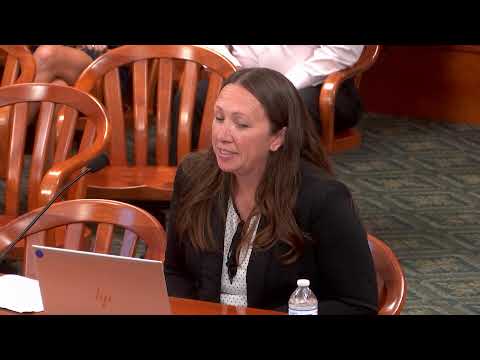
Rebecca Curtis, director of the Bureau of Bridges and Structures at the Michigan Department of Transportation, told the House Appropriations Subcommittee on State and Local Transportation that Michigan faces growing inspection and replacement demands across more than 11,000 bridges in the state.
Rebecca Curtis, director of the Bureau of Bridges and Structures at the Michigan Department of Transportation, told the House Appropriations Subcommittee on State and Local Transportation that Michigan faces growing inspection and replacement demands across more than 11,000 bridges in the state.
Curtis said MDOT and local agencies divide responsibility for those structures: roughly 4,500 bridges are on state trunk lines, about 5,800 are on county road systems and about 887 on city and village systems. She described how funding is spread across multiple line items and large construction projects, and emphasized that inspection compliance and aging inventories are creating pressure on budgets and delivery schedules.
"Inspection is a requirement of the CFR," Curtis said, referring to the federal Code of Federal Regulations, and she explained that noncompliance with National Bridge Inspection Standards can affect federal obligation authority for the whole state. She added that the National Bridge Inventory data specifications are changing and will require new routine-permit-load information and, in many cases, fresh load ratings performed by licensed engineers.
Why it matters: Committee members heard that limited annual program funding and an aging bridge inventory are increasing the risk of lane restrictions and closures. Curtis said MDOT projects a rising number of trunk-line bridges at risk of closure over the next 10 to 20 years unless investment increases.
Major figures and program structure Curtis and earlier House Fiscal Agency materials presented to the subcommittee laid out the current funding picture and relative scale of work. Key figures cited in the briefing include: - More than 11,000 bridges statewide (all systems combined). (presented by Rebecca Curtis) - State trunk lines: about 4,500 structures (roughly 40% of bridges by count). (Bill Hamilton/House Fiscal Agency) - County roads: about 5,800 structures; cities/villages: about 887 structures. (Bill Hamilton/House Fiscal Agency) - MDOT bridge capital and construction funding is largely embedded in the "state trunk line federal aid road and bridge construction" line item, which was cited at about $1.6 billion in the 2025 budget briefing documents. Local federal-aid road and bridge construction was cited at about $411.2 million; a separate local bridge program line item was cited at about $26.9 million in the materials shown to the committee. (House Fiscal Agency materials summarized by Bill Hamilton) - MDOT noted an approximate annual historical bridge spending level in the $200 million range for MDOT-managed bridge work. (Rebecca Curtis) - The state-local "local bridge program" was described as about $50 million per year in typical funding, with temporary increases during the IIJA period. (Rebecca Curtis)
Curtis described internal MDOT operating and maintenance budgets for bridge functions: operating funds for the Bluewater Bridge ($7.8 million); statewide bridge preservation/maintenance (~$22.6 million); and system operations and management (~$17.0 million). She said capital needs for Bluewater Bridge are funded from tolls, lease and duty free revenue with excess revenue rolling into capital projects.
Bridge bundling and grants Curtis outlined MDOT's bridge bundling initiative, a voluntary program that aggregates local-ownership bridge projects into bundles delivered and administered by MDOT to increase competitiveness for federal grants and to provide technical resources to local agencies.
"By bundling the bridges, which is recognized as an innovation by Federal Highway, it allows us to increase our competitiveness," Curtis said. She told the panel MDOT secured a $34 million federal grant for an expanded bundling effort and that the program has produced cost savings in procurement and delivery: a benefit-cost analysis for the pilot bundle showed an estimated savings of $608.1 million compared with a traditional design-bid-build delivery method, according to MDOT materials.
Curtis described three phases of bundling activity: an initial pilot (complete), a CRRSAA-funded Phase 2 with multiple bundles and permanent removals and replacements (some awarded and under construction), and a Phase 3 funded through the FY24 budget with design-bid-build and design-build bundles in various regions. She said MDOT has avoided requiring local matches in many bundle projects to date and that bundle sizes were adjusted after industry feedback to allow both small and large contractors to compete.
Inspection, inventory and permitting requirements Curtis emphasized upcoming federal data and inspection requirements. Federal Highway has amended National Bridge Inventory data elements to include routine permit loads; states must update their inventories and load-rating data under the new specifications. Curtis said MDOT recommends owners begin collecting the new NBI data promptly and offered MDOT support to local agencies.
MDOT and the County Road Association have discussed a proposal that would have MDOT "take over" the NBIS program for five years to perform load ratings and the additional data collection for local bridges, Curtis said. She said partial funding sources identified include unused CRRSAA funds, amounts available from August redistributions and a possible legislative change to use surplus in the movable-bridge fund. Curtis said the remainder of needed funding was unresolved and that transferring resources from other local federal-aid distributions would be a last resort.
Condition, lifecycle and construction innovations Curtis walked committee members through MDOT's condition ratings and asset-management lifecycle. She outlined the 0-to-9 rating scale for deck, superstructure and substructure, and gave approximate replacement-cost estimates cited in the briefing: about $200 per square foot for work on fair-condition bridges and roughly $725 per square foot for replacement of poor-condition bridges. She warned that many MDOT trunk-line bridges are beyond historic service life and that aging coupled with inflation and use of de-icing salts accelerate deterioration.
Curtis also described design and construction innovations MDOT uses to extend service life and reduce cost: digital delivery (3-D models instead of static plan sets), self-consolidating concrete, salvaging steel-beam connectors to reduce damage during deck replacement, and geosynthetic-reinforced soil abutments that can save roughly 20% on some projects.
Subcommittee questions and next steps Members pressed MDOT on specifics including how bridge work inside larger projects is tracked and whether MDOT can separate the bridge component in a large highway project. Curtis said MDOT can track bridge-specific work types even when bundled into larger bids. Representatives also asked about the number of closed bridges: Curtis said monthly reports show about 60 to 70 closed bridges statewide at any time, most on the local system, and that many more local bridges are at risk of closure (hundreds in the 2-3 rating range). For MDOT-owned trunk-line bridges, she said the greater risk is a large wave of replacements needed over the next 10 to 20 years because of age.
The subcommittee adopted the minutes of its July 30 meeting by unanimous consent before the briefing (Representative Robinson moved to adopt the minutes). The meeting adjourned after questions and discussion.
Sources: Presentation and materials shown to the House Appropriations Subcommittee on State and Local Transportation; testimony of Rebecca Curtis, Bureau of Bridges and Structures director, and summary material cited from the House Fiscal Agency line-item budget briefing.