Get Full Government Meeting Transcripts, Videos, & Alerts Forever!
Get email alerts on the Public Safety Drones topic
No spam. Unsubscribe anytime.
Police outline safeguards for small drone program; council asks for concise public overview
Summary
Highland Village police described intended uses, training and policy controls for a nascent drone program, and council asked for a one‑page public summary and greater clarity on operations, volunteer pilots and resource management.
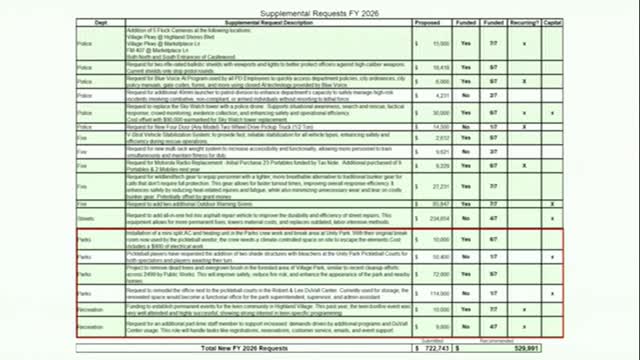
Highland Village police briefed the council on Aug. 12 about a proposed small unmanned aerial system (drone) program and the department’s plan for policies and oversight.
The police representative described the program as early-stage, with uses limited to training and specific operational events (e.g., crime‑scene documentation, officer safety responses and some nuisance investigations). The department said it intends to follow national best practices developed by the International Association of Chiefs of Police and the Texas Police Chiefs Association, to retain recordings only as required for case evidence or per retention rules, and to conduct regular policy review. Staff emphasized that recorded video with no evidentiary value would be purged under standard retention practices.
Nut graf: Why this matters — Drones can improve officer safety and investigative capabilities, but they also raise resident concerns about surveillance, privacy and resource allocation; the council sought clearer public-facing information and guidance on staffing and volunteer operators.
Council members pressed on privacy safeguards and asked for a short, plain-language one‑page overview for the public explaining policy limits, retention practices and allowable uses. Staff agreed to create that one‑pager and to present the draft at a workshop. Council also asked how the program would be staffed; staff said the department plans to use sworn staff, Criminal Investigations personnel, and trained volunteers/auxiliaries—subject to policy and insurance coverage—and that the fire department had expressed interest in shared use for some missions.
Ending: The council requested a concise public summary and a workshop to review the department’s proposed policies, retention schedules and staffing plan before expanding the program.