Get Full Government Meeting Transcripts, Videos, & Alerts Forever!
Get email alerts on the Policy Roundtable topic
No spam. Unsubscribe anytime.
Charlotte council uses new forum to raise homelessness, housing subsidies, sales-tax referendum and small-business concerns
Summary
Council members used a newly scheduled mayor-and-council topics block to raise multiple issues including homelessness and mental health, concerns about housing subsidies and nonprofit capacity, a county sales-tax referendum for transportation, small-business participation on projects, and a request to review landscaping/pollinator rules.
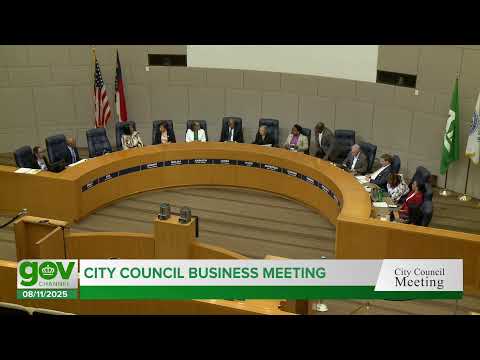
At a trial run of a new agenda block for mayor and council topics, members of the Charlotte City Council raised a series of public-policy issues ranging from homelessness and mental-health response to housing subsidy risk and an upcoming county transportation sales-tax referendum.
Council member John (D.) Driggs reported that the Mecklenburg County Board of Commissioners voted 8–1 to place a 1-cent transportation sales-tax question on the November ballot; he said public comment at the county hearing was largely favorable. Members called for coordination and public education ahead of the referendum.
Housing and subsidies Council member La Juana Mayfield asked the city manager to bring a council briefing, with Housing and Neighborhood Services and Public Safety, on the potential financial impact to multifamily projects if nonprofit partners that provide rental subsidies were to reduce services or close. Mayfield noted that the city has roughly $58 million in trust-fund dollars remaining in the housing trust fund and asked staff to work with development and nonprofit partners (she mentioned DreamKey as an example) to quantify risk to current subsidy recipients and to buildings with high shares of subsidized tenants.
Small-business participation and procurement Council member Victoria Watlington requested staff provide updated data on housing-unit production and vacancy rates to better understand supply versus price-point mismatches and pressed for a clearer plan and stronger language on small-business participation goals related to the regional transportation proposal and orphan roads MOU work. Council members also discussed procurement and cited statutes and policies that allow negotiation with low bidders or rejection of bids; Council member Renee Johnson asked for a review of procurement rules and the city’s approach to CBI and procurement integration.
Urban nature and pollinator conservation Council member Dimple Ajmera asked staff to review the city’s ordinances that affect naturalistic landscaping and pollinator habitat and suggested reviewing approaches used by other North Carolina cities, such as Winston-Salem, to allow exemptions that encourage pollinator-friendly yards and businesses.
Street vendors and public safety Mayor Pro Tem Dante Anderson (District 1) praised recent street-vending pilot work and Pride events but raised concern about unpermitted late-night food vendors in Uptown and South End, citing public-safety and code-enforcement issues tied to open-flame operations and late-night congregation.
Homelessness, mental health and services Several council members discussed visible homelessness and mental-health crises in corridors such as I-85/Sugar Creek, Reagan Drive and parts of Uptown. Council members said they want stronger collaboration with Mecklenburg County, expanded CARES teams or street psychiatry services, non-congregate shelter capacity and partnerships with local hospital systems. Council member Renee Johnson cited a figure she said appears in research that about 53 percent of people who are homeless have a history of head injury; she urged the city to explore brain-injury assessment and treatment as part of a broader response.
Outcome and next steps Council agreed to use the trial topics block for three-minute remarks per member and asked the city manager to return with briefings on housing subsidy exposure, small-business participation plans tied to major projects, procurement policy clarifications and options for urban-nature ordinance updates. Members asked staff to coordinate with county partners on mental-health and shelter strategies and to provide additional written materials to the council.